
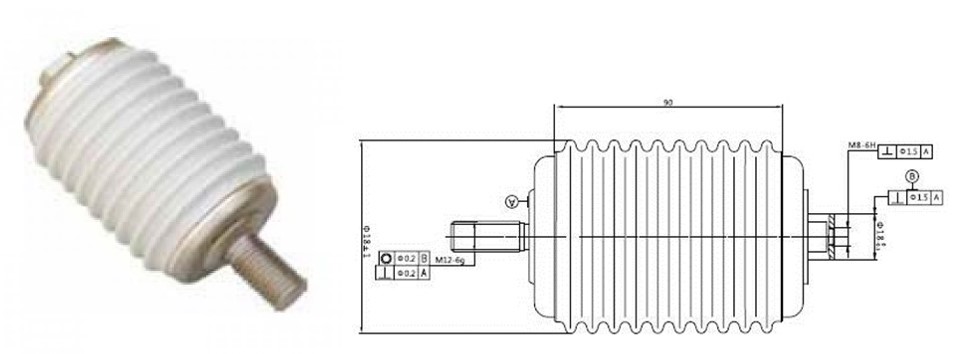
Every vacuum circuit breaker, vacuum contactor and many load break switches depend on one small component: the vacuum interrupter. This article explains how it is built, how it extinguishes an arc in microseconds, why it is considered “sealed for life” and what to look for when specifying interrupters or embedded poles.
What Is a Vacuum Interrupter?
A vacuum interrupter (VI) is a switch whose contacts operate inside a hermetically sealed, highly evacuated envelope. When the contacts separate under current, a metal-vapor arc forms and is extinguished at the next current zero. Because the arc never leaves the envelope, switchgear built around vacuum interrupters is compact, quiet and free of hot gas emissions.
Today, well over half of new switching devices in the 3.3-52 kV range use vacuum interruption, and vacuum circuit breakers are commercially available up to 145 kV.
A Short History
The idea came from X-ray tubes, where a gap of about one centimetre in vacuum could withstand tens of thousands of volts. Research at Caltech in 1926 confirmed that vacuum could interrupt current, but practical devices had to wait for better vacuum technology. In the late 1950s and early 1960s, the first commercial vacuum switches and a 15 kV, 12.5 kA vacuum circuit breaker appeared. From the 1970s vacuum began replacing minimum-oil breakers in MV switchgear, and from the 1980s it steadily displaced SF6 at medium voltage as well.
Anatomy of a Vacuum Interrupter
- Insulating envelope. Modern interrupters use high-purity alumina (Al2O3) ceramic. Early designs used glass, which is more vulnerable to hydrogen and helium permeation. The ceramic is metallized and brazed to metal end lids.
- Fixed and moving contacts. Usually a copper-chromium (CuCr) alloy, often around 50/50 for circuit breakers, mounted on oxygen-free copper stems. Other materials such as copper-tungsten or silver-based alloys are used for contactors and special duties.
- Contact geometry. Butt contacts suit low currents. For high currents, slotted radial magnetic field (RMF) contacts make the arc rotate, while axial magnetic field (AMF) contacts keep the arc diffuse over the whole contact face. Both reduce local erosion.
- Metal bellows. A thin stainless-steel bellows, about 0.1-0.2 mm thick, lets the moving contact travel while keeping the vacuum sealed. Bellows life commonly exceeds 30,000 close-open cycles in well-designed interrupters.
- Vapor shield. A metal shield around the contacts catches condensing metal vapor so it does not coat the ceramic, and helps grade the electric field.
- Guide and anti-twist protection. Prevents the bellows from being twisted during operation, which would shorten its life.
Because atmospheric pressure acts on the bellows, the interrupter naturally tends to close. The operating mechanism must hold the contacts open against this force and provide the correct contact pressure when closed.
How the Arc Is Interrupted
- As the contacts start to part, the contact area shrinks and current density rises sharply.
- The last bridge of metal melts and evaporates, creating a metal-vapor arc – the only conducting medium available.
- The magnetic field shaped by the contact slots moves or spreads the arc, keeping arc voltage low and limiting erosion.
- As the AC current approaches zero, vapor production stops. The vapor condenses on the contacts and shield within microseconds.
- The gap recovers its dielectric strength very rapidly and withstands the transient recovery voltage. The current is interrupted.
This fast recovery is why vacuum handles severe duties such as generator circuit breaking under IEC/IEEE 62271-37-013, capacitor switching and frequent motor switching.
Current chopping and overvoltages
With small inductive currents, a vacuum arc can become unstable and drop to zero slightly before the natural current zero. This “current chopping” can induce overvoltages in motors or unloaded transformers. Modern CuCr contact materials keep chopping currents to a few amperes, and surge arresters or RC snubbers are added where the load is sensitive.
How Interrupters Are Made
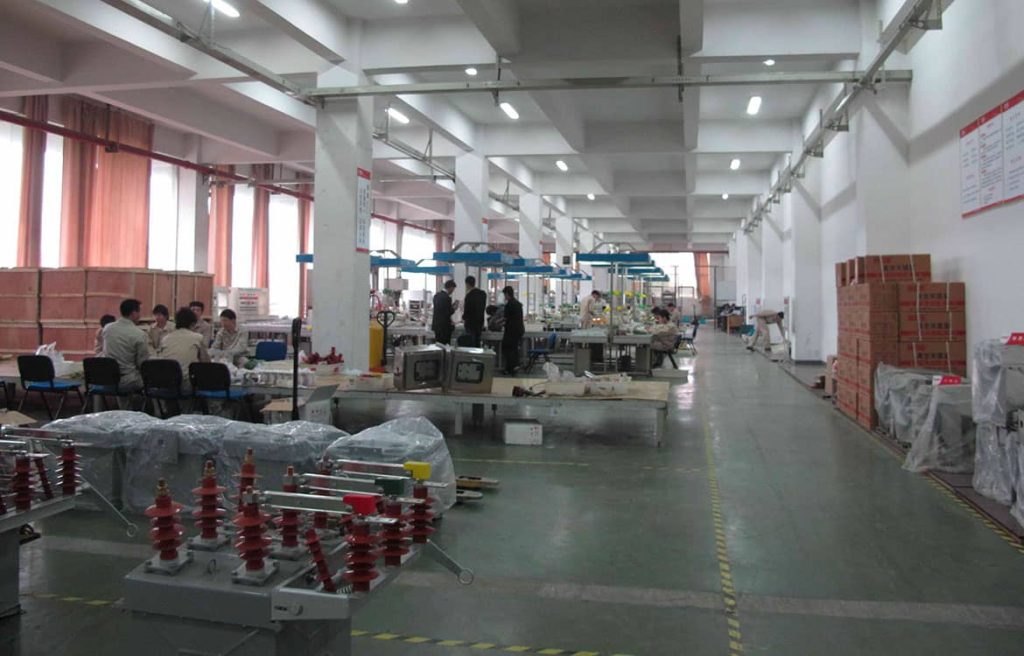
Vacuum quality depends almost entirely on manufacturing discipline:
- Clean-room assembly of carefully cleaned parts, because any contamination can release gas later.
- One-shot brazing and evacuation. Batches of tens or hundreds of interrupters are brazed and evacuated together in a high-vacuum furnace at roughly 800-900 °C, which also degasses the materials.
- X-ray inspection of internal part positions and brazed joints.
- Conditioning with gradually increasing voltage, followed by lightning-impulse testing above standard values.
- Vacuum measurement by the magnetron (Penning) method, which ionizes residual gas in a magnetic field and measures the resulting ion current.
“Sealed for Life”: What the Evidence Shows
Typical internal pressure in a new interrupter is around 10-7 hPa or lower. The interrupter still switches normally up to about 10-4 hPa, and laboratory tests show acceptable performance even at around 10-3 hPa. That leaves a margin of several orders of magnitude.
Field data from major manufacturers covers several decades and many millions of interrupters, with a reported mean time to failure exceeding 40,000 interrupter-years. Gross leaks from manufacturing faults are caught at the factory; in service, loss of vacuum is almost always linked to external events such as mechanical damage or external flashover. Interrupters more than 35 years old have been measured and found still tight.
The practical lesson: replacing healthy interrupters simply because switchgear is 20-25 years old is rarely necessary. A periodic power-frequency withstand test across the open contacts, together with contact-wear checks, confirms whether an interrupter can stay in service.
Where Vacuum Interrupters Are Used
- Vacuum circuit breakers for distribution and industrial switchgear
- Vacuum contactors for motors, capacitor banks and frequent switching
- Vacuum load break switches in RMUs and compact switchgear
- Outdoor reclosers and sectionalizers on overhead lines
- Generator circuit breakers, transformer on-load tap changers and arc furnace switching
Embedded poles
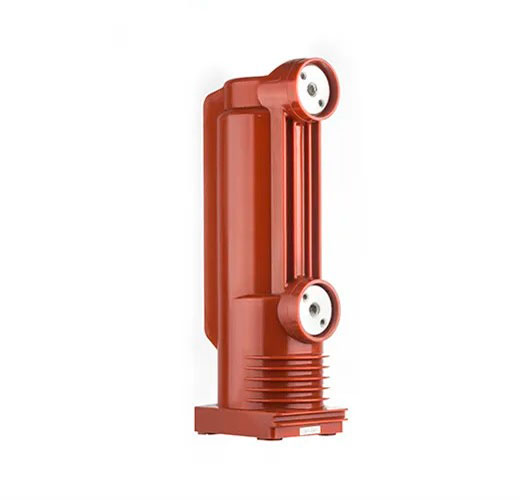
Many breakers now use embedded poles: the vacuum interrupter and its terminals are cast directly into epoxy resin or another solid insulation. This protects the ceramic from dust, moisture and mechanical impact, improves dielectric performance and reduces assembly work. Embedded poles are a common choice for compact indoor breakers and solid-insulated switchgear.
What to Check When Specifying Interrupters or Poles
- Rated voltage, rated normal current and short-circuit breaking current
- Contact gap, contact force and allowable contact erosion
- Mechanical endurance and number of full short-circuit interruptions
- Chopping current level for inductive load switching
- Compatibility with the operating mechanism’s travel and speed
- Test reports for dielectric, temperature-rise and short-circuit performance
Frequently Asked Questions
What is the vacuum level inside a vacuum interrupter?
Typically about 10-7 hPa or lower when new. Interrupters remain functional up to roughly 10-4 hPa.
How long does a vacuum interrupter last?
The vacuum itself typically lasts 30 years or more. Service life is normally limited by contact erosion or the bellows’ mechanical life.
Can a vacuum interrupter be repaired?
No. It is a sealed component and is replaced as a unit if damaged or worn.
What is the difference between a vacuum interrupter and a vacuum circuit breaker?
The interrupter is the sealed switching chamber. The breaker adds the mechanism, insulation, control and protection interfaces.
Work with METTZ Group
METTZ Group offers a wide range of switchgear components to suit many needs – from vacuum interrupters and embedded poles to operating coils and mechanisms for circuit breakers, contactors and load break switches. Check out our website to learn more, or contact METTZ Group today to work with a representative.
