
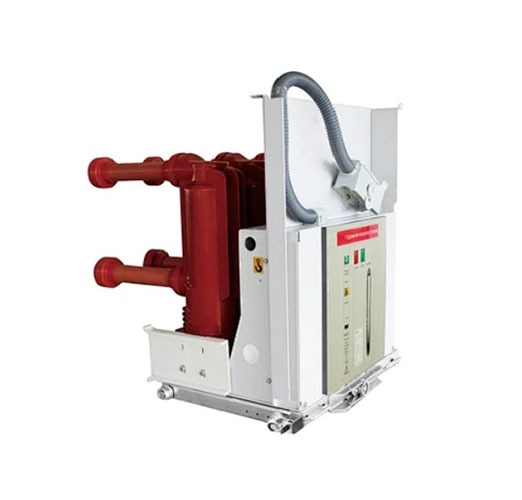
Vacuum circuit breakers are now the default medium-voltage switching device from 3.6 kV to 40.5 kV, and they are moving into higher voltages. But the right breaker for a utility feeder is not the right one for an arc furnace or a wind turbine. This article maps the main applications, the duty each one imposes and the ratings to focus on.
Why Vacuum Fits So Many Duties
Three properties explain the spread of vacuum technology: very fast dielectric recovery after current zero, low contact erosion (so tens of thousands of operations are possible) and a sealed interrupter with no gas or oil to manage. The EU F-gas Regulation (EU) 2024/573, which bans new SF6-insulated MV switchgear in stages from 2026 (up to 24 kV) and 2030 (up to 52 kV), is accelerating the shift further. The applications below show how those strengths are used – and where extra care is needed.
Applications at a Glance
| Application | Typical voltage | Key duty | What to specify |
|---|---|---|---|
| Utility primary and secondary substations | 10-36 kV | Feeder protection, auto-reclosing | Isc, E2, S1/S2 network class, reclosing duty |
| Overhead line reclosers and outdoor breakers | 12-38 kV | Repeated fault clearing outdoors | Outdoor insulation, M2, controller, CTs |
| Industrial plants | 3.6-12 kV | Motor, transformer and bus protection | Rated current, motor switching, surge protection |
| Mining | 3.3-36 kV | Shovels, draglines, conveyors, mobile substations | Ruggedness, IP rating, earth-fault protection, Ex design underground |
| Oil and gas, offshore | 3.3-36 kV | Compressors, pumps, compact platforms | Compact switchgear, IAC, hazardous-area layout |
| Rail traction supply | 27.5 kV single-phase AC; MV feeders for DC | Very frequent fault clearing | Traction-rated breakers, high M class |
| Data centers | 10-36 kV | High availability, fast restoration | Compact SF6-free switchgear, monitoring, IAC |
| Wind, solar and BESS | 12-40.5 kV (66 kV emerging) | Collector circuits, inverter and transformer switching | Compact design, transformer switching, outdoor or nacelle conditions |
| Capacitor banks | 6-36 kV | Daily switching, back-to-back inrush | Class C2, inrush limiting reactors |
| Arc and ladle furnaces | 12-36 kV | Dozens of operations per day | Very high mechanical endurance, surge protection |
Utilities and Distribution Networks
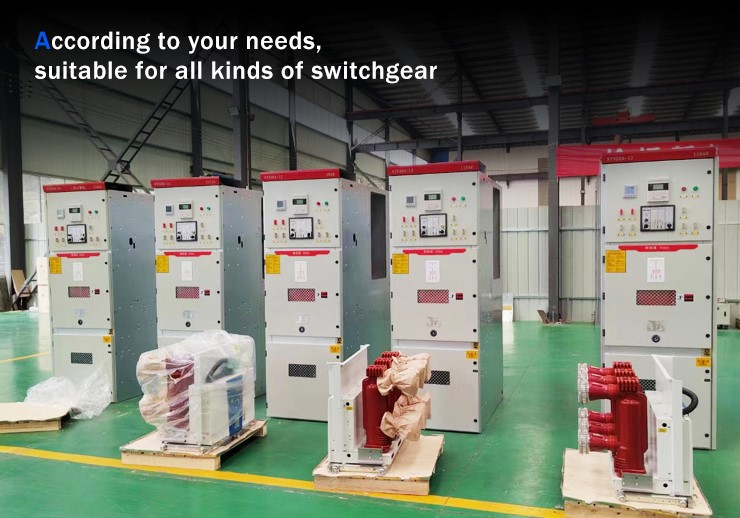
In primary substations, withdrawable VCBs in air-insulated or gas-insulated panels protect incoming transformers and outgoing feeders. In secondary networks, ring main units combine load break switches with VCBs for transformer protection. Two ratings deserve attention:
- Network class S1 or S2. S2 breakers are tested for the higher transient recovery voltage that appears when clearing faults on overhead lines connected directly to the breaker.
- Auto-reclosing. Rural overhead networks use the rated operating sequence O-0.3 s-CO-3 min-CO or faster, and pole-mounted reclosers can reclose up to four times. Vacuum handles repeated reclosing well because contact erosion is low.
Heavy Industry and Motors
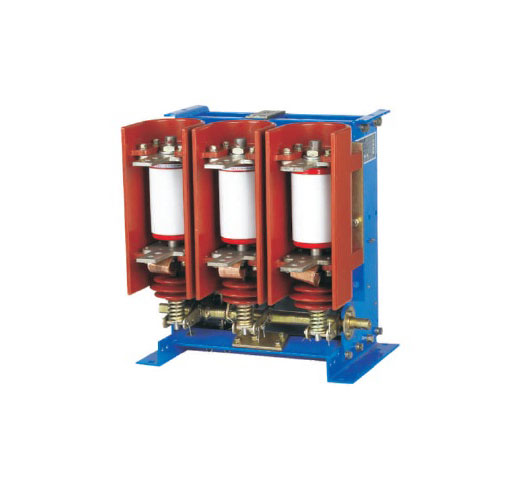
Large motors (pumps, fans, compressors, mills) are switched by VCBs where fault levels are high and by vacuum contactors where switching is frequent and fault duty can be covered by fuses. The concern with motors is switching overvoltage: interrupting the high starting current of a stalled or starting motor can cause current chopping and multiple reignitions. Metal-oxide surge arresters or RC snubbers at the motor terminals are standard practice for motors with low insulation withstand or long cable runs.
Mining
Surface mines use outdoor VCBs on skid-mounted or mobile substations that move with the pit, feeding electric shovels, draglines, crushers and conveyors. Breakers face dust, vibration, wide temperature swings and frequent load switching. Underground mines use VCBs inside flameproof or explosion-protected enclosures where national rules require it, often with sensitive earth-leakage protection on trailing cables. A separate article covers outdoor VCB selection for mines and harsh sites.
Oil, Gas and Petrochemicals
Refineries, LNG plants and offshore platforms run large compressor and pump motors at 6-11 kV, sometimes higher. Space and weight are tight offshore, so compact switchgear with vacuum breakers is the norm. Switchgear rooms are normally placed in a safe area or a pressurized room; equipment inside hazardous areas must follow the IEC 60079 series. Internal arc classification and remote operation are high priorities because personnel cannot easily leave the site.
Railway Traction
AC electrified railways (typically 25 kV nominal) use single-phase vacuum breakers in traction substations and on the trains themselves as the main line breaker. Fault clearing is frequent because overhead contact lines see short circuits from vegetation, animals and pantograph damage, so very high mechanical and electrical endurance is required. On DC railways the traction DC side uses dedicated high-speed DC breakers, while VCBs protect the MV supply to rectifier transformers.
Data Centers
Large campuses now take power at 10-36 kV and distribute it in medium-voltage rings to each data hall. The design priorities are availability, maintainability and footprint: redundant (N+1 or 2N) MV switchgear, fast transfer between sources and extensive monitoring. Vacuum breakers in SF6-free gas-insulated, solid-insulated or air-insulated switchgear support corporate sustainability goals as well as the new F-gas rules.
Renewables and Energy Storage
- Wind: collector systems at 33-36 kV use compact VCB switchgear in each turbine tower; 66 kV collector arrays are growing for large offshore projects, and vacuum designs for that voltage are entering service.
- Solar PV: VCBs protect inverter-station transformers and collector feeders, usually in outdoor skids or compact substations.
- Battery storage: frequent energization of step-up transformers means attention to inrush and switching transients, and to coordination with the storage system’s own controls.
Special Switching Duties
Capacitor banks
Capacitor switching is demanding because a restrike can generate overvoltages of several times the system voltage. Specify class C2 breakers (very low restrike probability) and check back-to-back inrush current; current-limiting reactors may be needed when several banks are switched on a common bus.
Arc furnaces
Furnace transformers in steel plants may be switched dozens of times per day, adding up to tens of thousands of operations per year. Only vacuum breakers designed for very high mechanical endurance – well above the 10,000 operations of class M2 – are practical here, together with surge protection on the furnace transformer.
Generator and transformer switching
Small and medium generators may use VCBs tested under IEC/IEEE 62271-37-013 for generator duty, which involves high DC components and delayed current zeros. Energizing and de-energizing unloaded transformers is routine for VCBs, but dry-type transformers with low insulation levels may need surge arresters.
Frequently Asked Questions
What is the most common use of a vacuum circuit breaker?
Protection of medium-voltage feeders and transformers in utility and industrial distribution switchgear, typically at 10-36 kV.
Are vacuum circuit breakers used at high voltage?
Mostly up to 40.5 kV today, but 72.5 kV and 145 kV vacuum breakers are in commercial service as SF6 alternatives, and the range is widening.
Should a VCB or a vacuum contactor switch a motor?
For frequent starting with moderate fault levels, a fused vacuum contactor is usually more economical. For large motors or high fault levels, a VCB with motor protection relay is preferred.
Work with METTZ Group
METTZ Group offers a wide range of vacuum circuit breakers to suit many needs – from indoor feeder breakers and vacuum contactors for motor duty to outdoor units and mining VCBs – plus capacitors for power factor correction. Check out our website to learn more, or contact METTZ Group today to work with a representative.
