
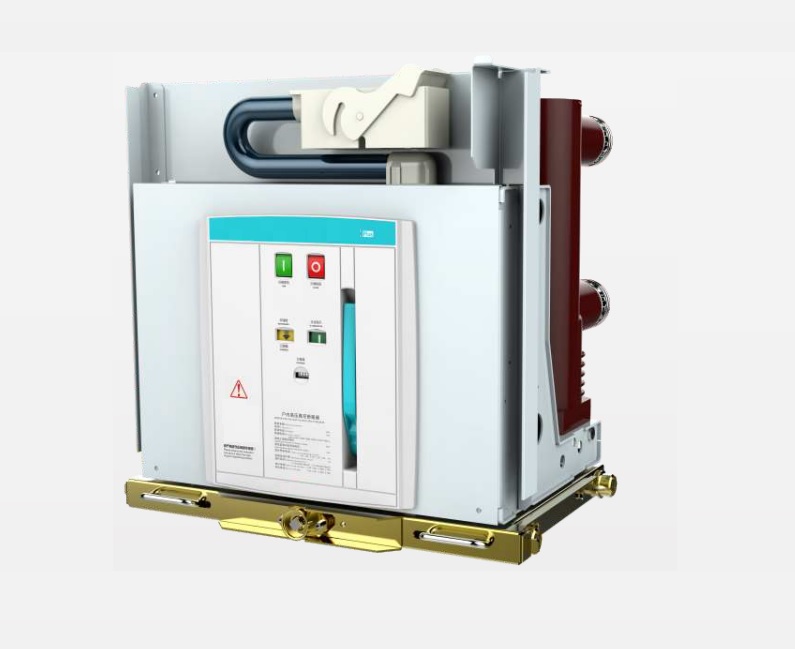
Vacuum circuit breakers need far less attention than oil or older air breakers, but “low maintenance” is not “no maintenance”. This guide covers safe switching and racking practice, a maintenance plan organized by interval, the mistakes that most often cause failures and how condition monitoring is changing the routine.
Start with the Safety Framework
Medium-voltage work is governed by national regulations and company rules, but most of them build on the same five safety rules (as set out, for example, in EN 50110):
- Disconnect completely.
- Secure against reconnection (lock-out/tag-out).
- Verify absence of voltage with an approved detector.
- Earth and short-circuit.
- Cover or barrier adjacent live parts.
Opening a VCB is not isolation. The contacts are inside a sealed interrupter and cannot be seen. Isolation comes from racking a withdrawable breaker to the disconnected position (with shutters closed) or from opening a disconnector, then applying an earthing switch rated for the duty.
Arc-flash awareness
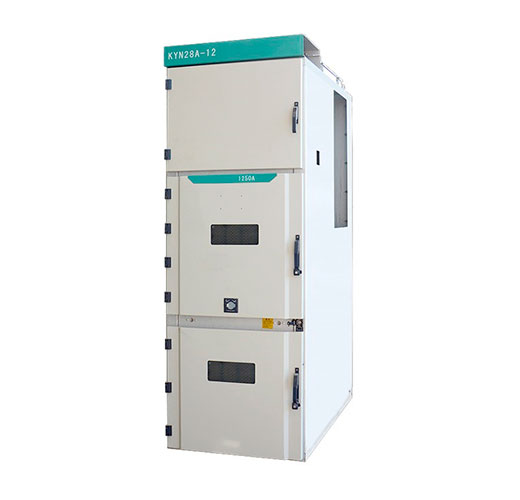
Switchgear tested for internal arc classification (IAC) under IEC 62271-200 protects people in front of a closed panel, at the accessibility type stated (for example AFLR). It does not protect anyone working with doors open or covers removed. Where an arc-flash study exists (common in IEEE 1584 / NFPA 70E markets), wear the PPE it specifies for each task.
Safe Operating Practice
Switching
- Operate breakers remotely whenever possible, especially for the first close after maintenance or after a fault trip.
- Before closing onto a circuit that tripped, find the cause. Repeated closing onto a fault erodes contacts and stresses the network.
- Confirm each operation with the mechanical position indicator, not just the control-room lamp.
Racking
- Rack only with the breaker open; the interlock should enforce this but should never be relied on alone.
- Use remote or motorized racking where installed, so the operator stands outside the arc-flash boundary.
- If racking is stiff, stop. Forcing it damages shutters, cluster contacts and interlocks.
Never defeat interlocks
Interlocks between the breaker, earthing switch, doors and racking mechanism prevent the classic accidents: closing onto an earth, racking a closed breaker, opening a door on a live compartment. Bypassing them “for a moment” during testing is a frequent root cause in incident reports.
A Maintenance Plan by Interval
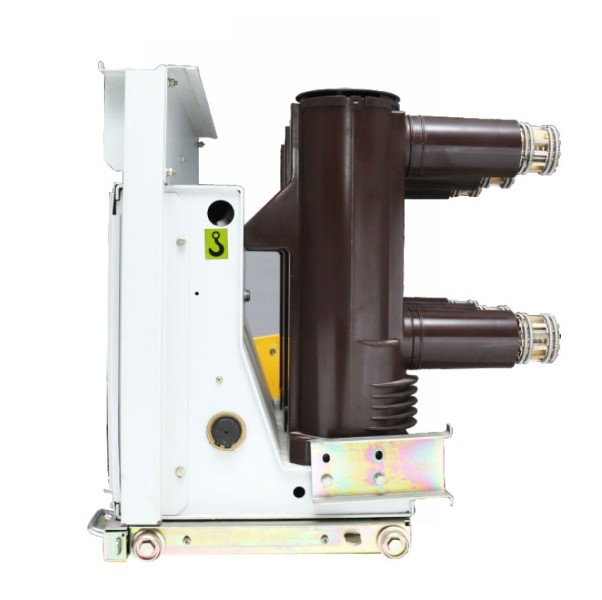
IEC 62271-1 leaves maintenance intervals to the manufacturer. The plan below reflects common practice for indoor distribution duty; shorten intervals for dusty, humid or high-switching applications and always follow the breaker manual.
| Interval | Tasks |
|---|---|
| Monthly / at patrol | Check position and spring indicators, counter reading, alarms, heater operation, room temperature and humidity, unusual noise or smell |
| Annually | Thermal imaging of panels under load; partial discharge survey (TEV/ultrasonic); review protection trip records |
| Every 3-5 years or per operation count | Withdraw breaker; clean and inspect insulation; inspect and lubricate mechanism with the specified grease; check coils, auxiliary switches, motor and charging time; measure main-circuit resistance, contact wear, timing and travel; open-gap withstand test; insulation resistance; check cluster contacts and shutters |
| At 10,000 operations or manufacturer limit | Mechanism overhaul or replacement per manual; evaluate interrupter wear against electrical life curve |
| After a heavy fault interruption | Inspect for damage, measure wear and resistance, check timing |
What maintenance means for each part
- Interrupter: no internal maintenance is possible. Check wear and vacuum integrity; replace when limits are reached.
- Insulation: wipe epoxy poles and insulators with a lint-free cloth and the cleaner specified by the manufacturer. Do not use solvents that attack epoxy or silicone.
- Mechanism: the part that most needs care. Remove old, hardened grease and apply fresh lubricant only where specified; over-greasing attracts dust.
- Secondary: tighten terminals, check plugs and wiring, verify coils at minimum operating voltage.
- Withdrawable parts: clean and lightly lubricate cluster contacts with the specified contact grease; inspect for pitting or discoloration that signals overheating.
Five Mistakes That Shorten VCB Life
- Treating “maintenance-free” literally. The interrupter is sealed for life; the mechanism is not. Dry, sticky mechanisms are the most common cause of slow or failed trips.
- Ignoring the environment. Condensation and conductive dust cause tracking on insulation surfaces. Keep heaters working and room seals intact.
- Operating outside the duty. Daily capacitor or motor switching with a breaker not rated for it accelerates wear and can cause restrikes or overvoltages.
- No surge protection where needed. Switching motors, arc furnaces or dry-type transformers can need surge arresters or RC snubbers to limit switching overvoltages.
- No records. Without baseline values for timing, resistance and wear, a test result cannot be interpreted.
From Calendar to Condition: Monitoring in 2026
New switchgear increasingly includes sensors that make maintenance condition-based rather than calendar-based:
- Coil current signature – changes in trip and close coil current shape reveal mechanism friction and latch problems.
- Travel and timing sensors – trend opening speed and time on every operation.
- Wireless temperature sensors on cluster contacts, cable lugs and busbar joints.
- Partial discharge sensors for early warning of insulation defects.
- Cumulative contact wear computed by protection relays from interrupted current.
Data flows to the substation automation system (often via IEC 61850), where alarms trigger targeted inspections. For older installations, portable tools – thermal cameras, TEV detectors and breaker analyzers – give much of the same insight at the scheduled visit.
Frequently Asked Questions
How often should a vacuum circuit breaker be serviced?
Typically a full service every 3-5 years in clean indoor conditions, or at the operation count given by the manufacturer, whichever comes first. Harsh environments call for shorter intervals.
Can the interrupters be cleaned or repaired?
The outside of the pole can be cleaned. The interrupter itself is sealed and is replaced, not repaired, when wear or vacuum limits are reached.
Is it safe to operate a VCB locally?
Local operation of arc-classified switchgear with doors closed is generally acceptable, but remote operation is safer and is preferred whenever a fault may be present.
What grease should be used on the mechanism?
Only the lubricant specified by the breaker manufacturer. Mixing greases or using a general-purpose product can harden the mechanism at low temperatures.
Work with METTZ Group
METTZ Group offers a wide range of vacuum circuit breakers to suit many needs – from indoor breakers for air-insulated switchgear to outdoor and mining designs – along with earthing switches and spare components for maintenance. Check out our website to learn more, or contact METTZ Group today to work with a representative.
