
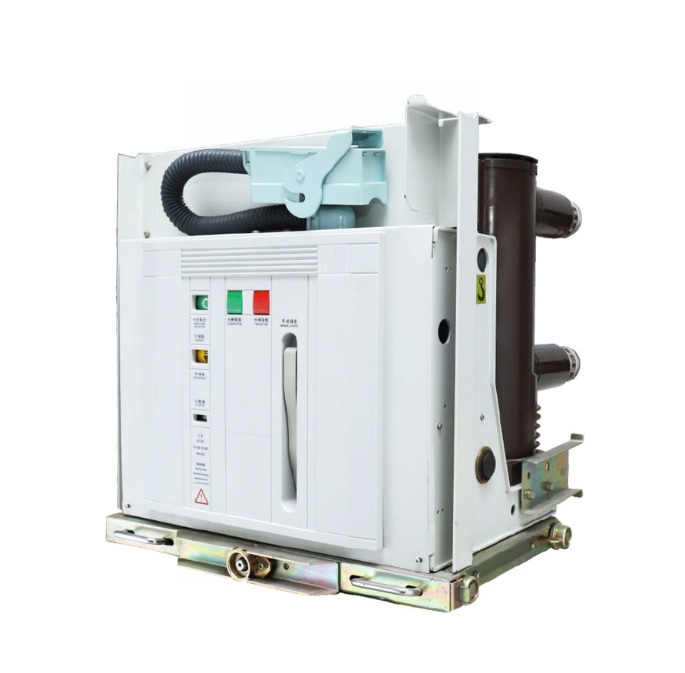
Vacuum circuit breakers dominate medium-voltage switching for good reasons, but they are not free of drawbacks. This article weighs the real advantages against the limitations – especially current chopping and switching overvoltages – and explains how engineers manage each one in practice.
For a side-by-side comparison of vacuum with SF6, air and oil technologies, see our separate article on choosing a circuit breaker technology. Here the focus is on vacuum alone: what it does well, where it causes trouble and how to design around it.
The Advantages
1. Fast, reliable interruption
The vacuum gap recovers its dielectric strength within microseconds of current zero, so a VCB normally clears a fault at the first or second current zero after contact separation. Arcing time is short, which limits contact erosion and energy released inside the interrupter.
2. Long life and high endurance
Modern designs are commonly type-tested to IEC 62271-100 classes M2 (10,000 mechanical operations) and E2 (extended electrical endurance without maintenance of interrupting parts). Special designs exceed 30,000 operations for frequent switching duties.
3. Low maintenance
The interrupter is sealed for life. There is no oil to filter, no gas pressure to monitor and no arc chute to clean. Maintenance is limited to the mechanism, insulation and secondary circuits.
4. No greenhouse gas and no fire load
Vacuum needs no SF6, whose global warming potential is roughly 23,500-25,000 times that of CO2 over 100 years. Under the EU F-gas Regulation (EU) 2024/573, new SF6 MV switchgear is being phased out, which makes vacuum the default for most new distribution projects. There is also no flammable oil, so fire risk inside buildings is minimal.
5. Compact and quiet
Short contact gaps (around 10-20 mm at 12-24 kV) and small strokes allow compact poles and light mechanisms. Operation is quiet, with no exhaust of hot gas.
6. Suitable for frequent switching
Low erosion and simple drives make VCBs ideal for capacitor banks, motors, arc furnaces and auto-reclosing feeders.
The Disadvantages
1. Current chopping
When interrupting small inductive currents, the arc in vacuum can become unstable and extinguish before natural current zero – this is current chopping. Energy stored in the load inductance then transfers to the stray capacitance and produces an overvoltage. Modern CuCr contacts have chopping currents of only a few amperes, so the effect is much smaller than in early designs, but it still matters for small or low-insulation loads.
2. Multiple reignitions and virtual chopping
If contacts part just before current zero, the small gap may not withstand the recovery voltage, causing reignitions. With a motor or transformer connected by a cable, high-frequency currents can cause a series of reignitions with escalating voltage steps. This is the main reason for switching-surge protection on motor and dry-type transformer circuits.
3. Restrike risk with capacitive loads
When switching capacitor banks or unloaded cables, a late restrike can produce overvoltages of several per unit. The risk is controlled by using class C2 breakers and sound contact design, but it should not be ignored.
4. Vacuum loss is invisible
A leaking ceramic interrupter looks identical to a healthy one. Only electrical tests across the open gap reveal it, so periodic testing is part of responsible maintenance.
5. Interrupters cannot be repaired on site
When an interrupter reaches its wear limit or loses vacuum, it is replaced – and with embedded poles, the whole pole is replaced. This makes long-term spare part availability an important purchasing criterion.
6. Limited voltage per gap
Dielectric strength of a vacuum gap does not rise linearly with gap length, so single-gap vacuum breakers are most economical up to about 40.5 kV. Designs at 72.5 kV and 145 kV exist and are growing, but at transmission voltages SF6-free gas or multiple-gap solutions are still under development.
7. X-ray emission during high-voltage testing
An open vacuum gap at high test voltage can emit low-level X-rays. This is irrelevant in service but requires distance and procedure during dielectric tests.
Summary Table
| Advantage | Disadvantage | How it is managed |
|---|---|---|
| Fast dielectric recovery | Can cause reignitions on inductive loads | Surge arresters, RC snubbers near the load |
| Low arc energy and erosion | Current chopping on small inductive currents | CuCr contacts with low chopping current; surge protection |
| Sealed for life | Vacuum loss is hidden; no on-site repair | Periodic open-gap withstand tests; spare interrupters or poles |
| No SF6, no oil | Higher voltages less mature | Use vacuum up to 40.5 kV routinely; evaluate higher-voltage vacuum or SF6-free alternatives case by case |
| Compact and quiet | X-ray emission at high test voltage | Test at specified values, keep distance |
When Is Surge Protection Needed?
Most VCB circuits need no extra protection. Consider it in these cases:
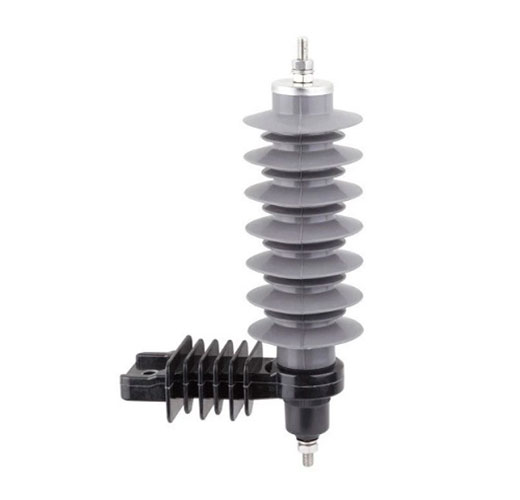
- Motors, especially those switched during starting or stall, rated below about 1,000 kW, or connected with short cables. Use metal-oxide surge arresters at the motor terminals, often with surge capacitors or an RC snubber.
- Dry-type and cast resin transformers with lower basic insulation levels than oil-immersed units, particularly when switched unloaded.
- Arc furnace transformers and shunt reactors, which see frequent inductive switching.
- Generators and rotating machines with sensitive winding insulation.
A switching transient study, run with the actual cable lengths and load data, is the best way to decide. For standard distribution feeders and oil-immersed transformers, the arresters already installed for lightning protection are normally sufficient.
Bottom Line
For distribution and industrial voltages, the advantages of vacuum clearly outweigh the drawbacks, and the drawbacks are well understood. The practical rule: choose the right endurance and capacitive classes, add surge protection where the load is sensitive, test the vacuum periodically and secure spare parts for the breaker’s life.
Frequently Asked Questions
What is the biggest disadvantage of a vacuum circuit breaker?
Switching overvoltages caused by current chopping and reignitions when interrupting small inductive currents. They are manageable with surge arresters or RC snubbers.
Does every VCB need a surge arrester?
No. Surge protection is mainly needed for motors, dry-type transformers, reactors and furnace transformers. Normal feeders usually need only standard lightning protection.
Is a VCB more expensive than an SF6 breaker?
At distribution voltages, prices are comparable, and the lifetime cost of a VCB is usually lower because there is no gas handling, monitoring or end-of-life recovery.
Work with METTZ Group
METTZ Group offers a wide range of vacuum circuit breakers to suit many needs – from indoor feeder breakers to outdoor VCBs and mining designs – along with vacuum contactors for motor duty. Check out our website to learn more, or contact METTZ Group today to work with a representative.
