
Description
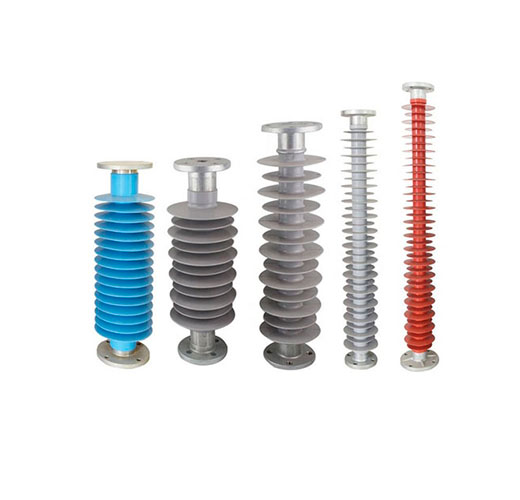
A Metal Oxide Surge Arrester (MOSA) is a protective device used in electric power systems to protect electrical equipment from overvoltages caused by lightning strikes, switching surges, or insulation faults. It works by diverting transient overvoltage energy safely to the ground, preventing insulation breakdown and equipment failure.
Unlike older silicon carbide types, MOSA uses zinc oxide (ZnO) varistor blocks, which provide superior nonlinear voltage-current characteristics, resulting in faster response, higher energy absorption, and lower leakage current.
MOSA devices are essential in high-voltage (HV), medium-voltage (MV), and low-voltage (LV) systems across power generation, transmission, and distribution networks.
Gapless Metal Oxide Surge Arrester which uses zinc oxide semiconductor as a resistor material, such type of arrester is known as a metal oxide surge arrester or ZnO Diverter. This arrester provides protection against all types of AC and DC over voltages. It is mainly used for overvoltage protection at all voltage levels in a power system.
Advantage
- It eliminates the risk of spark over and also the risk of shock to the system when the gaps break down.
- It eliminates the need for a voltage grading system.
- At the normal operating condition, the leakage current in the ZnO is very low as compared to other diverters.
- There is no power following the current in ZnO diverter.
- It has a high energy absorbing capability.
- ZnO diverters possess high stability during and after prolonged discharge.
- In ZnO diverter, it is possible to control the dynamic overvoltage in addition to switching surges. This results in economic insulation coordination.
Working Condition
- Ambient air temperature: -40℃~+40℃.
- Altitude:<=2000m.
- Frequency: 48Hz~62Hz.
- Power frequency voltage applied between terminals of surge arrester must not exceed continuous operating voltage of surge arrerter.
- Earthquake intensity is less than 8 degrees.
- Wind speed is 35m/s.