
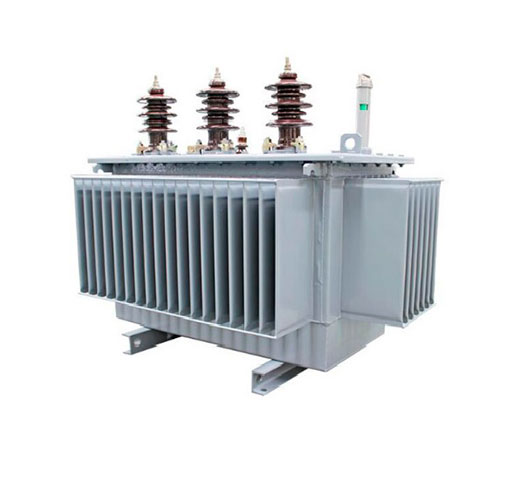
The liquid inside an oil-immersed transformer is both its insulation and its cooling system, and it is also the best diagnostic tool an operator has. This article explains how these transformers are built, how mineral oil compares with ester fluids, and how to keep the liquid healthy over decades of service.
How an Oil-Immersed Transformer Is Built
The active part, made of a laminated steel core and copper or aluminum windings insulated with cellulose paper and pressboard, sits in a steel tank filled with insulating liquid. The liquid fills every gap in the paper insulation, raising its dielectric strength, and carries heat from the windings to the tank walls, radiators or coolers.
Two tank designs are common:
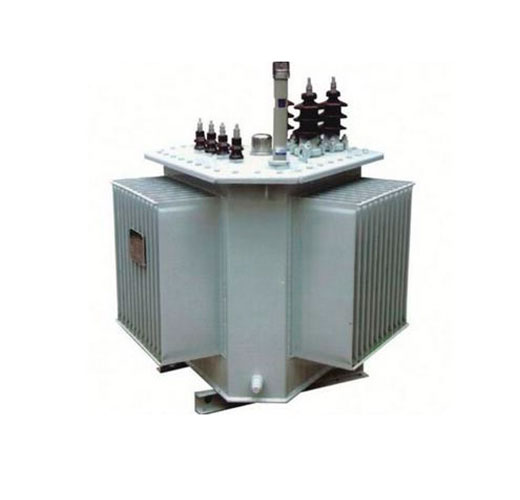
- Conservator (free-breathing) type: an expansion tank above the main tank absorbs volume changes as the oil heats and cools. Air enters through a silica-gel breather, and a Buchholz relay detects gas from internal faults. Most power transformers use this design.
- Hermetically sealed type: the tank is completely filled and sealed; corrugated walls flex to absorb expansion. Oil never contacts air, so oxidation and moisture ingress are minimal. This is the norm for distribution transformers up to a few MVA.
Cooling Classes
IEC 60076-2 describes cooling with a four-letter code: internal medium and its circulation, then external medium and its circulation.
| Code | Meaning | Typical use |
|---|---|---|
| ONAN | Oil natural, air natural | Distribution and smaller power transformers |
| ONAF | Oil natural, air forced (fans on radiators) | Power transformers needing a second, higher rating |
| OFAF / ODAF | Oil forced or directed by pumps, air forced | Large transmission and generator transformers |
| KNAN | Less-flammable liquid (e.g. ester), natural cooling | Ester-filled distribution units |
Temperature Limits That Protect the Insulation
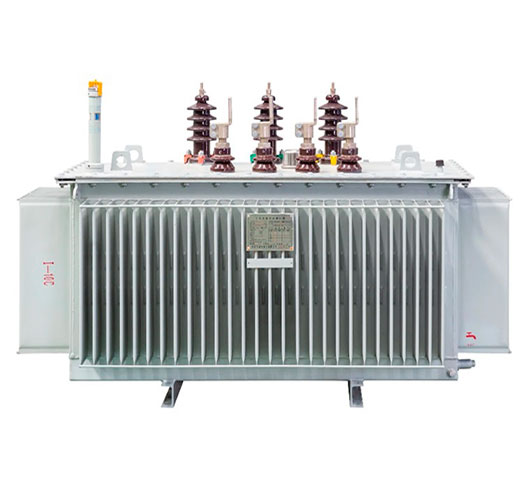
Paper insulation, not the oil, usually limits transformer life. Under IEC 60076-2, at a maximum ambient of 40 °C, the standard limits are a top-oil temperature rise of 60 K and an average winding rise of 65 K. The IEC 60076-7 loading guide uses a reference hot-spot of 98 °C for normal paper and 110 °C for thermally upgraded paper. Every 6-7 K above this roughly doubles the aging rate. Keeping hot-spot temperature, oxygen and moisture low is the essence of long transformer life.
Mineral Oil vs Ester Fluids
| Property | Mineral oil (IEC 60296) | Natural ester (IEC 62770) | Synthetic ester (IEC 61099) |
|---|---|---|---|
| Origin | Refined petroleum | Vegetable oils (e.g. soybean, rapeseed) | Synthesized from chemicals |
| Fire point | About 160-170 °C (O class) | Above 300 °C (K class) | Above 300 °C (K class) |
| Biodegradability | Poor | Readily biodegradable | Readily biodegradable |
| Moisture tolerance | Low | High; dries paper insulation | High |
| Oxidation stability | Good (inhibited grades) | Lower; best in sealed tanks | Very good |
| Viscosity | Low | Higher; needs cooling design allowance | Higher |
| Cost | Lowest | Medium | Highest |
Ester fluids are now widely chosen for transformers near buildings, in environmentally sensitive areas, on wind turbines and in urban substations. Their high fire point can reduce the need for fire walls and deluge systems, and their moisture tolerance slows paper aging. Retrofilling existing mineral-oil units with ester is possible but should be checked with the manufacturer.
Oil Testing: What the Liquid Tells You
A small oil sample, taken correctly into a clean syringe or bottle, reveals much about the transformer’s condition. IEC 60422 gives guidance on test selection, frequency and action limits for mineral oil in service.
- Breakdown voltage (IEC 60156): falls with moisture and particles.
- Water content: high water lowers dielectric strength and accelerates paper aging.
- Acidity and interfacial tension: track oxidation and sludge formation.
- Dielectric dissipation factor (tan δ): rises with contamination and aging products.
- Dissolved gas analysis (DGA, IEC 60599): gases such as hydrogen, methane, ethylene and acetylene point to partial discharge, overheating or arcing, often months before failure.
- Furan analysis: indicates the degree of paper degradation and remaining life.
Typical practice is an annual sample for power transformers, more often after a fault or for critical units. Sealed distribution transformers are often sampled only if a problem is suspected.
A Practical Care Plan
- Inspect for oil leaks at gaskets, valves and radiators; repair promptly.
- Check oil level and temperature gauges; record maximum readings.
- Replace silica gel in the breather when it changes color.
- Check the Buchholz relay, pressure relief device and winding temperature indicators.
- Keep radiators and fans clean and working.
- Sample and test oil on schedule; trend the results.
- Treat oil (filtration, degassing, drying) or regenerate it when test results reach action limits.
- Maintain the bund or oil pit so that any spill is contained.
Online Monitoring
Online DGA monitors, moisture-in-oil sensors, fiber-optic hot-spot probes and bushing monitors give continuous insight into large transformers. Combined with load data and a thermal model, they let operators run units closer to their real capability and plan interventions before failures occur. Smaller utilities increasingly fit compact single-gas or multi-gas sensors on key distribution and primary substation units.
Frequently Asked Questions
How often should transformer oil be replaced?
Rarely. Well-maintained oil can last the life of the transformer with periodic treatment. Replacement or regeneration is based on test results, not on age alone.
Can mineral oil and ester be mixed?
They are miscible, but mixing changes properties such as fire point. Follow manufacturer guidance for retrofills, which usually limit residual mineral oil.
What does acetylene in DGA mean?
Acetylene usually indicates high-energy arcing. Any significant or rising value calls for urgent investigation.
Work with METTZ Group
METTZ Group offers a wide range of oil-immersed transformers to suit many needs – from hermetically sealed distribution units to substation power transformers up to 220 kV, with versions for mining and tropical conditions, plus transformer components. Check out our website to learn more, or contact METTZ Group today to work with a representative.
