
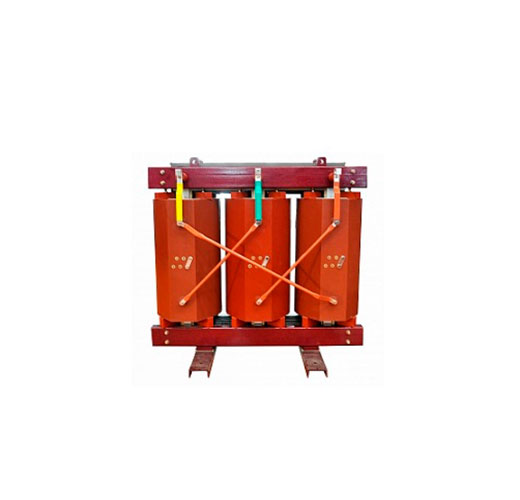
Dry-type transformers need less care than oil units, but “low maintenance” is not “no maintenance”. This checklist sets out what to inspect while energized, what to do during a shutdown, which tests to run and how digital monitoring can stretch inspection intervals.
Why Dry-Type Units Still Need Attention
The main enemies of a dry-type transformer are heat, dirt, moisture and loose connections. Dust on coils blocks cooling ducts and, combined with humidity, creates tracking paths across the resin surface. Loose bolted joints overheat. Failed fans or a blocked room vent push winding temperatures beyond design. All of these are easy to find early and expensive to find late.
Recommended Intervals
| Task | Clean, dry indoor site | Dusty, humid or industrial site |
|---|---|---|
| Visual and temperature check (energized) | Monthly | Weekly to monthly |
| Infrared thermography | Annually | Every 6 months |
| Shutdown, cleaning and torque check | Every 2-3 years | Annually |
| Electrical tests (IR, ratio, resistance) | Every 3-5 years or after a fault | Every 1-2 years |
Always follow the manufacturer’s manual first; these intervals are typical starting points. Sites with good online monitoring can often extend them.
Checklist 1: While the Transformer Is Energized
Stay outside the enclosure and keep the safety distances for the voltage level. The surface of a cast coil may be at a dangerous potential.
- Read the winding temperature controller. Note maximum values and any alarm history. Compare with the load at the time.
- Check that cooling fans start and stop at their set points, if fitted.
- Listen for changes in sound: rattling, buzzing or crackling can indicate loose parts or discharge.
- Look for discoloration, tracking marks or carbon traces on coils, and for smell of overheated insulation.
- Check room ventilation: inlet and outlet grilles clear, filters clean, room temperature within limits.
- Confirm the enclosure is closed, doors interlocked and warning labels legible.
- Carry out infrared thermography of connections and coil surfaces through inspection windows where available. Hot spots of more than about 10 K above similar points deserve investigation.
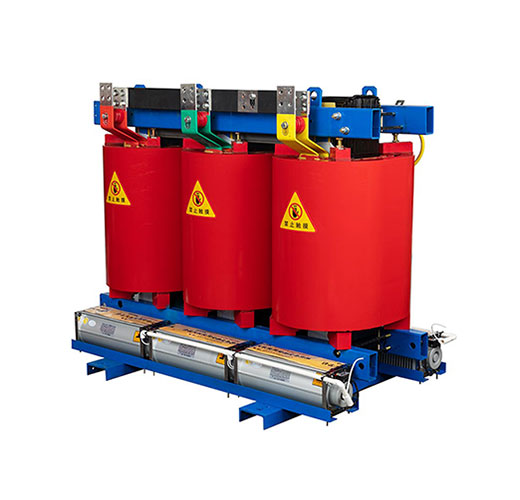
Checklist 2: During a Planned Shutdown
Isolate and earth
- Open the upstream circuit breaker and the LV main switch; lock out and tag both.
- Verify absence of voltage with a suitable tester, then apply earthing on the HV and LV sides using the earthing switch or portable earths.
- Watch for back-feed from generators, UPS systems or PV inverters on the LV side.
Clean
- Remove dust from coils, cooling ducts, core and enclosure with a vacuum cleaner and dry, oil-free compressed air at low pressure.
- Wipe resin surfaces with a lint-free cloth; use only cleaning agents approved by the manufacturer.
- Clean or replace enclosure air filters.
Inspect and tighten
- Check torque on HV and LV terminals, tap links, busbar joints and earth connections, using the values in the manual.
- Inspect coil spacer blocks and elastic pads; replace any that are cracked or displaced.
- Check core clamping bolts and frame for corrosion; touch up coatings.
- Look for cracks in cast resin, especially near terminals and at the coil ends.
- Confirm that tap link positions are equal on all three phases.
- Test the temperature relay: simulate alarm and trip, and check that the trip signal reaches the breaker.
- Check that the PT100 sensors read plausibly against each other.
Checklist 3: Electrical Tests
- Insulation resistance: HV to LV plus earth, LV to HV plus earth, and core to earth where accessible, typically with a 2.5 kV or 5 kV tester for the HV winding. Correct to a reference temperature and compare with earlier readings rather than a single absolute value.
- Polarization index (PI) or dielectric absorption ratio: the ratio of 10-minute to 1-minute readings (PI) or 60-second to 30-second readings indicates surface moisture and contamination.
- Turns ratio: should be within ±0.5% of nameplate on each tap and phase. Deviations point to shorted turns.
- Winding resistance: phases should match closely; differences reveal poor joints or tap link problems.
- Partial discharge: recommended for critical units or after a fault; rising PD in a cast coil indicates voids or cracks.
If the unit has stood de-energized in a humid place, check insulation resistance before re-energizing. A short drying period with heaters or reduced-voltage heating may be required.
From Calendar to Condition: Digital Monitoring
Modern temperature controllers communicate over Modbus or IEC 61850 and can feed a SCADA or building management system. Adding load current, room temperature and fan status lets operators see trends instead of snapshots. Online partial discharge sensors are increasingly fitted to critical units in data centres and hospitals. With this data, maintenance shifts from fixed intervals to condition-based decisions, reducing both unplanned outages and unnecessary shutdowns.
Common Problems and Likely Causes
- High winding temperature: overload, harmonics, blocked ventilation, fan failure.
- Hot connection: loose bolts, corroded contact surfaces, undersized cable lugs.
- Low insulation resistance: dust plus humidity, condensation after a long shutdown.
- Increased noise: loose clamping, displaced spacer blocks, overvoltage.
Frequently Asked Questions
Can I clean a dry-type transformer with water?
No. Use a vacuum, dry compressed air and dry cloths. Water and solvents can damage insulation and leave conductive residues.
What insulation resistance value is acceptable?
Use the manufacturer’s guidance and, above all, the trend. A sharp drop from previous readings at similar temperature is more significant than any single number.
Do dry-type transformers need oil testing?
No. There is no liquid. Diagnostics rely on thermal checks, insulation tests and partial discharge measurement.
Work with METTZ Group
METTZ Group offers a wide range of dry-type transformers to suit many needs – from standard cast resin units to designs for mining and tropical conditions, plus transformer components and spare parts. Check out our website to learn more, or contact METTZ Group today to work with a representative.
