
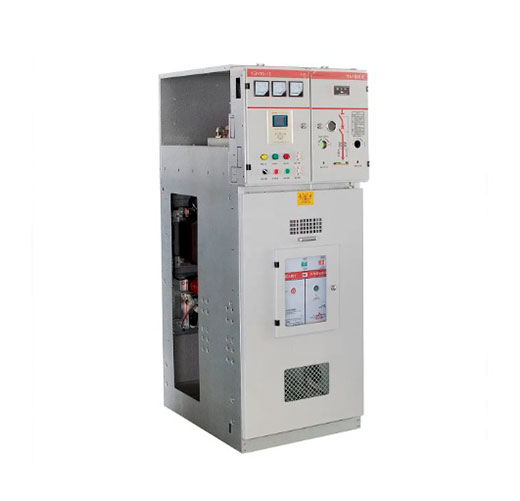
The IP code on a switchgear datasheet is short, but it drives safety, reliability, cooling and cost. This guide decodes IEC 60529 for medium-voltage enclosures, explains how IK impact ratings complement it, and shows which level fits which site.
How to Read an IP Code
IEC 60529 defines the “International Protection” code. It has the letters IP, two digits and, optionally, extra letters:
- First digit (0-6): protection of people against access to hazardous parts and protection of the equipment against solid foreign objects.
- Second digit (0-8): protection against harmful ingress of water.
- X: used in place of a digit when that characteristic is not specified, as in IP3X.
- Additional letter (A-D): access protection only, when it is higher than the first digit indicates.
- Supplementary letter: for example W for specified weather conditions.
| First digit | Protection against solid objects | Second digit | Protection against water |
|---|---|---|---|
| 2 | Objects ≥ 12.5 mm; finger | 0 | No protection |
| 3 | Objects ≥ 2.5 mm; tool | 1 | Vertically falling drops |
| 4 | Objects ≥ 1.0 mm; wire | 2 | Drops with enclosure tilted up to 15° |
| 5 | Dust-protected (limited ingress, no harmful deposit) | 3 | Spraying water up to 60° from vertical |
| 6 | Dust-tight | 4 | Splashing water from any direction |
| 5 | Water jets |
An important detail: for medium voltage, “access to hazardous parts” means getting close enough to cause a flashover, not only touching. The test probe must stay outside the clearance distance for the rated voltage, so an MV enclosure rated IP4X must keep a 1 mm wire from reaching that danger zone.
What IEC 62271-200 Requires
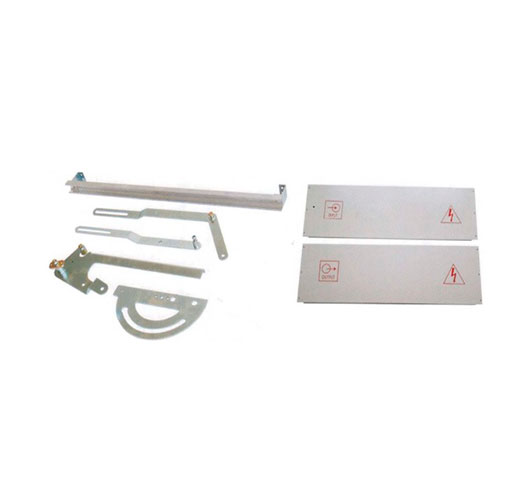
The product standard for metal-enclosed AC switchgear from 1 kV up to and including 52 kV sets the floor. The external enclosure must provide at least IP2X. Partitions and shutters between compartments also carry an IP rating, which matters during maintenance when one compartment is open and its neighbor is live. Manufacturers state the IP code for the enclosure and, separately, for partitions and shutters with doors open.
In practice, most modern indoor MV panels are offered at IP3X or IP4X externally, with IP2X between compartments. Outdoor equipment is usually IP54 or higher and must pass additional weatherproofing tests.
IP3X, IP4X and IP54 Compared
| Rating | Keeps out | Water | Typical use | Trade-off |
|---|---|---|---|---|
| IP3X | Tools and objects ≥ 2.5 mm | Not specified | Clean, dry, access-controlled electrical rooms | Gaps allow small insects and fine dust |
| IP4X | Wires and objects ≥ 1 mm | Not specified | Most commercial and industrial indoor substations, data centers | Smaller vent openings; slightly reduced cooling |
| IP41 / IP42 | Objects ≥ 1 mm | Dripping water | Rooms with risk of condensation drip or leaking pipes | Needs drip-proof roofs and vent hoods |
| IP54 | Dust-protected | Splashing water | Dusty plants, mines, cement works, outdoor kiosks | Ventilation is restricted, so current may need derating |
| IP55 / IP65 | Dust-protected or dust-tight | Water jets | Washdown areas, offshore, harsh outdoor sites | Usually requires a sealed or heat-exchanger design |
When IP3X is enough
IP3X suits switchgear rooms that are dry, clean, locked and maintained, where only authorized personnel enter. It allows generous ventilation, so panels run cooler at high currents.
Why IP4X is the common default
IP4X blocks thin wires and most insects and small rodents, which are a real cause of flashovers in MV panels. The cost difference compared with IP3X is small, which is why many utilities and data center operators specify IP4X as standard.
When to go to IP54 or above
Choose IP54 when dust is conductive or abrasive, when the room cannot be kept clean, or when water may splash during cleaning or storms. Mining, steel, cement and outdoor installations are typical. Remember that sealing a panel traps heat: ask the supplier for the rated normal current at the chosen IP rating, not only the open-ventilated value.
IP and Heat: The Hidden Trade-Off
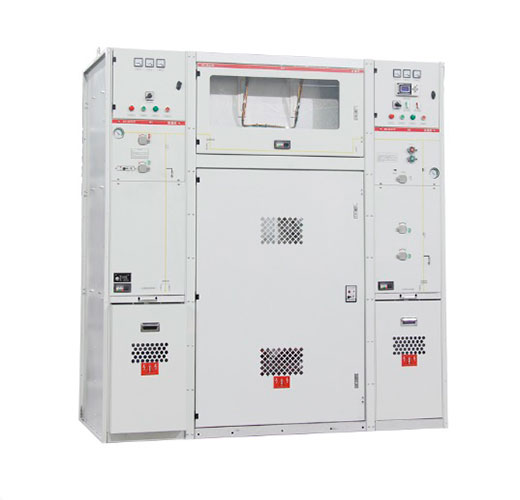
Medium-voltage panels lose heat through contacts, busbar joints and current transformers. Natural ventilation through louvers removes most of it. Every step up in IP rating means smaller or filtered openings and higher internal temperatures. Options to keep the rating without losing current capacity include:
- Larger busbar cross-sections and silver-plated joints to reduce losses.
- Labyrinth-style vents that block water and objects but still allow airflow.
- Forced ventilation with filters, or air-conditioned rooms.
- Gas- or solid-insulated designs, where the primary circuit is sealed and the external IP rating is easier to achieve. See our gas-insulated switchgear and solid-insulated switchgear.
Also check that pressure relief flaps for internal arc venting do not compromise the declared IP rating in normal service. At high-altitude or very hot sites, the derating effects of a higher IP code and of the environment add up, so they should be assessed together rather than one at a time.
IK Codes: Protection Against Impact
IP says nothing about mechanical strength. That is covered by the IK code in IEC 62262, which states the impact energy an enclosure withstands without losing its protective properties.
| IK code | Impact energy | Typical application |
|---|---|---|
| IK07 | 2 J | Indoor switchgear in restricted rooms |
| IK08 | 5 J | Indoor areas with forklift or tool traffic |
| IK09 | 10 J | Industrial plants, semi-public areas |
| IK10 | 20 J | Outdoor kiosks, public areas, vandal-prone sites |
A complete enclosure specification therefore reads something like “IP4X, partitions IP2X, IK08” for an indoor panel, or “IP54, IK10” for an outdoor kiosk. For prefabricated and compact designs, see our substations.
Common Specification Mistakes
- Over-specifying: demanding IP65 for a clean indoor room adds cost and heat with no benefit.
- Forgetting the cable entry: an IP54 panel on an open cable trench is not IP54 in practice. Seal glands, floor plates and trenches.
- Ignoring open-door conditions: ask for the IP rating of partitions and shutters, which protects staff during work on an adjacent compartment.
- Confusing IP with internal arc classification: a high IP code does not mean the enclosure will contain an internal arc. That is a separate IAC rating under IEC 62271-200.
- Mixing NEMA and IP: NEMA enclosure types used in North America are not direct equivalents of IP codes; compare test requirements, not labels.
Frequently Asked Questions
Is IP4X better than IP3X?
It offers finer protection (1 mm instead of 2.5 mm objects) at little extra cost. Whether it is “better” depends on whether insects, wires or small debris are a risk at your site.
Does IP54 make switchgear suitable for outdoor use?
Not by itself. Outdoor equipment must also handle UV, solar heating, condensation, pollution and impact, and pass weatherproofing tests. IP54 is one part of an outdoor design.
What does the letter D in IP2XD mean?
It means the enclosure prevents access to hazardous parts with a 1 mm wire, even though protection against solid objects is only declared at the IP2X level.
Where should the IP rating be stated?
In the technical data and on the nameplate or documentation, separately for the enclosure and for partitions and shutters.
Work with METTZ Group
METTZ Group offers a wide range of medium-voltage switchgear to suit many needs – from ventilated IP3X and IP4X panels for electrical rooms to sealed gas-insulated units and outdoor kiosks for dusty and wet sites. Check out our website to learn more, or contact METTZ Group today to work with a representative.
