
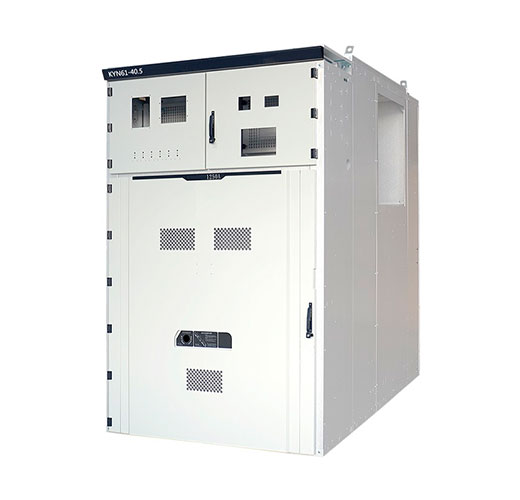
An internal arc is the most violent failure a switchgear panel can suffer. This article explains how IEC 62271-200 and IEEE C37.20.7 classify arc-resistant designs, what an “IAC AFLR 25 kA 1 s” rating really promises, and which measures reduce the incident energy workers are exposed to.
What Happens During an Internal Arc
An internal arc fault occurs when insulation fails inside an enclosure and current flows through the air between phases or to earth. The arc can reach temperatures several times hotter than the surface of the sun. Within milliseconds it vaporizes copper, heats the gas in the compartment and creates a pressure wave that can blow doors open, throw parts and expel hot gases and molten metal.
Common triggers include insulation aging, condensation and dirt, loose connections, animals, tools left behind after maintenance and operating errors such as closing onto an earthed circuit. Good design and maintenance make arcs rare, but no design makes them impossible. Arc-resistant switchgear accepts that and controls the consequences.
Internal Arc Classification Under IEC 62271-200
IEC 62271-200 covers metal-enclosed switchgear from above 1 kV up to and including 52 kV. Its internal arc classification (IAC) is optional, but it is now specified in most industrial, utility and data center projects. An IAC rating is proven by a type test in which an arc is deliberately ignited inside each compartment at the rated current and duration.
Reading the IAC code
A typical rating looks like IAC AFLR 25 kA 1 s. Each part has a meaning:
| Element | Meaning |
|---|---|
| A | Accessibility type A: access restricted to authorized personnel only |
| B | Accessibility type B: unrestricted access, including the general public |
| C | Accessibility type C: restricted by installation out of reach, such as pole-mounted equipment |
| F, L, R | Sides proven safe: Front, Lateral (sides), Rear |
| 25 kA | Arc fault test current (rms) |
| 1 s | Arc duration in the test (commonly 0.1 s to 1 s) |
So “IAC AFLR” means that a person standing at the front, sides or rear of the panel in an area accessible only to trained staff is protected. “IAC AF” means only the front is classified, so the rear and sides must be made inaccessible, for example by placing the panel against a wall.
The five pass criteria
- Correctly secured doors and covers do not open.
- No fragmentation of the enclosure; no parts heavier than 60 g are ejected.
- The arc does not burn holes in the accessible sides up to a height of 2 m.
- Cotton indicators placed around the panel do not ignite from hot gases.
- The enclosure remains connected to its earthing point.
The IEEE Equivalent: C37.20.7
In North America and other ANSI markets, arc-resistant metal-enclosed switchgear is tested to IEEE C37.20.7. It uses accessibility types instead of letters:
- Type 1: protection at the front only.
- Type 2: protection at front, sides and rear.
- Suffix B: protection is maintained with the low-voltage control compartment door open.
- Suffix C: the arc is contained in the compartment where it starts and does not spread to adjacent compartments.
The test philosophies are similar, but the standards are not interchangeable. A project in an ANSI market will usually ask for IEEE C37.20.7 test reports, while IEC markets ask for IEC 62271-200 IAC reports.
Where the Arc Energy Goes
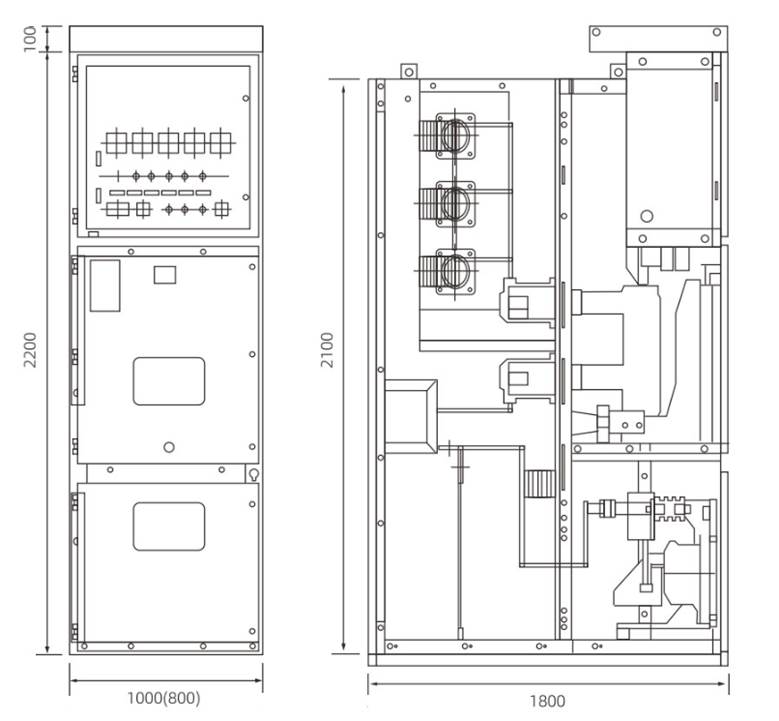
Arc-resistant design does not stop the arc. It controls the path of the pressure and hot gases:
- Reinforced enclosures, doors and hinges with multi-point locking.
- Pressure relief flaps at the top of each compartment.
- Arc ducts or plenums that lead gases away, often outside the building.
- Arc absorbers or cooling filters that reduce gas temperature where ducting is not practical.
The room matters too. The IAC test is valid only for the installation conditions it was tested with: minimum ceiling height, distance to walls and the venting arrangement. Building engineers should also check that walls and the roof can withstand the pressure rise in the room, especially in small compact substations.
Arc-Resistant Does Not Mean Arc-Flash-Free
IAC protection applies when the panel is in normal operating condition with all doors closed and secured. Once a door is opened for racking, testing or maintenance, the classification no longer protects the worker. That is why incident energy, measured in cal/cm², still has to be assessed under IEEE 1584 and NFPA 70E in ANSI markets, or equivalent national rules elsewhere.
Incident energy depends mainly on arcing current, distance from the arc and, above all, clearing time. Halving the time an arc burns roughly halves the energy released. That makes speed the most effective lever.
Practical Ways to Reduce Incident Energy
| Measure | How it helps | Typical effect |
|---|---|---|
| Arc flash detection relays (light plus overcurrent) | Trip the breaker without waiting for time-graded protection | Total clearing in the order of 50-100 ms instead of several hundred ms |
| Bus differential or zone-selective interlocking | Fast, selective tripping for busbar faults | Removes intentional grading delays |
| Maintenance mode switch | Temporarily sets instantaneous protection while staff work nearby | Lower energy during the riskiest tasks |
| Active arc quenching devices | Create a controlled low-impedance path within a few milliseconds, extinguishing the arc before the breaker opens | Very low arc energy; useful in high-fault-level systems |
| Remote racking and remote operation | Keep people outside the arc flash boundary | Reduces exposure rather than energy |
| Current-limiting fuses | Limit let-through energy on fused circuits | Effective within their current-limiting range |
Active arc quenching (sometimes called arc elimination) equipment has its own US product standard, UL 2748 for arcing fault quenching equipment. It works alongside, not instead of, a properly rated upstream vacuum circuit breaker, which still has to clear the fault.
Prevention Still Comes First
The cheapest arc is the one that never strikes. Design choices and maintenance practices that reduce the probability of an internal fault include:
- Solid- or gas-insulated designs that enclose live parts, such as solid-insulated switchgear.
- Reliable mechanical interlocks that prevent closing onto earth or racking under load.
- Condensation control with heaters and sealed cable entries.
- Regular thermography and partial discharge surveys to catch degrading insulation and joints.
- Correct torque on cable terminations and busbar joints, verified after installation.
Specifying Arc-Resistant Switchgear
- Choose the accessibility type and sides that match the room layout: AFLR for free-standing panels with rear access, AF for wall-mounted lines.
- Set the arc test current at least equal to the prospective short-circuit current at the busbar.
- Choose the arc duration with your protection settings in mind; 1 s gives the widest margin, while shorter durations require fast, reliable protection.
- Request the type test report and the installation conditions it covers, including the venting route.
- Combine the passive IAC rating with active measures such as arc flash relays.
Frequently Asked Questions
Is internal arc classification mandatory?
IEC 62271-200 treats it as an optional rating, but many utilities, national rules and project specifications require it, especially where people work near the switchgear.
What is the difference between IAC AF and IAC AFLR?
AF protects people at the front only. AFLR protects at the front, sides and rear, which is needed when people can walk around the panel.
Does arc-resistant switchgear remove the need for arc flash PPE?
Only for normal operation with doors closed. Any task with doors open, covers removed or racking at the panel still needs an arc flash risk assessment and suitable PPE.
How fast must protection be to make a real difference?
Reducing clearing time from 500 ms to around 70 ms with an arc flash relay cuts incident energy by roughly a factor of seven, often enough to move work into a lower PPE category.
Work with METTZ Group
METTZ Group offers a wide range of medium-voltage switchgear to suit many needs – from air-insulated panels with internal arc classification to compact gas- and solid-insulated designs for space-limited substations. Check out our website to learn more, or contact METTZ Group today to work with a representative.
