
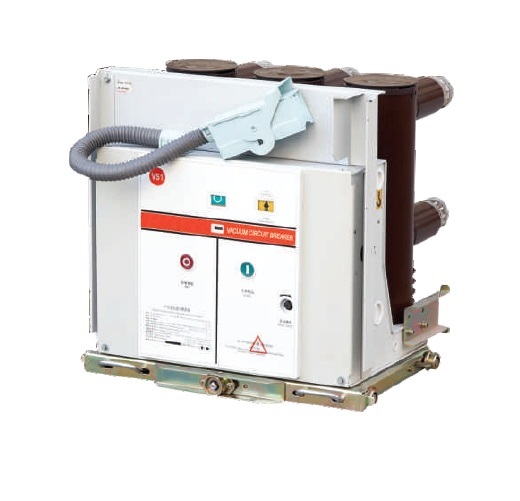
Vacuum circuit breakers (VCBs) protect most of the world’s new medium-voltage feeders. This article walks through what happens inside a VCB when it trips, the parts that matter, a practical maintenance routine and how indoor, outdoor and mining versions differ.
The Short Version: Why Vacuum Works
When two current-carrying contacts separate, an arc forms between them. In air, oil or gas, the arc burns in a medium that must be cooled and de-ionized. In a vacuum there is almost nothing to ionize except the metal vapor released from the contacts themselves.
As alternating current falls toward its natural zero, vapor production stops, the vapor condenses on the contacts and the surrounding shield within microseconds, and the gap recovers its dielectric strength very quickly. The arc does not restrike, and the current is interrupted at the first or second current zero after contact separation.
What Is Inside a VCB
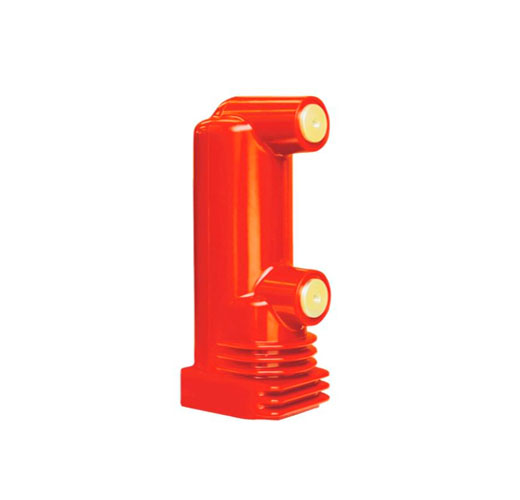
A VCB combines one vacuum interrupter per phase with an operating mechanism and an insulating structure.
- Vacuum interrupter. A sealed ceramic envelope holding a fixed contact, a moving contact, metal bellows and a vapor shield. Internal pressure is typically around 10-7 hPa or lower.
- Contacts. Usually a copper-chromium (CuCr) alloy on oxygen-free copper. Slotted radial- or axial-magnetic-field contact designs keep the arc moving and limit erosion.
- Pole assembly. Either an interrupter mounted in an open insulating frame, or an embedded pole where the interrupter is cast into epoxy resin or another solid insulation for protection against dust, humidity and mechanical damage.
- Operating mechanism. A spring-stored energy or permanent-magnet mechanism that moves the contacts a few millimetres – typically around 8-12 mm at 12 kV – at a controlled speed and applies contact pressure in the closed position.
- Secondary equipment. Trip and close coils, a charging motor, auxiliary switches, an operation counter and mechanical position indicators.
The protection relay, not the breaker, detects faults. Older texts mention “thermal and magnetic trips” – those belong to low-voltage breakers. An MV VCB opens on a command from a relay fed by current and voltage transformers.
Step by Step: One Trip Operation
- The relay detects overcurrent or an earth fault and energizes the shunt trip coil.
- The trip coil releases the latch; the opening spring drives the moving contacts apart.
- A metal-vapor arc forms and is driven around the contact faces by its own magnetic field.
- At current zero the arc extinguishes; the gap withstands the transient recovery voltage.
- Auxiliary contacts signal “open” to the control system; the mechanism is ready for the next operation in the rated sequence.
Total break time is typically about 40-60 ms, depending on the design and the instant of fault inception.
Strengths and Limitations
Strengths
- Long mechanical life, commonly 10,000 operations (class M2), with some designs rated higher
- Sealed-for-life interrupters: no gas filling, no oil, no arc products released
- Very low fire risk and no greenhouse gas
- Compact poles that fit narrow switchgear and ring main units
- Suitable for frequent switching of motors, capacitor banks and arc furnaces
Limitations
- Interrupters cannot be repaired on site; a damaged bottle is replaced as a unit.
- Switching small inductive currents can cause current chopping or multiple re-ignitions. Motors and dry-type transformers are often protected with surge arresters or RC snubbers.
- Above about 52 kV, vacuum is still less common than SF6 or newer gas alternatives, although vacuum breakers rated 72.5 kV and 145 kV are now in service.
A Practical VCB Maintenance Routine
VCBs need far less attention than oil or air breakers, but “maintenance-free” applies to the interrupter, not to the whole breaker. Always follow the manufacturer’s manual. A typical program looks like this:
| Check | Purpose | Typical trigger |
|---|---|---|
| Visual inspection and cleaning of insulation | Remove dust and moisture that cause tracking | Annually or per site conditions |
| Contact wear indicator or stroke measurement | Confirm remaining contact erosion margin | Every service and after heavy fault duty |
| Main circuit resistance (micro-ohm test) | Detect loose joints or worn contacts | Every service |
| Vacuum integrity check (power-frequency withstand across open gap) | Confirm the interrupter still holds vacuum | Periodic or after suspected damage |
| Timing and travel test | Verify opening/closing times and contact speed | Periodic, or when counter reaches set values |
| Mechanism lubrication and spring charging test | Keep latches, linkages and motor reliable | Per manufacturer’s interval |
| Coils, auxiliary contacts and interlocks | Ensure remote trip and safety functions work | Every service |
Modern breakers increasingly add condition monitoring: coil current signatures, travel sensors, temperature sensors and operation counters reported to SCADA. This allows condition-based maintenance instead of fixed calendar intervals.
Indoor, Outdoor and Mining VCBs
Indoor VCBs
Indoor vacuum circuit breakers are mounted on withdrawable trucks in metal-clad air-insulated switchgear or fixed inside compact panels and RMUs. Withdrawable designs allow fast replacement and testing in the “test” position. They serve substations, industrial plants, data centres, hospitals and commercial buildings.
Outdoor VCBs
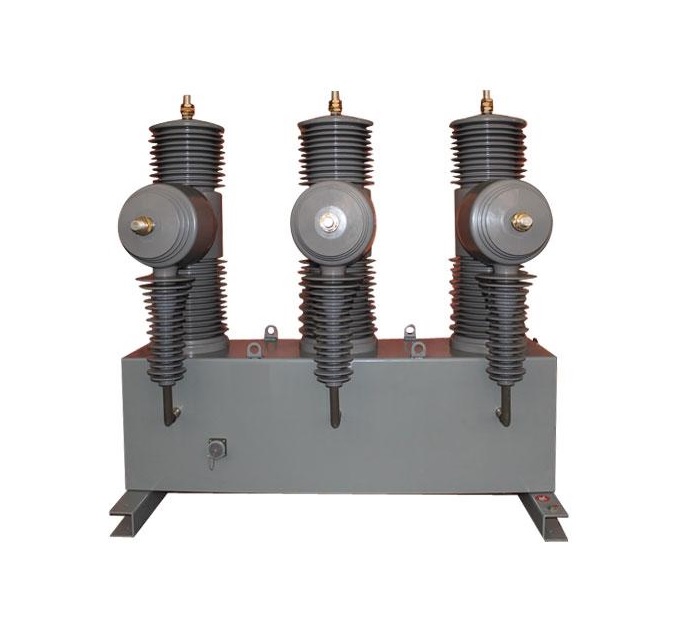
Outdoor vacuum circuit breakers are pole-mounted or post-mounted on overhead lines and in outdoor substations. They often combine a controller with auto-reclosing and sectionalizing functions, which restore supply automatically after transient faults such as lightning or tree contact. Housings and insulation are designed for UV, rain, pollution and wide temperature swings.
Mining VCBs
Mining vacuum circuit breakers are built for underground and open-pit operations: robust enclosures against dust, moisture and vibration, compact dimensions for confined spaces and, where required by local regulation, explosion-protected housings. Because the arc stays inside the sealed interrupter, vacuum is a natural fit where hot gases or flames must never escape.
Other common applications
- Motor feeders for pumps, fans, compressors and conveyors
- Capacitor bank switching and harmonic filters
- Railway traction substations
- Solar, wind and battery energy storage collection systems
Frequently Asked Questions
How long does a vacuum interrupter last?
Field experience shows interrupters with ceramic housings keep their vacuum for 30 years and more. Contact erosion and mechanical operations usually define the end of life.
How do you know a VCB has lost vacuum?
A power-frequency withstand test across the open contacts, or a magnetron test, will reveal it. A bottle that has lost vacuum will flash over at a much lower voltage.
Is a VCB suitable for DC?
Standard AC VCBs rely on current zero and are not rated for DC. DC interruption needs special designs with forced current zero.
What voltage range suits a VCB?
VCBs are the standard choice from 3.6 kV to 40.5 kV and are increasingly used at higher voltages.
Work with METTZ Group
METTZ Group offers a wide range of vacuum circuit breakers to suit many needs – from indoor withdrawable units for switchgear to outdoor pole-mounted breakers and mining versions, including designs for tropical conditions. Check out our website to learn more, or contact METTZ Group today to work with a representative.
