
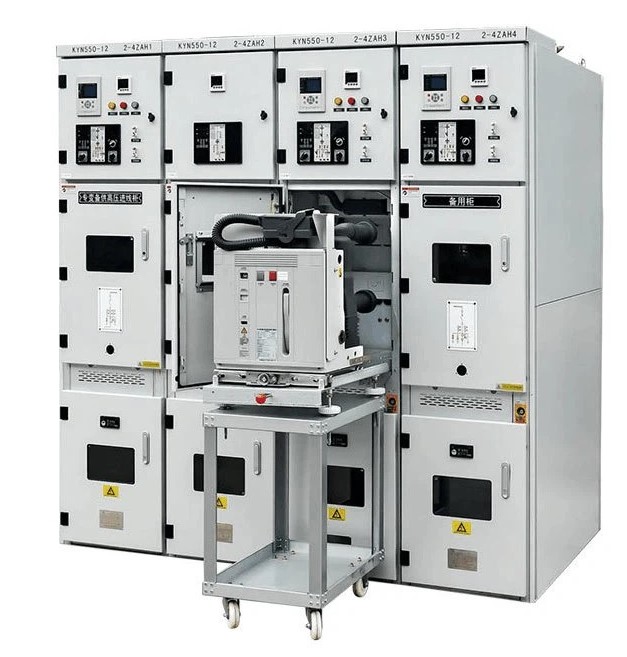
Every kilowatt delivered to a factory, hospital or solar farm passes through several switchgear line-ups on the way. This article shows where switchgear sits in a distribution system, what each panel does, and which ratings to put in a specification so the equipment fits the network.
Where switchgear sits in the network
A distribution network is a chain of voltage levels, and switchgear marks every node where circuits branch or change hands:
- Primary substation. HV/MV transformers (for example 110/10 kV) feed an MV switchboard. Each outgoing feeder supplies a part of the city or an industrial area.
- MV distribution feeders. Along cable rings and overhead lines, ring main units and compact switchgear allow sections to be isolated and supply to be rerouted.
- Secondary (MV/LV) substations. A transformer feeder protects the distribution transformer, which steps voltage down to 400/230 V.
- LV main switchboard. Air circuit breakers and moulded case breakers distribute power to the consumer’s installation.
At each level, switchgear has the same three tasks: carry load current continuously, interrupt fault current quickly, and provide a visible, lockable isolation point for safe work.
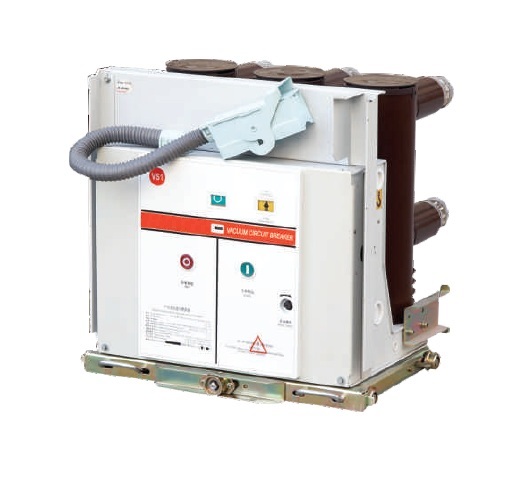
The functional units inside a switchgear line-up
A switchboard is built from standardized panels, each with a defined function:
- Incomer: connects the supply (transformer or utility cable) to the busbar, usually through a circuit breaker with main protection.
- Outgoing feeder: supplies a cable or line; protected by overcurrent and earth-fault relays.
- Bus section or bus coupler: splits the busbar so half the board can be de-energized while the other half stays in service.
- Transformer feeder: protects a downstream transformer with a breaker or a switch-fuse combination.
- Motor feeder: often a vacuum contactor with fuses for frequent starts.
- Capacitor feeder: switches power factor correction banks.
- Metering panel: houses current and voltage transformers for revenue or check metering.
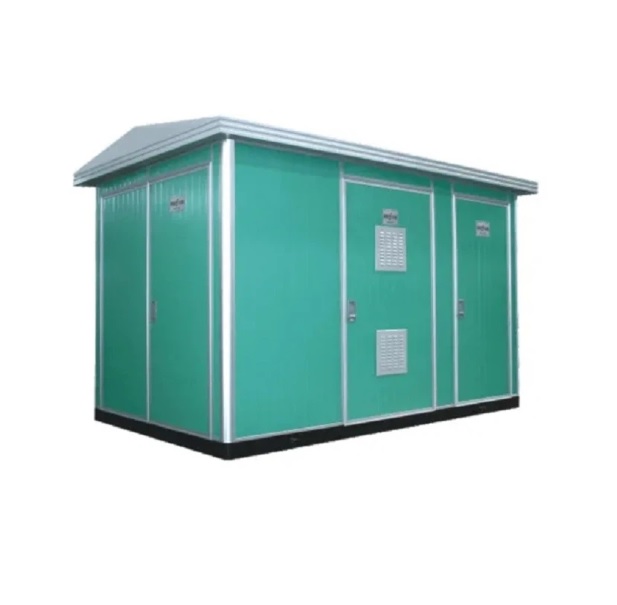
What switchgear does in different applications
Industrial plants
Process industries rely on selective protection. A fault on one motor feeder must trip only that feeder, not the whole plant. Correctly graded relays, fast breakers and a bus section let maintenance teams work on one half of the board without stopping production.
Solar, wind and storage
A PV plant collects power from inverter stations through MV collector cables to a main switching station. The switchgear protects each collector circuit, connects the plant to the grid at the point of common coupling, and must cope with bidirectional power flow when batteries are installed.
Urban and residential networks
Cities use open-ring cable networks with ring main units in compact substations. When a cable section fails, the faulty section is isolated and the ring is closed from the other side, so most customers lose power only briefly. Remote-controlled RMUs shorten this restoration time to minutes.
Power stations and data centres
Generating plants use switchgear for generator circuits, auxiliaries and grid connection. Data centres use duplicated (A/B) MV boards, automatic transfer between utility and generator supplies, and continuous monitoring, because availability is the main design criterion.
How to specify MV switchgear: a practical checklist
A clear specification prevents costly redesign later. The ratings below follow IEC 62271-1 and IEC 62271-200.
| Parameter | What to state | Typical values |
|---|---|---|
| Rated voltage (Ur) | Highest system voltage, not nominal | 12 kV for a 10-11 kV network; 24 kV for 20 kV; 40.5 kV for 35 kV |
| Insulation level | Power-frequency and lightning impulse withstand | 12 kV: 28/75 kV; 24 kV: 50/125 kV; 36 kV: 70/170 kV |
| Rated frequency | Network frequency | 50 or 60 Hz |
| Busbar rated current | Maximum continuous load plus margin | 630, 1250, 2500, 4000 A |
| Short-time withstand current and duration | From the network short-circuit study | 20, 25, 31.5 kA for 1 s or 3 s |
| Peak withstand current | 2.5 × Ik at 50 Hz, 2.6 × Ik at 60 Hz | 63 kA for 25 kA systems |
| Internal arc classification | Accessible sides, current and duration | IAC AFLR 25 kA 1 s |
| Service continuity | LSC category and partition class | LSC2B-PM for critical boards |
| Enclosure protection | IP code to IEC 60529 | IP4X enclosure, IP2X between compartments |
| Site conditions | Ambient temperature, humidity, altitude, pollution | Derating above 1,000 m; tropical or mining versions where needed |
Do not forget the “soft” requirements
- Insulation medium: air, solid, SF6 or an SF6-free gas. In the EU, new MV switchgear up to 24 kV must not use F-gases with a GWP of 10 or more under Regulation (EU) 2024/573.
- Protection and control: relay functions, auxiliary voltage (for example 110 V DC), and communication protocol such as IEC 61850 or Modbus.
- Cable connection: number and size of cables per phase, bottom or top entry, and termination type.
- Interlocking and operation: mechanical interlocks, key interlocks between panels, and whether remote or motorized racking is required.
- Space and access: available footprint, wall-mounted or free-standing, and front-only access if the room is small.
- Documentation and testing: type test certificates, routine test reports and factory acceptance testing.
Common specification mistakes
- Quoting the nominal voltage (10 kV) instead of the rated voltage (12 kV).
- Sizing the short-circuit rating for today’s network only, ignoring future transformers or generation.
- Requesting “metal-clad” without stating LSC and IAC requirements.
- Ignoring altitude and ambient temperature, which can reduce insulation margin and current rating.
Frequently Asked Questions
What is the difference between a feeder and an incomer?
An incomer brings power onto the busbar from a transformer or supply cable. A feeder takes power from the busbar to a load or downstream network.
Do I always need a circuit breaker in every panel?
No. Ring main units and small transformer feeders often use a load break switch with HV fuses. Breakers are needed where fault currents must be interrupted with relay protection or frequent switching.
Why does the rated voltage differ from the network voltage?
Rated voltage is the highest voltage the equipment is designed for. A 10 kV network can operate up to about 12 kV, so 12 kV equipment is used.
How is the short-circuit rating chosen?
From a network study at the switchgear location, including the supply, transformers, motors and generators that contribute fault current, plus a margin for future growth.
Work with METTZ Group
METTZ Group supplies and commissions distribution equipment from 1 kV up to 220 kV through local partners in 29 countries. METTZ Group offers a wide range of MV switchgear and complete substations to suit many needs – from ring main units for urban cable networks to multi-panel switchboards for industry, solar plants and data centres. Check out our website to learn more, or contact METTZ Group today to work with a representative.
