
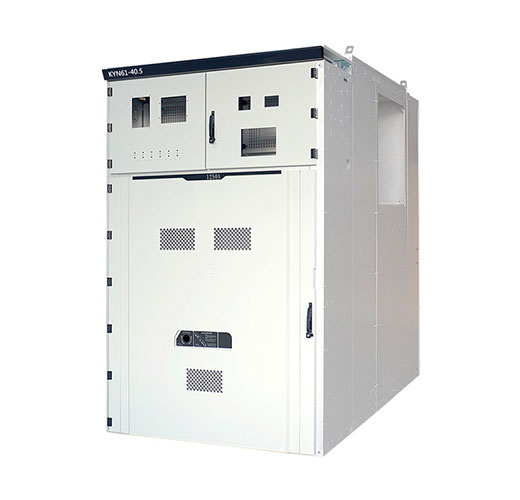
Medium-voltage switchgear is designed for decades of service, but only under the conditions it was rated for. Condensation, conductive dust, salt, corrosive gases, heat and altitude are the usual reasons panels fail early. This guide covers how to specify for difficult sites, how to install correctly, and which maintenance tasks matter most once the line-up is energized.
Start with the Rated Service Conditions
IEC 62271-1 defines “normal service conditions” for indoor switchgear. Anything outside them is a special condition that must be stated in the enquiry. The main limits are:
| Parameter | Normal indoor condition (IEC 62271-1) | What changes outside it |
|---|---|---|
| Ambient air temperature | Max 40 °C, 24-hour average max 35 °C, minimum -5 °C (class “minus 5 indoor”) | Current derating above 40 °C; low-temperature classes need checking of mechanisms, lubricants and LV devices |
| Humidity | 24-hour average relative humidity ≤ 95 %, monthly average ≤ 90 % | Higher risk of condensation, tracking and corrosion |
| Altitude | Up to 1,000 m | Air insulation weakens; higher insulation levels or altitude correction are needed |
| Pollution | No significant dust, smoke, corrosive or flammable gases, salt | Requires special design classes, sealing or room protection |
| Vibration and seismic | Negligible | Seismic qualification (IEC/IEEE 62271-210 or local codes) |
For condensation and pollution, IEC TS 62271-304 defines design classes for indoor switchgear. Class 0 covers normal conditions; Class 1 covers severe conditions where condensation and pollution occur. If a site is humid or dirty, ask for Class 1 evidence, not just a higher IP code.
The Five Enemies of Switchgear Life
1. Condensation
Water forms on cold metal and insulation when warm, moist air meets surfaces below the dew point, typically at night or after a long de-energized period. Combined with dust, it creates conductive films that lead to surface discharge, tracking and eventually flashover. Cable compartments and bushings are the usual hot spots.
2. Dust and conductive particles
Cement, coal, metal and mineral dust settle on insulators and in mechanisms. In mines and steel works, conductive dust is the main cause of insulation failure.
3. Salt and corrosive gases
Coastal air, fertilizer plants, wastewater works and paper mills carry chlorides, hydrogen sulphide and sulphur dioxide. They corrode steel, attack silver-plated contacts and damage electronics in relays.
4. Heat
As a rule of thumb, every 10 K above design temperature roughly halves the life of many insulating materials and electronic components. High ambient also reduces the current a panel can carry without exceeding the temperature-rise limits of IEC 62271-1.
5. Altitude
Thinner air lowers dielectric strength and cooling. Above 1,000 m, the required insulation level must be corrected, which often means choosing the next higher rated voltage or a solid- or gas-insulated design.
Specifying for a Difficult Site
- State the real conditions in the tender: maximum and minimum temperature, humidity, altitude, pollution type, and whether the room will be air-conditioned.
- Ask for anti-condensation heaters in breaker and cable compartments, controlled by a hygrostat or thermostat and supervised so a failed heater raises an alarm.
- Choose suitable surface protection: aluminium-zinc coated or powder-coated steel, and for coastal or chemical sites a coating system rated for the corrosivity category (ISO 12944 C4 or C5).
- Check insulation materials: epoxy or other track-resistant materials, longer creepage distances, and conformal-coated electronics.
- Specify the enclosure IP code to IEC 60529 for the room conditions, but remember that IP4X does not stop moisture or fine dust. Room design matters more.
- Consider sealed insulation: solid-insulated or gas-insulated panels are far less sensitive to dust, humidity and altitude than air-insulated busbars.
- Use mining- or tropical-rated equipment where available. METTZ Group supplies versions of its equipment for mining and tropical conditions.
Designing the Switchroom
- Keep the room clean, dry and lightly pressurized with filtered air on dusty sites.
- Seal every cable entry, trench and floor opening against water, dust and vermin.
- Plan ventilation or air-conditioning for the heat losses of the line-up and any transformers in the same room.
- Allow for the internal arc: room height, wall distances and the route of pressure relief gases must match what was used in the IAC type test.
- Keep clear operating and withdrawal space in front of the panels, and access space at the rear if the design needs it.
Installation Steps That Prevent Later Problems
- Storage: keep panels in their packaging indoors, dry and heated if the site is humid. Many insulation problems start months before energization.
- Foundation: base frames or channels must be level within the manufacturer’s tolerance along the whole line-up, or breaker trucks will bind and doors will not seal.
- Erection: align panels, bolt them together and assemble the busbars with the specified bolts and torque. Check every joint with a calibrated torque wrench.
- Cabling: use correctly sized cable terminations, support cables so they do not load the bushings, and keep bending radii.
- Earthing: connect the earth bar to the station earth at both ends of the line-up.
- Clean and inspect: remove dust, tools and packaging; check that heaters work before closing up.
Commissioning Tests
- Insulation resistance of the main circuit and secondary wiring.
- Power-frequency voltage test on site, usually at a reduced level agreed with the manufacturer.
- Main circuit resistance (micro-ohm) of contacts and busbar joints.
- Breaker timing and operation from all control positions.
- CT and VT ratio, polarity and burden checks; secondary injection of protection relays.
- Functional checks of every mechanical and electrical interlock.
Keep all results as a baseline. Later readings are only useful when compared with this first set.
Maintenance in Harsh Conditions
Intervals depend on the manufacturer’s instructions and the environment, so the figures below are typical starting points that should be shortened on dirty or humid sites.
| Task | Typical interval | Why it matters |
|---|---|---|
| Walk-through: heaters, room temperature, humidity, smells, noises | Monthly | Catches heater failures and leaks early |
| Infrared thermography through IR windows | Annually, or more often at high load | Finds loose or corroded joints |
| Partial discharge survey (TEV, ultrasonic) | Annually | Detects surface tracking and insulation defects before failure |
| Cleaning of insulation and compartments | 1-3 years, depending on pollution | Removes conductive deposits |
| Breaker mechanism check, lubrication, timing | Per manufacturer or operation count | Prevents slow or failed trips |
| Vacuum interrupter integrity and contact wear | Per manufacturer | Confirms breaking capability |
| Protection relay testing | Every few years | Confirms the system will actually trip |
Online monitoring is increasingly common. Wireless temperature sensors, continuous partial discharge sensors and humidity monitoring in each compartment let operators move from fixed intervals to condition-based maintenance, which is especially valuable on remote or hazardous sites.
Safe Working
All work must follow a written switching program and the local safety rules: isolate, lock out, prove dead, earth and only then work. Racking should be done with the door closed or remotely, and personal protective equipment selected from an arc flash or internal arc risk assessment.
Frequently Asked Questions
Are higher IP ratings enough for dusty or humid sites?
No. IP codes describe protection against solid objects and water ingress, not condensation or pollution performance. Ask for IEC TS 62271-304 Class 1 or sealed insulation, and control the room climate.
Should heaters stay on when the switchgear is energized?
Usually yes, under hygrostat or thermostat control. Load current warms the conductors but not necessarily the cable compartment walls where condensation forms.
What changes above 1,000 m altitude?
The insulation level must be corrected for lower air density, and cooling is weaker. Check both dielectric and current ratings with the manufacturer.
Work with METTZ Group
METTZ Group offers a wide range of medium-voltage switchgear to suit many needs, from standard indoor panels to designs for mining and tropical conditions, together with mining vacuum circuit breakers. Check out our website to learn more, or contact METTZ Group today to work with a representative.