
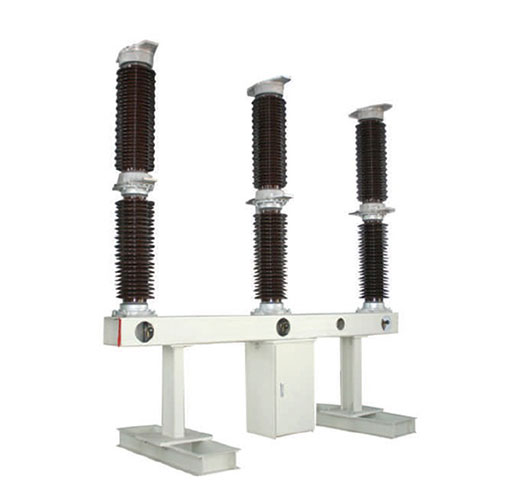
Substations are the nodes of the power grid. They change voltage, route power, isolate faults and, more and more, collect data. This article explains how substations are classified, what each piece of equipment in the yard does, and how digitalization and SF6-free technology are changing substation design.
What a Substation Does
A substation does more than “raise or lower voltage”. Its core functions are:
- Transformation between voltage levels.
- Switching: connecting and disconnecting lines, transformers and loads for operation and maintenance.
- Protection: detecting faults and tripping breakers within milliseconds, so damage and outages stay small.
- Voltage and reactive power control with tap changers, capacitor banks, reactors and FACTS.
- Measurement and control: metering, monitoring and remote operation through SCADA.
How Substations Are Classified
By function
- Generator step-up substations at power plants raise generator voltage to transmission level.
- Transmission (grid) substations link EHV lines and transform between, for example, 500 kV and 220 kV. They may include phase-shifting transformers to control power flow.
- Switching substations have no transformers. They connect or sectionalize lines at the same voltage.
- Distribution (primary) substations step down from sub-transmission to MV feeders, for example 110/20 kV or 132/11 kV.
- Secondary substations convert MV to LV for local networks, often as compact prefabricated units.
- Collector substations gather power from wind or solar farms and step it up to grid voltage.
- Converter stations link AC grids with HVDC lines or cables.
- Industrial and traction substations supply plants, mines, railways and metros.
By insulation technology
| Type | How it works | Best suited for |
|---|---|---|
| AIS (air-insulated) | Open-air conductors and equipment separated by air clearances | Rural and suburban sites with available land; lowest equipment cost |
| GIS (gas-insulated) | Live parts sealed in earthed metal enclosures filled with insulating gas | Cities, indoor and underground sites, heavy pollution; up to about 90% smaller footprint |
| Hybrid / MTS | Compact gas-insulated switching modules with air-insulated busbars | Substation extensions and retrofits |
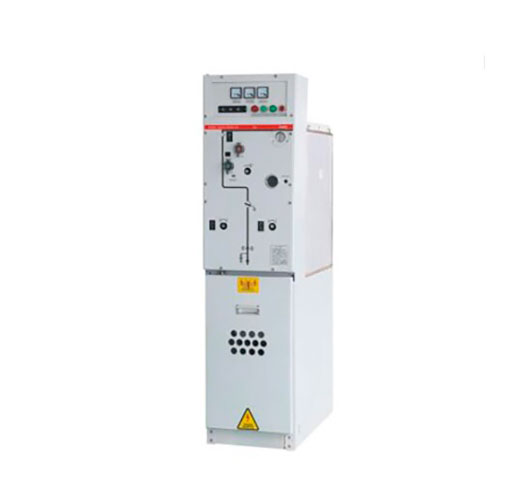
At medium voltage, the same choice applies to switchgear: air-insulated switchgear, gas-insulated switchgear, or solid- and dry-insulated designs that avoid SF6 entirely.
By construction
Substations can be outdoor, indoor, underground (common under city centres), or mobile, meaning trailer-mounted for emergencies and temporary supply.
Equipment in the Switchyard
- Power transformers change voltage. They are often fitted with on-load tap changers and monitored for dissolved gas, temperature and bushing condition (IEC 60076).
- Circuit breakers interrupt load and fault currents when protection relays detect overcurrent, differential or distance faults (IEC 62271-100). Vacuum is standard at MV. SF6 and newer SF6-alternative designs dominate at HV.
- Disconnectors provide a visible isolation gap for safe maintenance. They are not designed to break load current.
- Earthing switches connect isolated equipment to earth before anyone works on it.
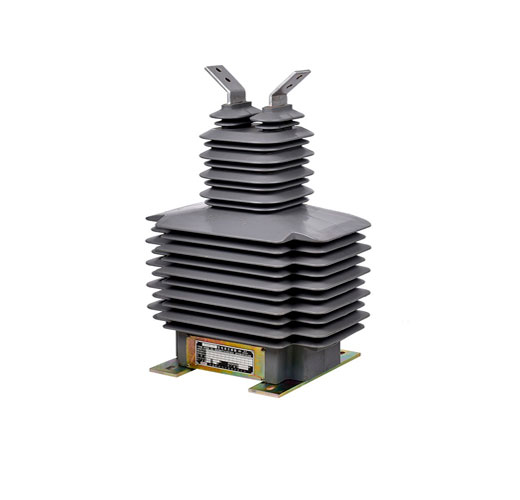
- Instrument transformers (CTs and VTs, IEC 61869) scale current and voltage down for protection and metering.
- Surge arresters limit overvoltages from lightning and switching.
- Busbars are the common conductors that connect incoming and outgoing circuits.
- Reactive compensation: shunt capacitor banks, shunt reactors, SVCs and STATCOMs.
- Control building with protection relays, SCADA/RTU, communications and a DC battery system that keeps protection working when AC supply is lost.
- Earthing grid below the whole site, keeping step and touch voltages safe during faults.
Busbar Schemes: Trading Cost for Reliability
| Scheme | Reliability | Cost | Notes |
|---|---|---|---|
| Single busbar | Low | Lowest | A bus fault takes out everything. Sectionalizing helps. |
| Double busbar | High | Medium-high | Circuits can move between buses for maintenance. |
| Ring (mesh) | Good | Medium | Each circuit sits between two breakers. Good for small HV sites. |
| Breaker-and-a-half | Very high | High | Three breakers for two circuits. Common at EHV. |
The Digital Substation
Traditional substations use kilometres of copper control cable between yard equipment and relay panels. A digital substation based on IEC 61850 replaces much of that wiring with fibre-optic networks:
- Station bus: relays and controllers exchange GOOSE messages for fast interlocking and tripping.
- Process bus: merging units in the yard digitize CT and VT signals (sampled values), and non-conventional optical sensors are becoming common.
- Condition monitoring: online sensors for transformer gas, partial discharge in switchgear, breaker operating times and temperatures support predictive maintenance.
- Cybersecurity under IEC 62351 and IEC 62443 is now a design requirement, not an option.
The benefits are less copper, smaller control buildings, safer CT circuits, and data that feeds grid-wide analytics.
Sustainability: Moving Beyond SF6
SF6 is a superb insulating and arc-quenching gas, but it is also an extremely potent greenhouse gas. The revised EU F-gas Regulation phases out SF6 in new MV switchgear from 2026, with higher voltage levels following over the next several years. Other markets are moving the same way. Vacuum interruption combined with clean air, solid insulation or alternative gas mixtures is replacing SF6 in new MV designs and, increasingly, at HV.
Frequently Asked Questions
What is the difference between a substation and a switching station?
A switching station connects or disconnects circuits at a single voltage level and has no power transformers. A substation usually includes transformation between voltages.
When is GIS worth the higher price?
When land is expensive or scarce, in heavily polluted or coastal areas, indoors or underground, and where low maintenance and high reliability are priorities.
Why do substations need batteries?
Protection relays, breaker trip coils and communications run on DC. The battery keeps them working during an AC supply loss, which is exactly when faults must still be cleared.
Can an existing substation be digitalized?
Yes. Retrofits usually start with IEC 61850 relays on the station bus and add merging units and sensors bay by bay during planned outages.
Work with METTZ Group
METTZ Group offers a wide range of substations and substation equipment to suit many needs, from compact distribution units to 220 kV-class components, including circuit breakers, disconnectors, earthing switches and instrument transformers. Check out our website to learn more, or contact METTZ Group today to work with a representative.
