
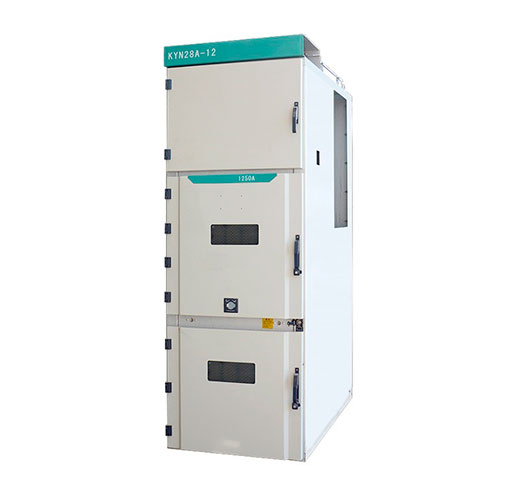
Air-insulated and gas-insulated switchgear do the same job, but they lead to very different substations, budgets and maintenance plans. This article compares the two on the factors that really drive the decision and shows, with typical scenarios, which one fits best – and where SF6-free options change the picture.
The core difference in one sentence
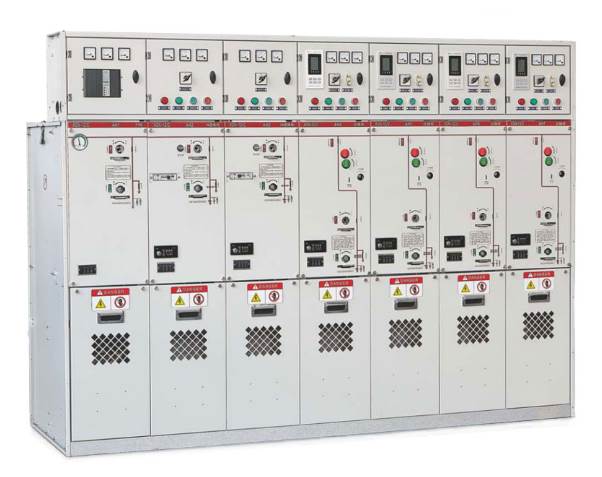
AIS uses atmospheric air as the main insulation between live parts and earth, so it relies on distance. GIS encloses live parts in sealed, earthed metal tanks filled with an insulating gas under slight overpressure, so it relies on the dielectric strength of the gas. Everything else – size, cost, maintenance and environmental impact – follows from this.
Side-by-side comparison
| Factor | Air-insulated (AIS) | Gas-insulated (GIS) |
|---|---|---|
| Insulation medium | Ambient air plus solid insulators | SF6 or an SF6-free gas (dry air, fluoroketone or fluoronitrile mixtures) in sealed tanks |
| Typical MV switching device | Vacuum circuit breaker, often withdrawable | Vacuum or SF6 breaker, fixed inside the tank |
| Footprint | Larger; panel widths and clearances grow with voltage | Compact; at MV often 30-50% less floor area, at HV dramatically less land |
| Sensitivity to environment | Affected by dust, humidity, salt and altitude | Live parts sealed; largely independent of pollution and humidity |
| Inspection | Live parts can be seen and accessed when de-energized | Live parts not visible; relies on monitoring and indicators |
| Maintenance | Regular cleaning, inspection and mechanism service | Mainly mechanism checks and gas density monitoring |
| Extension and repair | Easy to add panels or replace a breaker | Extensions need matching modules; tank repairs may need factory support |
| Upfront cost | Lower | Typically higher |
| F-gas regulations | Not affected | SF6 versions restricted in the EU under Regulation (EU) 2024/573 |
| Standards | IEC 62271-200 (MV); IEC 62271-100/-102 devices (HV) | IEC 62271-200 (MV); IEC 62271-203 (HV) |
The five decision factors in detail
1. Space and installation
If land or building space is expensive – city centres, offshore platforms, underground substations, building extensions – GIS often wins outright. A compact GIS substation may fit inside a building where an outdoor AIS yard would need a whole plot. GIS is also delivered in larger factory-tested modules, which can shorten site work. AIS, by contrast, is easier to transport in smaller pieces and simpler to assemble with local crews.
2. Environment and site conditions
Coastal salt, desert sand, industrial pollution and heavy condensation all threaten open insulation. In these conditions, AIS needs longer creepage distances, more frequent cleaning or an indoor building. GIS keeps its live parts sealed and is far less affected. Altitude matters too: AIS insulation must be corrected above 1,000 m, while the internal insulation of GIS is not affected by air density – although its bushings and cable terminations still are.
3. Operation and safety
Both technologies can be designed and type-tested for internal arc classification. GIS has an advantage because all live parts are enclosed in earthed metal, so accidental contact is practically impossible and many units need only front access. Well-designed AIS achieves a high safety level through compartments, shutters and interlocks, and has the benefit that operators can see and verify isolation directly on withdrawable designs.
4. Maintenance and availability
GIS is often described as “maintenance-free”, but more accurately it is “low-maintenance”. Gas density monitors, operating mechanisms, auxiliary circuits and cable terminations still need periodic checks. AIS requires more routine work: cleaning insulators, checking joints for heating and corrosion, and servicing withdrawable trucks. In return, an AIS breaker can be swapped in minutes, while a failure inside a GIS tank may take longer to repair.
5. Lifecycle cost
GIS usually costs more to buy. AIS costs more to maintain and needs more space. Both are commonly designed for 30 years or more of service. A fair comparison adds:
- equipment price, civil works and land or building cost;
- installation and commissioning time;
- planned maintenance labour and outage cost over the service life;
- for SF6 equipment: gas monitoring, leak reporting, certified handling and end-of-life recovery.
At high voltage in dense urban areas, GIS frequently has the lower total cost. At medium voltage in industrial plants with available space, AIS often remains the economical choice.
The SF6 factor in 2026
The biggest change since older comparisons were written is regulation. SF6 has a global warming potential more than 23,000 times that of CO2. Under the EU F-gas Regulation (EU) 2024/573, new MV switchgear up to and including 24 kV may no longer use F-gases with a GWP of 10 or more from 1 January 2026; the same applies above 24 kV up to 52 kV from 1 January 2030, with HV following from 2028 and 2032.
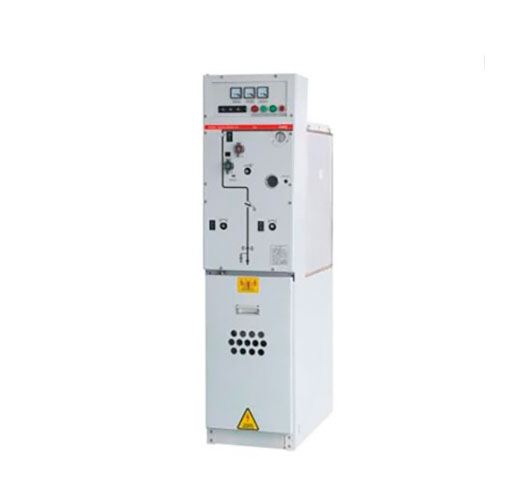
This means “GIS” no longer automatically means “SF6”. Compact switchgear now comes in several forms:
- GIS filled with dry or synthetic air, combined with vacuum interrupters;
- GIS with low-GWP gas mixtures, used mainly at higher voltages;
- solid-insulated switchgear (SIS), where live parts are cast in epoxy;
- dry-insulated switchgear combining vacuum switching and solid insulation.
AIS, which already uses air and vacuum, is unaffected by these rules.
Which one fits your project?
| Scenario | Usually best fit | Why |
|---|---|---|
| Industrial plant with a dedicated switchroom | AIS (withdrawable) | Lower cost, quick breaker replacement, easy extension |
| City-centre primary substation at 110 kV | GIS | Small land area, indoor installation, low visual impact |
| Compact secondary substation or ring main unit | GIS, SIS or dry-air RMU | Small footprint, sealed design, little maintenance |
| Coastal, desert or heavily polluted site | GIS or indoor AIS with enhanced creepage | Protection of insulation from contamination |
| Mine or remote site with local maintenance staff | AIS or SIS | Robust, simple to service without gas handling |
| New project in the EU at 12 or 24 kV | AIS, SIS or SF6-free GIS | Compliance with Regulation (EU) 2024/573 |
| Solar, wind or battery storage plant | Compact GIS/SIS or containerized AIS | Factory-built skids, limited space in stations |
Frequently Asked Questions
Is GIS always safer than AIS?
Not automatically. Both can be internal-arc tested to IEC 62271-200. GIS reduces the chance of contact with live parts, while AIS allows visual verification of isolation. The IAC rating and interlocking matter more than the insulation type.
How much smaller is GIS than AIS?
It depends on voltage. At medium voltage, savings in floor area are often in the range of 30-50%. At 110 kV and above, a GIS substation can need only a small fraction of the land of an equivalent AIS yard.
Can I still buy SF6 switchgear?
Outside the EU, SF6 switchgear is still widely available. Inside the EU, new MV switchgear up to 24 kV with high-GWP F-gases is restricted from 2026, with limited exemptions, and higher voltages follow later.
Is AIS outdated?
No. AIS remains the most common choice for many industrial and utility applications, and the SF6 phase-out has strengthened its position.
Work with METTZ Group
METTZ Group designs, manufactures and commissions switchgear from 1 kV up to 220 kV and works through local partners in 29 countries, including projects for mining and tropical conditions. METTZ Group offers a wide range of air-insulated and gas-insulated switchgear to suit many needs – from withdrawable industrial switchboards to compact sealed units for space-limited substations. Check out our website to learn more, or contact METTZ Group today to work with a representative.
