
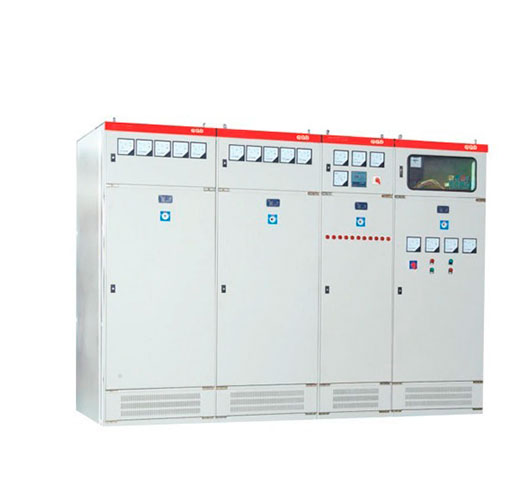
Engineers, contractors and buyers often use “switchgear”, “switchboard” and “panelboard” as if they meant the same thing. They do not, and mixing them up in a tender can lead to equipment that cannot withstand the site fault level or cannot be maintained without a shutdown. This article explains how the IEC and North American systems define each assembly, how their ratings differ and how to pick the right one.
Three Assemblies, Three Jobs
Think of a building or plant as a tree. Power arrives at the trunk, splits into large branches and finally reaches thousands of small twigs. Each level needs a different kind of equipment.
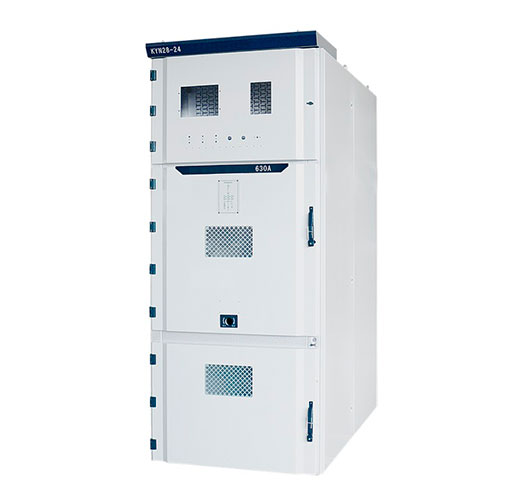
- Switchgear sits at the trunk: the service entrance or main substation, medium-voltage distribution, and the main low-voltage incomers next to transformers. It must handle the highest currents and fault levels and is built for frequent switching and maintenance without shutting down the whole site.
- Switchboards form the large branches: they take power from the main supply and split it into feeders for floors, process areas, motor control centres and large loads.
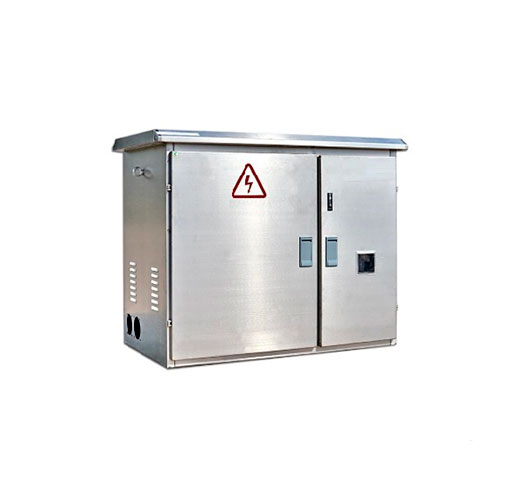
- Panelboards (in IEC language, distribution boards) are the twigs: compact wall- or flush-mounted boards with miniature or moulded-case breakers feeding lighting, sockets and small equipment.
How the Standards Define Them
IEC markets
IEC does not use the word “switchboard” as a formal category. Instead it splits assemblies by voltage:
- Above 1 kV: metal-enclosed switchgear and controlgear to IEC 62271-200, typically 3.6-40.5 kV in distribution.
- Up to 1,000 V AC: low-voltage switchgear and controlgear assemblies to the IEC 61439 series. IEC 61439-2 covers power switchgear and controlgear assemblies (main and sub-distribution boards, motor control centres), and IEC 61439-3 covers distribution boards intended to be operated by ordinary persons, which is the IEC counterpart of a panelboard.
So in IEC practice, a “main LV switchboard” is simply a power switchgear assembly to IEC 61439-2. The quality difference between a heavy-duty main board and a light sub-board is expressed through ratings and internal separation, not through a different name.
North American markets
- Switchgear: low-voltage power circuit breaker switchgear (IEEE C37.20.1, UL 1558) and medium-voltage metal-clad or metal-enclosed switchgear (IEEE C37.20.2 and C37.20.3). LV switchgear uses draw-out power circuit breakers, compartmented sections and a short-time withstand rating.
- Switchboards: UL 891 and NEMA PB 2, up to 600 V (1,000 V in newer editions). They are usually front-accessible, use fixed or plug-in moulded-case or insulated-case breakers, and do not need full compartmentalization.
- Panelboards: UL 67 and NEMA PB 1, enclosed in a cabinet with a front cover, typically up to 1,200 A main rating and installed against or in a wall.
Side-by-Side Comparison
| Feature | Switchgear | Switchboard | Panelboard / distribution board |
|---|---|---|---|
| Voltage | LV up to 1 kV and MV up to 52 kV | LV only | LV only |
| Typical current | Up to 6,300 A LV; 630-4,000 A MV | Up to about 4,000-6,300 A | Usually up to 250-1,200 A |
| Main devices | Air circuit breakers (LV), vacuum breakers (MV), often withdrawable | ACBs, MCCBs, fixed or plug-in | MCBs, RCDs, small MCCBs |
| Short-circuit duty | High; rated short-time withstand (Icw) for e.g. 1 s, enabling selectivity | Medium to high; often relies on instantaneous trip | Low to medium; often current-limited by upstream devices |
| Internal separation | High: Form 3b/4b in LV, LSC2B in MV | Form 1 to Form 4 depending on specification | Usually Form 1 |
| Access | Front and often rear | Mostly front | Front only |
| Maintenance under live conditions | Designed for it (withdrawable units) | Limited | Usually requires shutdown |
| Cost and footprint | Highest | Medium | Lowest |
Forms of Internal Separation
For low-voltage assemblies, IEC 61439-2 defines forms of internal separation that describe how busbars, functional units and outgoing terminals are separated from each other.
- Form 1: no internal separation.
- Form 2: busbars separated from functional units.
- Form 3: busbars separated from functional units, and functional units separated from each other.
- Form 4: as Form 3, and outgoing terminals of each unit separated from those of other units.
Sub-forms “a” and “b” state whether terminals are in the same compartment as the busbar or device. Form 3b and Form 4b are typical for main LV switchgear where single feeders must be worked on while others stay live.
Which Is Safer?
None of the three is safe or unsafe in itself. Safety depends on matching the assembly to the fault energy and the way people will operate it.
- At high fault levels next to large transformers, only switchgear with tested short-time withstand and short-circuit ratings is appropriate. A panelboard there would be dangerous.
- For arc risk, look for internal arc testing: IAC to IEC 62271-200 for MV, and arcing-fault tests to IEC TR 61641 for LV assemblies. Withdrawable devices and higher forms of separation also reduce exposure.
- For ordinary users, a distribution board to IEC 61439-3 with finger-safe covers is the right choice: it is designed to be operated by non-specialists.
- For maintainability, switchgear allows a single feeder to be isolated and worked on while the rest stays energized.
How They Work Together
A typical industrial site uses all three. An MV switchgear line-up receives the utility supply and feeds distribution transformers. Each transformer supplies a main LV switchgear assembly with air circuit breakers. That feeds sub-distribution boards and motor control centres in production areas, which in turn feed small distribution boards for lighting, offices and workshops.
A Note on Terminology in Tenders
International projects often mix the two vocabularies. A North American consultant may ask for a “switchboard” where an IEC supplier would offer an IEC 61439-2 assembly with ACB incomers and Form 4b separation. To avoid misunderstandings, describe the required ratings (rated current, Icw, form of separation, type of functional units, IP code) rather than relying on the name alone, and state which standard governs.
Choosing the Right Assembly
- Find the prospective short-circuit current at the point of installation. This often decides the answer alone.
- Check the rated current of the incomer and the largest feeders.
- Define the service continuity requirement: must one feeder be worked on while others run?
- Decide who will operate it: trained electricians only, or ordinary persons.
- Consider selectivity: devices with short-time ratings allow upstream breakers to wait while downstream ones clear the fault.
- Plan for growth and monitoring: spare ways, metering and communication.
Frequently Asked Questions
Is a switchboard the same as LV switchgear?
In IEC markets, a main LV switchboard is a power switchgear assembly to IEC 61439-2. In North America, switchboards (UL 891) and LV switchgear (UL 1558) are separate product classes with different construction and ratings.
Can a panelboard replace a switchboard?
Only for small loads with low fault levels. Panelboards have limited current and short-circuit ratings and are not designed for large feeders.
What is the IEC equivalent of a panelboard?
A distribution board to IEC 61439-3, intended to be operated by ordinary persons.
Can switchgear and switchboards share one room?
Yes, as long as clearances, ventilation and internal arc venting are respected for each assembly.
Work with METTZ Group
METTZ Group offers a wide range of low-voltage cabinets and distribution boards to suit many needs, from final distribution in buildings to main switchboards next to transformers, plus medium-voltage switchgear for the supply side. Check out our website to learn more, or contact METTZ Group today to work with a representative.
