
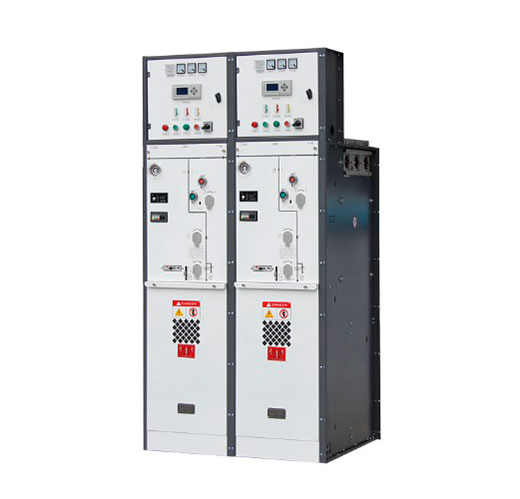
Switchgear is usually grouped into three voltage classes: low, medium and high. The boundaries are not arbitrary. Each class has its own standards, insulation levels, interrupting technology and installation style. This article sets out where the limits lie, what typically goes into each class and how to work out which one, and which ratings, your project needs.
Where the Boundaries Are
Strictly speaking, IEC defines only two ranges: low voltage up to 1,000 V AC, and high voltage above that. “Medium voltage” is an industry term, but it is used everywhere and matches the scope of IEC 62271-200 (above 1 kV up to and including 52 kV). The practical classes are:
| Class | AC voltage range | Main IEC standards | Typical location |
|---|---|---|---|
| Low voltage (LV) | Up to 1,000 V (commonly 400/230 V or 690 V) | IEC 61439 (assemblies), IEC 60947 (devices) | Buildings, factories, transformer secondaries, solar inverters, EV chargers |
| Medium voltage (MV) | Above 1 kV up to 52 kV (IEC rated values 3.6, 7.2, 12, 17.5, 24, 36 and 52 kV; 40.5 kV is common in Chinese practice) | IEC 62271-1, -100, -102, -103, -200 | Distribution substations, industrial plants, wind and solar collection, large motors |
| High voltage (HV) | Above 52 kV (rated 72.5, 126/145, 245 kV and up) | IEC 62271-1, -100, -102, -203 (GIS), -205 (hybrid) | Transmission and sub-transmission substations, power plants, large industrial intakes |
North American practice differs slightly. ANSI C84.1 and IEEE usage put medium voltage between 1 kV and 100 kV, with high voltage above that. Always check which convention a tender uses.
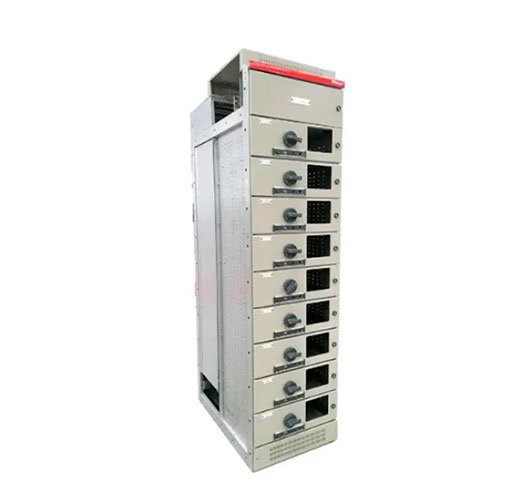
Low-Voltage Switchgear
LV assemblies take power from the transformer secondary and distribute it to final loads. Their design is driven by high currents and high fault levels rather than insulation.
- Devices: air circuit breakers up to 6,300 A, moulded-case breakers, switch-disconnectors, fuses, contactors and motor starters.
- Key ratings: rated current of the assembly and each circuit, rated short-time withstand current (Icw, e.g. 50-100 kA for 1 s) and peak withstand current.
- Construction: fixed, plug-in or withdrawable functional units, with forms of separation to IEC 61439-2.
- Trends: built-in metering and communication, arc-fault protection and growing use in battery storage, data centres and EV charging hubs.
Our existing guides on LV switchgear cover ratings and panel types in more depth; the key point here is that LV is chosen whenever the load is at utilization voltage.
Medium-Voltage Switchgear
MV is the backbone of distribution. It feeds distribution transformers, large motors and MV loads, and connects renewable plants to the grid.
- Devices: vacuum circuit breakers, load break switches, switch-fuse combinations, vacuum contactors, disconnectors and earthing switches.
- Insulation options: air-insulated (AIS), gas-insulated (GIS), solid-insulated (SIS) and dry-air or other SF6-free designs.
- Forms: withdrawable metal-clad style panels for main substations and industry; compact ring main units for secondary distribution.
- Key ratings: rated voltage, insulation level, rated normal current (630-4,000 A typical), rated short-circuit breaking current (16-40 kA), LSC and IAC classes.
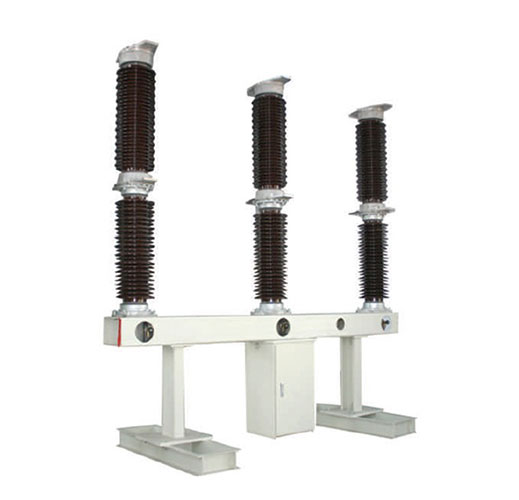
High-Voltage Switchgear
HV switchgear sits in transmission and sub-transmission substations and at large generation sites.
- Devices: SF6 or SF6-alternative circuit breakers, vacuum breakers up to about 145 kV in newer designs, disconnectors, earthing switches, instrument transformers and surge arresters.
- Forms: outdoor AIS bays, indoor or outdoor GIS, and hybrid or compact modules.
- Key drivers: dielectric design, switching overvoltages, system stability and the busbar scheme (single, double or breaker-and-a-half).
- Regulation: in the EU, the revised F-gas Regulation phases in bans on new SF6 switchgear by voltage level, so alternative gases and vacuum are becoming standard choices for new projects.
Insulation Levels at a Glance
The rated voltage determines the insulation level the switchgear must withstand. Typical values for MV are (IEC 62271-1 common values, with 40.5 kV from Chinese GB practice):
| Rated voltage Ur | Power-frequency withstand (1 min) | Lightning impulse withstand |
|---|---|---|
| 7.2 kV | 20 kV | 60 kV |
| 12 kV | 28 kV | 75 kV |
| 24 kV | 50 kV | 125 kV |
| 36 kV | 70 kV | 170 kV |
| 40.5 kV (GB) | 95 kV | 185 kV |
Some national grids specify higher values, for example 42 kV power-frequency withstand at 12 kV in China. Above 1,000 m altitude, the required levels increase further.
How to Choose the Right Class and Ratings
Step 1: Start from the supply and the loads
The utility supply voltage, the voltage of your largest loads and the distances involved usually decide the class. A site taking more than a few megawatts, or with long internal feeders, almost always needs an MV distribution level. A transmission-connected plant or large solar or wind farm needs HV at the grid connection.
Step 2: Fix the rated voltage and insulation level
Choose the next standard rated voltage above the highest system operating voltage, for example 12 kV for an 11 kV or 10 kV network, and 24 kV for 20 kV.
Step 3: Calculate currents
- Rated normal current from the maximum load plus growth margin.
- Short-circuit breaking current from a network study, including contributions from motors, generators and future connections.
- Peak making current: 2.5 times the RMS short-circuit current at 50 Hz, or 2.6 times at 60 Hz, per IEC 62271-1.
Step 4: Decide the switching device
Circuit breakers for incomers, transformer feeders above a few MVA, motors and anything that needs relay protection. Load break switches or switch-fuses for simple transformer and ring feeders. Contactors for frequently switched motors and capacitors.
Step 5: Select the insulation technology and form
Weigh space, environment, maintenance capability and SF6 policy. AIS is easy to inspect and extend; GIS and SIS are compact and less sensitive to pollution and altitude.
Step 6: Specify safety and service continuity
State LSC, partition class and IAC for MV, and the form of separation and arc-fault testing for LV.
Step 7: Plan for digital operation
Protection relays with IEC 61850 or Modbus, remote control, temperature and partial discharge monitoring, and energy metering are now standard expectations for most new projects.
Common Selection Mistakes
- Choosing the rated voltage equal to the nominal system voltage, for example 10 kV gear on a 10 kV network, instead of the next standard rating above it.
- Sizing short-circuit ratings for today’s network only, then exceeding them when a second transformer or a solar plant is connected.
- Forgetting altitude and ambient temperature corrections.
- Mixing ANSI and IEC ratings in one specification without stating which standard governs.
Frequently Asked Questions
Is 35 kV switchgear medium or high voltage?
In IEC terms it is MV, rated 36 kV or 40.5 kV and covered by IEC 62271-200.
Why not run everything at LV?
At LV, currents become very large for the same power. Cable sizes, losses and voltage drop grow quickly, so larger sites distribute at MV and step down near the loads.
Can one supplier deliver all three classes?
Yes. Using a single supplier for LV, MV and HV equipment can simplify coordination of ratings, protection and documentation.
Work with METTZ Group
METTZ Group offers a wide range of switchgear to suit many needs, from low-voltage cabinets and medium-voltage switchgear to gas-insulated switchgear and substation equipment up to 220 kV. Check out our website to learn more, or contact METTZ Group today to work with a representative.
