
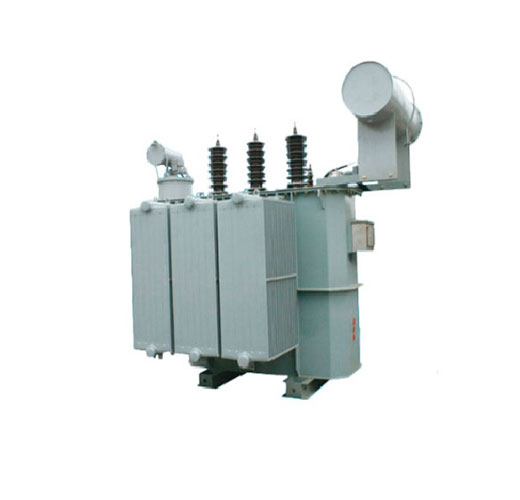
Electricity usually passes through three or four transformers between the generator and the socket. This article follows that path stage by stage, shows which ratings matter at each step, and gives a practical sizing method for substation and industrial projects.
The Core Purpose: Matching Voltage to the Job
A power transformer transfers energy between two AC networks of different voltage by electromagnetic induction. High voltage is efficient for moving bulk power over distance; low voltage is safe and practical for using it. Power transformers are the interfaces between those worlds, and they also control fault levels, regulate voltage and isolate network sections.
Note one common misconception: transformers work only on AC. They do not convert AC to DC or change DC levels. HVDC links and battery systems use power electronics, fed through converter transformers.
Stage 1: Generation (Step-Up)
Synchronous generators typically produce 10-27 kV. A generator step-up (GSU) transformer raises this to transmission level, commonly 110-500 kV. GSU units run near full load for long periods, so low load losses and robust cooling (often ONAF or OFAF) are priorities.
Wind and solar plants work differently. Inverters or turbine converters output low voltage, which collector transformers raise to 20-36 kV. A main substation transformer then steps this up to the grid. These units see frequent load swings and harmonic content, so the specification must address cyclic loading and harmonics.
Stage 2: Transmission and Sub-Transmission
In grid substations, large power transformers or autotransformers link voltage levels such as 400/220 kV or 220/110 kV. They usually carry an on-load tap changer (OLTC) to keep voltage steady as demand moves through the day. Reliability is critical: a single failure can affect thousands of customers, and replacing a large unit can take many months.
Stage 3: Primary Distribution
Primary substations step sub-transmission voltage (for example 110 kV or 66 kV) down to medium voltage, typically 10-35 kV. These transformers, often in the 10-63 MVA range, feed the medium-voltage feeders and switchgear that supply towns and industrial sites.
Stage 4: Secondary Distribution
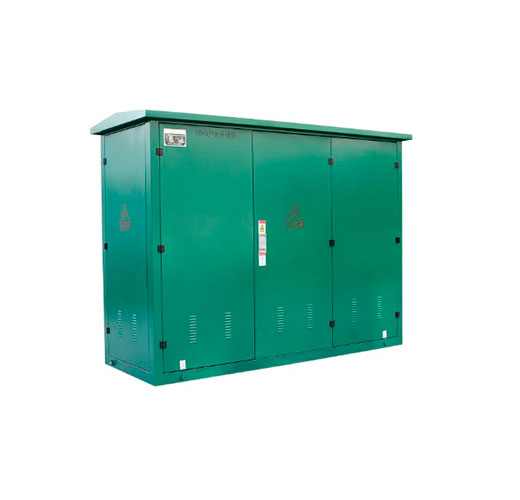
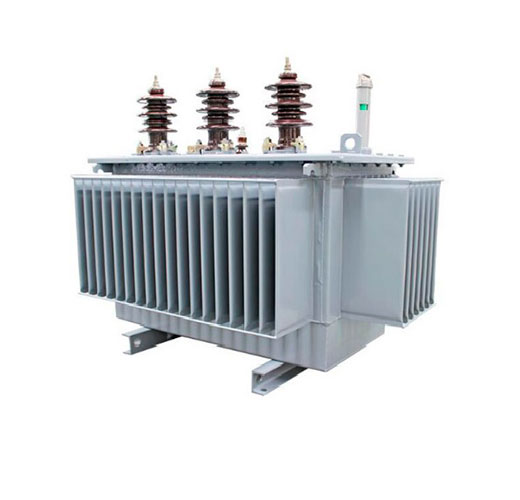
Distribution transformers make the final step to 400/230 V. Ratings range from about 25 kVA on a rural pole to 2,500-3,150 kVA in a building or factory substation. Most are three-phase; single-phase units serve light loads in some networks. They operate at varying load for decades, so no-load losses matter as much as load losses.
| Grid stage | Typical voltages | Typical rating | Key specification points |
|---|---|---|---|
| Generation step-up | 10-27 kV / 110-500 kV | 50-1,000 MVA | Load losses, cooling, short-circuit strength |
| Transmission | 400/220 kV, 220/110 kV | 100-500 MVA | OLTC, reliability, transport limits |
| Primary distribution | 110-66 kV / 10-35 kV | 10-63 MVA | Impedance, voltage regulation, noise |
| Secondary distribution | 10-35 kV / 0.4 kV | 25-3,150 kVA | No-load losses, footprint, fire safety |
How to Size a Power or Distribution Transformer
1. Build a realistic load list
List connected loads in kW, then apply demand and diversity factors. Not every motor, heater and charger runs at full load at the same time. Measured data from similar sites beats assumptions.
2. Convert to apparent power
Transformers are rated in kVA, not kW. Divide by power factor: 800 kW at 0.9 pf is about 890 kVA. Power factor correction with capacitor banks can reduce the required rating.
3. Add growth and contingency
A margin of 15-25% is common for planned expansion. For critical sites, consider N+1 redundancy: two units, each able to carry the essential load alone.
4. Check the loading profile and environment
Rated power assumes standard ambient conditions. High ambient temperature, altitude above 1,000 m or enclosure installation reduce capacity. IEC 60076-7 (liquid-immersed) and IEC 60076-12 (dry-type) give loading guides for cyclic and emergency overloads.
5. Account for harmonics
Variable-speed drives, UPS systems, data centre IT loads and EV chargers create harmonic currents that add extra heating. Specify the harmonic spectrum so the manufacturer can design for it, or apply a derating factor.
6. Choose the next standard rating
Pick the next standard size up (for example 630, 800, 1,000, 1,250, 1,600, 2,000 or 2,500 kVA). Avoid large oversizing: a lightly loaded unit wastes energy through no-load losses for its whole life.
Other Ratings to Get Right
- Short-circuit impedance: IEC 60076-5 lists minimum values (for example 4% up to 630 kVA, 6% for 1,251-2,500 kVA). Higher impedance limits fault current but increases voltage drop.
- Vector group: Dyn11 is standard for distribution in many countries; parallel units must share the same group, ratio and similar impedance.
- Tap changer: off-circuit taps (often ±2 × 2.5%) suit stable networks; OLTCs suit variable networks and renewable connections.
- Efficiency: in the EU, Ecodesign Tier 2 sets maximum losses or minimum Peak Efficiency Index; check local equivalents elsewhere.
- Monitoring: online temperature, load and dissolved gas monitoring is now affordable for primary substation units and supports condition-based maintenance.
Frequently Asked Questions
What is the difference between a power and a distribution transformer?
Power transformers handle transmission and sub-transmission voltages, typically above about 10 MVA. Distribution transformers make the final step to low voltage and usually stay below a few MVA.
Can I run a transformer above its nameplate rating?
Short overloads are possible within IEC loading guide limits, but they consume insulation life faster. Sustained overload calls for a larger unit or forced cooling.
Why are transformers rated in kVA instead of kW?
Heating depends on current and voltage, not on how much of the power is real or reactive. kVA captures both.
Work with METTZ Group
METTZ Group offers a wide range of power transformers to suit many needs – from distribution units for buildings and factories to substation transformers up to 220 kV, together with complete substations. Check out our website to learn more, or contact METTZ Group today to work with a representative.
