
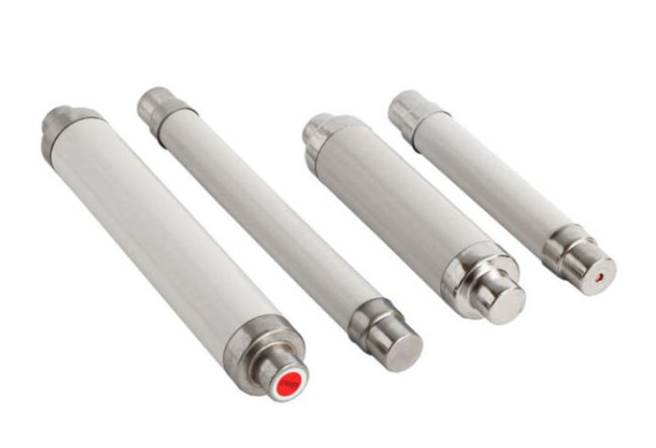
A fuse is the simplest overcurrent protection there is – and at high fault levels, one of the fastest. This article explains how a fuse element actually clears a fault, the main LV and MV/HV fuse classes under IEC 60269 and IEC 60282, and how to choose fuses for transformers, motors and solar plants.
What a Fuse Is – and What It Is Not
An electric fuse is a protective device that opens a circuit by melting one or more specially designed elements when current exceeds a given value for a sufficient time. The fuse link is then replaced.
A fuse is not the same as a fuse box. “Fuse box” is an old name for a consumer unit or distribution board – the enclosure that holds fuses or circuit breakers. The fuse itself is the small replaceable link inside.
How a Fuse Clears a Fault
A modern cartridge fuse contains one or more thin silver or copper strips with deliberately narrowed sections, surrounded by high-purity quartz sand inside a ceramic or glass-fiber body.
- Heating. Current flowing through the element produces heat proportional to I²R. Under normal load the heat dissipates and the element stays solid.
- Melting. On overload, the narrow sections heat up over seconds or minutes until they melt. On a short circuit they melt in a few milliseconds.
- Arcing. Small arcs form at each melted section. The arcs vaporize the element and melt the surrounding sand.
- Quenching. The sand absorbs the arc energy and fuses into a glassy, non-conductive mass called fulgurite. Arc voltage rises quickly and forces the current to zero.
Because the arc voltage builds so fast, a current-limiting fuse interrupts a heavy short circuit before the current reaches its first natural peak, usually in less than 5 ms. The let-through energy (I²t) and peak current are a fraction of the prospective values, which protects cables, busbars and transformers from thermal and mechanical stress.
Fuse vs Circuit Breaker
| Criterion | Fuse | Circuit breaker |
|---|---|---|
| Overload and short-circuit protection | Yes, both | Yes, both |
| Speed at high fault current | Very fast, current-limiting | Depends on design; MV breakers clear in several cycles |
| Breaking capacity | Very high for size (LV HRC fuses commonly 80-120 kA) | Defined by rating; higher capacity means larger, costlier device |
| After operation | Replace the fuse link | Reset or reclose |
| Remote control and reclosing | No | Yes |
| Cost | Low | Higher |
A common misconception is that fuses protect only against overload while breakers also handle short circuits. In fact, both do both. The real differences are speed, reusability and control.
Low-Voltage Fuses (IEC 60269)
LV fuses up to 1,000 V AC and 1,500 V DC are covered by IEC 60269. The two letters describe the breaking range and the application:
- gG – full-range, general purpose for cables and distribution circuits
- aM – partial-range motor back-up; tolerates starting currents, used with overload relays
- gPV – full-range DC fuses for photovoltaic strings (IEC 60269-6)
- aR / gR – very fast fuses for semiconductor protection in drives, UPS and rectifiers
Common formats are cylindrical cartridges (for example 10×38 mm), blade-contact NH fuses in sizes 000 to 4a, and D-type screw fuses. Older North American screw-in plug fuses (Edison base and Type S) are legacy residential products and are not used in new industrial installations.
Medium- and High-Voltage Fuses (IEC 60282)
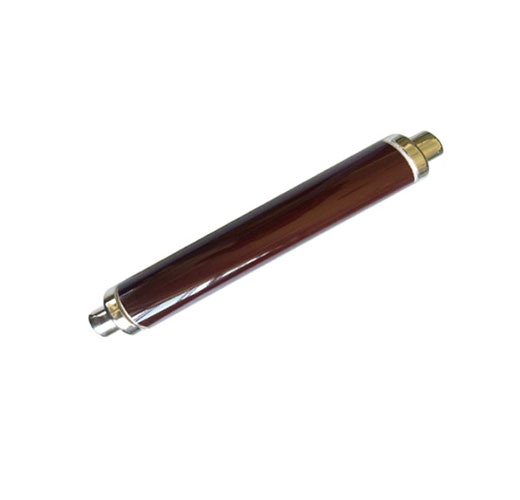
Above 1 kV, fuses are covered by IEC 60282. Two families dominate distribution networks.
Current-limiting fuses (IEC 60282-1)
These are the cylindrical fuses used in ring main units, compact substations and motor starters, typically rated from 3.6 kV to 40.5 kV. IEC 60282-1 defines three classes by breaking range:
- Back-up fuses – interrupt currents from their rated minimum breaking current up to the rated maximum breaking current. Low overloads must be cleared by another device. This is the most common type in switch-fuse combinations.
- General-purpose fuses – interrupt all currents that melt the element within one hour.
- Full-range fuses – interrupt any current that melts the element.
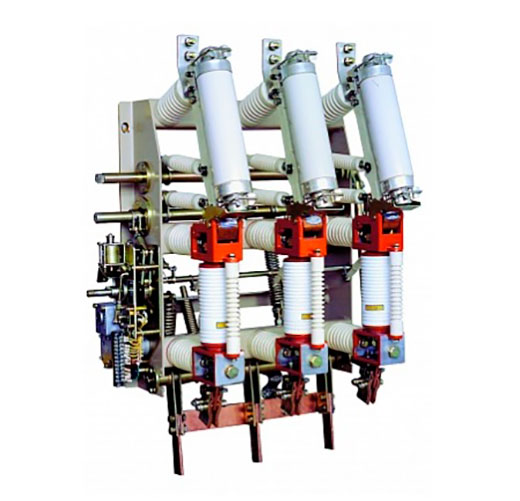
Most MV fuses have a striker pin that pops out when the fuse operates. In a switch-fuse combination to IEC 62271-105, the striker trips the load break switch so all three phases open together – preventing single-phasing of transformers and motors.
Expulsion fuses (IEC 60282-2)
Used in outdoor drop-out fuse cutouts on overhead lines. The arc generates gas from a liner inside the fuse tube, which expels the arc products and quenches the arc at current zero. The tube then swings down, giving a visible indication of operation.
Selecting Fuses for Transformers and Motors
- Rated voltage equal to or above the system’s highest voltage; current-limiting fuses should not be used on systems far below their rated voltage because their arc voltage may cause overvoltages.
- Rated current above the transformer’s full-load current with margin for permitted overload – typically 1.5 to 2 times rated current, using the fuse manufacturer’s selection tables.
- Inrush withstand – the fuse must not melt during transformer magnetizing inrush, often checked as about 10-12 times rated current for 0.1 s.
- Selectivity with LV fuses or breakers on the transformer secondary.
- Breaking capacity equal to or above the prospective fault level.
- Thermal conditions inside enclosed RMU fuse canisters, which may require derating.
Is the Fuse Blown? Safe Checks
Never test or replace a fuse on a live circuit without the right procedure and equipment. With the circuit isolated:
- Check the indicator or striker (MV fuses) or the indicator flag (LV fuses).
- Measure continuity with an ohmmeter; a healthy fuse shows very low resistance.
- For MV fuse combinations, replace all three fuses if one has operated – the others may have been stressed.
- Find and fix the cause before re-energizing.
Frequently Asked Questions
Why do fuses blow?
Short circuits, earth faults or sustained overloads. A fuse that blows repeatedly indicates a fault or an undersized rating, not a faulty fuse.
What does IEC 60282-1 cover?
It covers current-limiting fuses for AC systems above 1 kV, including ratings, breaking classes, tests and striker requirements.
Can I replace a fuse with a higher rating?
No. A larger fuse may no longer protect the cable or equipment. Always use the rating and type specified by the designer.
Are fuses still used with circuit breakers?
Yes. Switch-fuse combinations protect transformers in RMUs, and LV fuses back up breakers where fault levels are very high.
Work with METTZ Group
METTZ Group offers a wide range of electric fuses to suit many needs – from LV cartridge and NH fuses to MV current-limiting fuses for ring main units, compact substations and load break switch combinations. Check out our website to learn more, or contact METTZ Group today to work with a representative.
