
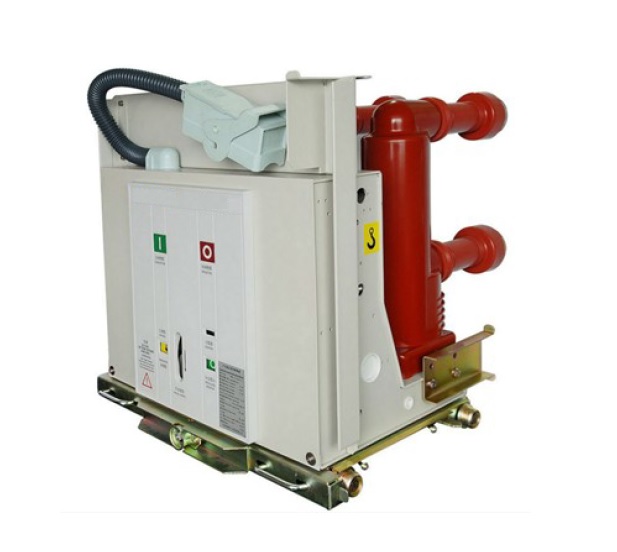
Two quotations for “a 12 kV, 1250 A vacuum circuit breaker” can differ widely – and the cheaper one is not always the better deal. This guide explains which technical choices move the purchase price, which hidden costs appear later, and how to compare offers on total cost of ownership rather than unit price.
Why Unit Prices Are Hard to Compare
A VCB quotation bundles many decisions: ratings, construction, mechanism, accessories, testing, documentation, packaging and support. Published “price ranges” are of little use because they rarely state these details. A reliable comparison starts from a clear specification, so that every bidder prices the same thing.
Technical Factors That Set the Purchase Price
1. Rated voltage
Higher rated voltage (12, 24, 36 or 40.5 kV) means larger interrupters, longer contact gaps, bigger insulating poles and greater clearances. The step from 12 kV to 24 kV and especially to 36/40.5 kV is significant.
2. Rated normal current
Ratings such as 630, 1250, 2500 and 4000 A require heavier conductors, larger contacts and, at the top end, forced cooling or special heat-sink designs. Above about 2500 A, cost rises steeply.
3. Short-circuit breaking current
Moving from 25 kA to 31.5, 40 or 50 kA needs larger interrupters, often with axial magnetic field contacts, a stronger mechanism and a more robust frame. Specify the fault level the network actually needs, with reasonable margin for growth – oversizing the breaking current is one of the most common ways to overspend.
4. Endurance and switching classes
Classes M2, E2 and C2 under IEC 62271-100 are standard for good distribution breakers, but extended endurance for furnace or frequent motor switching, generator duty or S2 line-network duty add cost. Ask for them only when the application requires them.
5. Construction type
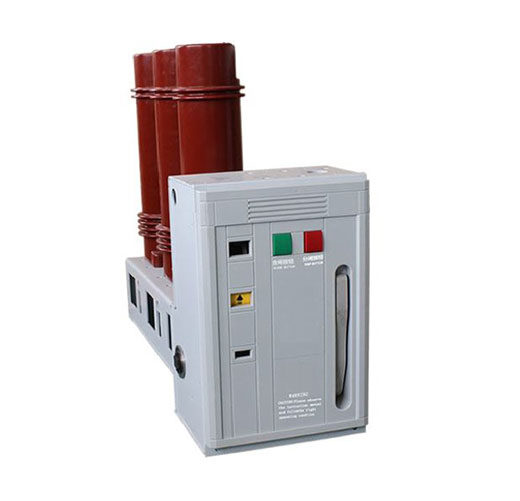
- Fixed or withdrawable: withdrawable breakers include a truck, primary disconnecting contacts and racking interlocks; they cost more but reduce downtime during maintenance.
- Indoor, outdoor or mining: outdoor breakers need weatherproof enclosures, UV-resistant insulation, longer creepage distances and often integrated current transformers. Mining versions add ruggedized frames, high IP ratings and, for underground use, explosion-protected enclosures.
- Embedded or assembled poles: embedded epoxy poles cost more to tool but simplify assembly and improve environmental resistance.
6. Operating mechanism
Spring stored-energy mechanisms with motor charging are the baseline. Permanent magnetic actuators add an electronic controller and capacitors; they can be more expensive initially but reduce lubrication and mechanism maintenance over high operation counts.
7. Accessories and secondary equipment
- Additional shunt trip coils, undervoltage releases and auxiliary contacts.
- Motor-operated racking for remote operation.
- Integrated current and voltage sensors, protection relays or recloser controllers.
- Condition-monitoring sensors: temperature, travel, coil current and partial discharge.
- Non-standard control voltages, special colors, labelling or language requirements.
8. Standards, type tests and documentation
Type tests to IEC 62271-100 (and ANSI/IEEE C37 where required) at an independent laboratory represent a large investment, and their cost is reflected in pricing. Project-specific witness testing, third-party inspection, extended document packages and special approvals add to the quotation. These costs buy confidence – an untested design is cheaper for a reason.
9. Commercial and logistics factors
Order quantity, delivery time, seaworthy or long-storage packaging, Incoterms, freight and insurance, import duties and local certification all affect the landed price. Raw material markets, particularly copper and chromium, also move prices over time.
Quick Reference: Cost Drivers and Their Impact
| Factor | Relative impact on price | Buyer’s tip |
|---|---|---|
| Rated voltage | High | Match to system voltage and insulation coordination; do not round up without reason |
| Short-circuit breaking current | High | Base on a fault study plus growth margin |
| Rated normal current | Medium to high | Size for real load and ambient temperature |
| Outdoor or mining design | Medium to high | Specify actual environment: altitude, pollution, temperature |
| Withdrawable vs fixed | Medium | Consider maintenance and downtime costs |
| Accessories and monitoring | Low to medium each | Specify what operations will actually use |
| Testing and documentation | Low to medium | Require type test reports; add witness tests for critical projects |
Total Cost of Ownership: The Bigger Picture
Over a 20-30 year life, the purchase price is often a minority share of what a breaker costs. A TCO comparison should include:
- Installation and commissioning: site labor, testing, training and any interface engineering with existing switchgear.
- Maintenance: mechanism servicing, test equipment and outage time. Vacuum breakers need no gas handling or oil treatment.
- Spare parts: availability and price of interrupters or embedded poles, coils, motors and auxiliary switches over the full life.
- Energy losses: main-circuit resistance causes I2R losses on every heavily loaded breaker; low-resistance designs save energy year after year.
- Downtime risk: the cost of a failed trip or extended outage – lost production, penalties, safety incidents – usually dwarfs any price difference between breakers.
- End of life: vacuum breakers contain no SF6, avoiding gas recovery, reporting and disposal costs that apply to SF6 equipment.
A simple TCO method
- Fix the specification and evaluation period (for example 25 years).
- Add purchase, delivery and commissioning costs.
- Estimate maintenance cost per service interval, including outage cost, and multiply by the number of services.
- Estimate annual energy losses from main-circuit resistance and expected load.
- Add a risk allowance for failure based on the supplier’s reference record and test evidence.
- Discount future costs to present value and compare.
How to Get Comparable Quotations
- Issue a complete technical data sheet: ratings, classes, service conditions, control voltages, accessories and interfaces.
- Ask for type test reports, routine test procedures and a list of recommended spares with prices.
- Request lead time, warranty terms and local service arrangements in writing.
- Compare deviations from the specification line by line before comparing prices.
Frequently Asked Questions
Why are outdoor vacuum circuit breakers more expensive than indoor ones?
They include a weatherproof enclosure, outdoor-grade insulation, longer creepage distances, heaters and often integrated current transformers and controls.
Is a magnetic actuator worth the extra cost?
For high switching frequencies or sites where mechanism maintenance is difficult, often yes. For normal feeder duty, a proven spring mechanism is usually the more economical choice.
What is the most common reason for overspending on VCBs?
Specifying a higher short-circuit rating or rated current than the network needs. A fault study and load analysis usually pay for themselves.
Work with METTZ Group
METTZ Group offers a wide range of vacuum circuit breakers to suit many needs – from indoor VCBs for standard switchgear to outdoor and mining designs, from 1 kV up to 220 kV across our equipment range. Check out our website to learn more, or contact METTZ Group today to work with a representative.
