
Partial discharge is the early warning sign of insulation failure in medium-voltage switchgear. This article explains what it is, where it comes from, how the main detection methods compare, and how to turn survey results into repairs before a flashover happens.
What Partial Discharge Is
Partial discharge (PD) is a small electrical breakdown that bridges only part of the insulation between two conductors. It happens where the local electric field exceeds the strength of a small region of insulation, typically a gas-filled void, a sharp edge or a contaminated surface. Each discharge is tiny, measured in picocoulombs, but it repeats thousands of times per second at every voltage peak.
Over months or years, these discharges erode the insulation chemically and thermally. Voids grow into tree-like channels, surfaces carbonize into tracks, and eventually the remaining insulation can no longer hold the voltage. The result is a flashover or internal arc. PD is responsible for a large share of insulation-related failures in MV switchgear, cable terminations and instrument transformers.
Three Types of Partial Discharge
| Type | Where it occurs | Typical cause |
|---|---|---|
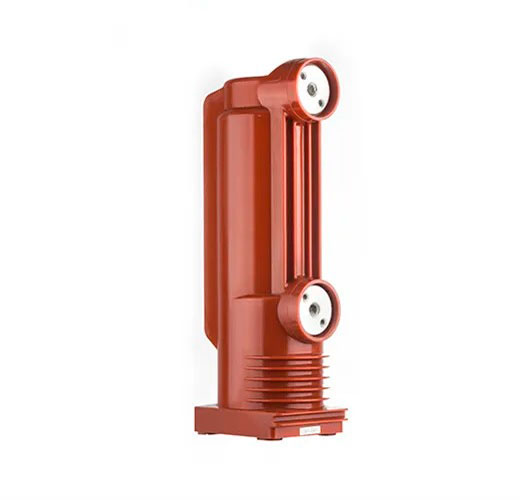
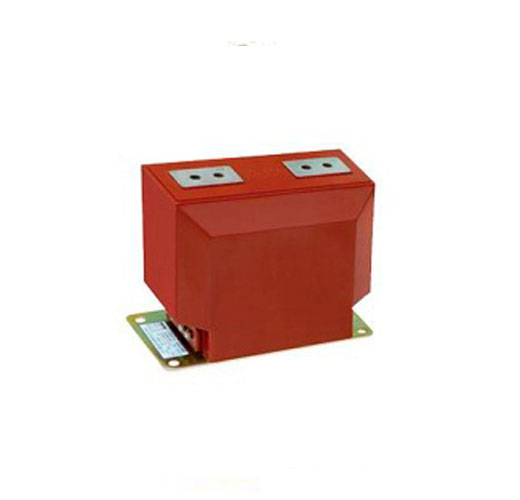
| Internal discharge | Inside solid insulation | Voids or delamination in cast-resin bushings, CTs, VTs, embedded poles and spouts |
| Surface discharge (tracking) | Along insulation surfaces | Dirt plus moisture, poor cable termination stress control, condensation |
| Corona | Around sharp conductors in air | Sharp edges, protruding bolts, loose wire strands; usually less harmful but a sign of poor workmanship |
What Causes PD in Switchgear
Manufacturing defects
Voids in epoxy castings, poor bonding between insulation and metal inserts, and sharp edges on busbars are the classic sources. They are best caught by routine PD testing in the factory, especially for solid-insulated components.
Installation errors
Cable terminations made on site are the most frequent PD source in operating switchgear. A stress-control tube cut at the wrong length, a scratched cable insulation surface, a missing semiconductor layer cut-back or poor cleaning can all start discharge within weeks of energization. Incorrect torque on bushing connections and misaligned plug-in terminations add to the risk.
Environmental stress
Humidity and condensation combined with dust are the main drivers of surface discharge in air-insulated equipment. Panels in unheated rooms, coastal substations and mines are particularly exposed. Industrial pollution and salt make surfaces more conductive and accelerate tracking.
Aging and operating stress
Thermal cycling, mechanical vibration from switching operations and overvoltages can open cracks and delaminations in older insulation. Equipment that has run cool and lightly loaded for years may suffer more from condensation than heavily loaded panels that stay warm.
Detection Methods Compared
No single sensor sees every type of PD. Survey teams usually combine two or three methods.
| Method | Principle | Best for | Limitations |
|---|---|---|---|
| TEV (transient earth voltage) | Detects high-frequency voltage pulses induced on the metal enclosure by internal discharges | Internal PD in metal-clad AIS; quick live surveys | Affected by external noise; less sensitive to surface PD |
| Airborne ultrasonic (around 40 kHz) | Listens for acoustic emission through vents and gaps | Surface discharge and corona in air | Needs an air path; cannot detect PD deep inside solid insulation |
| Contact acoustic | Sensor placed on enclosure or insulation surface | Localizing sources in GIS and sealed parts | Signal attenuates across interfaces |
| UHF (300 MHz-3 GHz) | Antennas pick up electromagnetic waves from discharges | Gas-insulated switchgear; continuous monitoring | Needs sensors or dielectric windows; mostly fitted at manufacture |
| HFCT (high-frequency current transformer) | Clamp on cable earth straps detects PD pulses | Cable terminations and cables connected to the panel | Needs access to earth connections |
| IEC 60270 conventional measurement | Calibrated measurement of apparent charge in pC with a coupling capacitor | Factory routine and type tests; quantitative acceptance | Off-line, needs a test voltage source; not practical for routine field surveys |
Interpreting live survey results
TEV readings are expressed in dBmV and compared with background levels measured on nearby metalwork. Many survey teams treat readings close to background as normal, readings roughly 10 to 20 dB above background as a reason to monitor more closely, and higher or rising readings as a reason to investigate. Any clear ultrasonic discharge signal from closed switchgear deserves investigation. These are rules of thumb, not standard limits. The most reliable indicator is the trend: a reading that grows from one survey to the next points to an active, developing defect.
Online monitoring
Permanent PD sensors connected to a monitoring system are now common in critical substations, data centers and renewable plants. They capture intermittent PD that a once-a-year survey can miss, correlate it with humidity and load, and send alarms. Combined with wireless temperature sensors on cable joints, they form the core of a condition-based maintenance program.
From Detection to Repair
- Confirm the signal: repeat the measurement, compare with background and use a second method to rule out external noise from lighting, drives or radio sources.
- Locate the source: compare readings across panels, use time-of-arrival techniques or move sensors to find the strongest signal.
- Classify the defect: phase-resolved patterns help distinguish internal voids, surface tracking and corona.
- Plan the outage: severity and trend decide whether repair is urgent or can wait for the next planned shutdown.
- Repair and verify: after repair, re-measure to confirm the PD has disappeared.
Mitigation and Prevention
- Remake faulty cable terminations with the correct kit, dimensions and cleaning procedure, by trained jointers.
- Clean and dry insulation surfaces; replace parts with visible tracking.
- Control condensation with permanently energized anti-condensation heaters, sealed cable entries and room dehumidification.
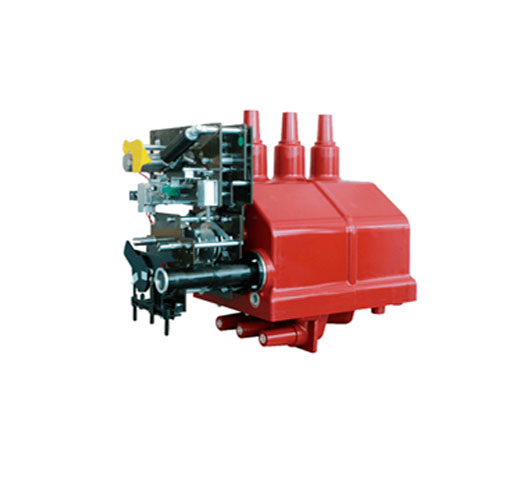
- Replace defective cast-resin components such as bushings, CTs or embedded poles and insulating parts.
- Remove sharp edges and protruding bolts; check torque and alignment of connections.
- Specify factory PD testing for solid-insulated parts and instrument transformers, and ask for the results with the routine test report.
- Consider sealed designs for humid or polluted sites, such as gas-insulated switchgear or solid-insulated units, which keep live parts away from room air.
Frequently Asked Questions
Can partial discharge be heard?
Sometimes. Strong surface discharge or corona can produce an audible hiss or crackle and an ozone smell, but by the time it is audible the defect is usually advanced. Instruments detect PD much earlier.
Is partial discharge always dangerous?
Corona in air on outdoor equipment can be relatively harmless. Internal and surface discharge inside MV switchgear, however, steadily erodes insulation and should be investigated.
How often should PD surveys be done?
Annually is common for clean indoor rooms, with six-monthly surveys or online monitoring for critical or harsh sites, and an extra survey after any repair or new cable termination.
Which detection method is best for gas-insulated switchgear?
UHF sensors are the most effective for GIS, often supported by contact acoustic measurements to locate the source.
Work with METTZ Group
METTZ Group offers a wide range of medium-voltage switchgear to suit many needs – from air-insulated panels for clean electrical rooms to gas- and solid-insulated designs for humid, dusty and polluted sites. Check out our website to learn more, or contact METTZ Group today to work with a representative.
