
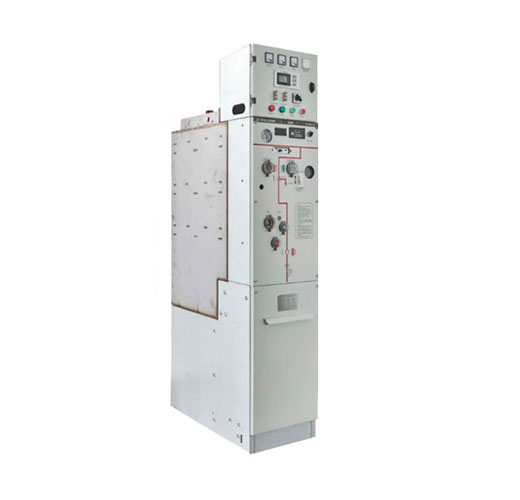
Switchgear can run for 30 to 40 years, but only if it is looked after in the right way at the right time. This guide explains how to choose between time-based and condition-based maintenance, which checks and tests matter most, and how to decide when to refurbish, retrofit or replace.
Why a Program Beats Ad-Hoc Servicing
Most switchgear failures do not come out of nowhere. Industry failure surveys repeatedly point to the same root causes: loose or overheated connections, insulation degraded by moisture and dirt, and operating mechanisms that stick after years without movement. All of these develop slowly and can be found long before they cause a fault.
A maintenance program turns that knowledge into a routine. It defines what is inspected, how often, by whom, with which acceptance criteria, and how the results are recorded. Without it, maintenance tends to happen only after something breaks, which is the most expensive and the most dangerous time to work on energized equipment.
The Four Maintenance Strategies
No single strategy suits every panel on a site. Most mature programs mix them according to how critical each feeder is.
| Strategy | Trigger for work | Best for | Main drawback |
|---|---|---|---|
| Run-to-failure (corrective) | A breakdown | Non-critical, cheap, redundant circuits | Unplanned outages and secondary damage |
| Time-based (preventive) | Calendar or operation count | Sites with little monitoring data; mechanisms | Some work is done too early, some too late |
| Condition-based (predictive) | Measured condition crossing a limit | Critical feeders, large fleets, hard-to-shut-down plants | Needs sensors, data handling and trained analysts |
| Reliability-centered (RCM) | Risk ranking: probability x consequence | Utilities, industrial plants, data centers | Upfront effort to build the asset register and risk model |
Time-based maintenance
Time-based maintenance follows the manufacturer’s instructions and fixed intervals. It is simple to plan and audit, and it remains the right approach for mechanical items that degrade with time and inactivity, such as lubricants in spring-operated mechanisms. Its weakness is that it ignores actual condition: a clean, lightly loaded panel gets the same outage as a dusty, heavily loaded one.
Condition-based maintenance
Condition-based maintenance (CBM) uses measurements to decide when intervention is needed. Typical inputs are infrared thermography, partial discharge surveys, contact resistance trends, breaker timing, SF6 gas density and online temperature sensors. CBM reduces unnecessary shutdowns and catches fast-developing faults that a fixed interval would miss. In 2026, low-cost wireless temperature sensors and digital protection relays make CBM practical even for mid-size industrial sites.
Know Your Switchgear Type Before Planning
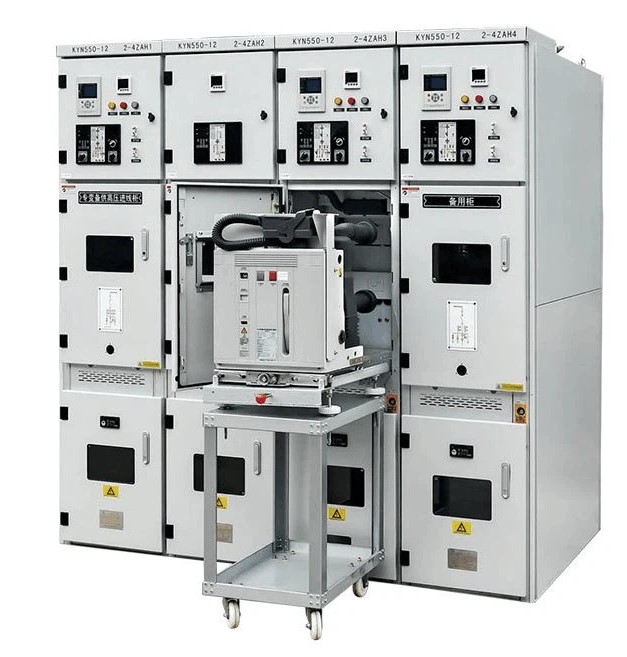
Maintenance needs depend strongly on the insulation technology:
- Air-insulated switchgear (AIS) has exposed insulation surfaces that collect dust and moisture, so cleaning, insulation checks and condensation control are central. Our air-insulated switchgear range is designed for easy access to these areas.
- Gas-insulated switchgear (GIS) has sealed primary parts. The focus moves to gas density or pressure monitoring, mechanism and drive checks, cable terminations and the external parts that are still exposed.
- Solid- and dry-insulated switchgear avoids SF6 and has encapsulated live parts. Inspection concentrates on cable connections, mechanisms and the surface condition of insulation in damp environments.
- Circuit breakers add their own wear model. Vacuum interrupters are rated for a defined number of mechanical operations (class M1 or M2 under IEC 62271-100) and short-circuit interruptions; contact wear indicators and vacuum integrity tests show when an interrupter is near the end of its life.
What a Practical Program Includes
1. Routine inspections without an outage
- Visual walk-down: indicator lamps, relay alarms, gas density gauges, heater operation, door seals, signs of rodents or water.
- Listening and smelling for buzzing, crackling or ozone, which often indicate partial discharge or tracking.
- Room conditions: temperature, humidity, ventilation, cable trench sealing.
- Load readings compared with the rated normal current of each panel.
2. Periodic diagnostics on live equipment
- Infrared thermography of accessible joints and through IR windows, at a load high enough to reveal hot spots.
- Partial discharge survey using TEV and ultrasonic sensors.
- Download of breaker operation counters and relay event records.
3. Outage maintenance
- Cleaning of insulation with approved, lint-free materials and solvents.
- Torque check of busbar and cable connections to the manufacturer’s values.
- Main-circuit resistance measurement with a micro-ohmmeter (typically at 100 A DC or more), compared with factory and previous values.
- Insulation resistance and, where specified, power-frequency withstand tests.
- Breaker timing, travel and coil current tests; lubrication of the mechanism per instructions.
- Function tests of interlocks, earthing switches, shutters and racking devices.
- Secondary injection of protection relays and a trip test through the real breaker.
- Check of DC auxiliary supply and batteries, which must be healthy for any breaker to trip.
Setting Realistic Intervals
Intervals should come from the manufacturer’s manual first, then be adjusted for environment and criticality. As a starting point that many operators use:
| Activity | Clean, controlled room | Harsh site (dust, humidity, mining, coastal) |
|---|---|---|
| Visual inspection | Monthly to quarterly | Weekly to monthly |
| Thermography and PD survey | Annually | Every 6 months |
| Outage maintenance and testing | Every 4 to 6 years | Every 1 to 3 years |
| Breaker mechanism service | Per operation count or manual | Per operation count, shorter interval |
Two events should always trigger an unscheduled check: a breaker that has interrupted a high short-circuit current, and any abnormal result from a live diagnostic survey.
Safety Comes First
Maintenance is when most people get hurt by switchgear. Every task should be covered by a written procedure and a permit-to-work system. Before touching any part, apply the five safety rules used across Europe and many other markets: disconnect, secure against reconnection, verify absence of voltage, earth and short-circuit, and cover or barrier adjacent live parts. In ANSI markets, NFPA 70E and NFPA 70B (now an enforceable standard for electrical equipment maintenance) set similar expectations, including arc flash risk assessment and suitable PPE.
Remote racking, remote operation and arc flash detection relays reduce exposure further and are worth considering whenever older panels are upgraded.
Refurbish, Retrofit or Replace?
Life extension is a decision, not a default. Record each panel’s condition, spares availability and fault history, then choose one of these paths:
- Refurbishment: overhaul mechanisms, replace worn contacts, seals and auxiliary parts. Suitable when the design is sound and spares exist.
- Retrofit: install modern vacuum breakers, protection relays or monitoring sensors in the existing enclosure and busbar system. This often gives 15 to 20 more years at a fraction of replacement cost, and removes oil or SF6 breakers from service.
- Replacement: needed when ratings no longer match the network (for example, fault levels have grown beyond the rated short-time current), when the enclosure has no internal arc classification and the risk is unacceptable, or when parts are no longer available.
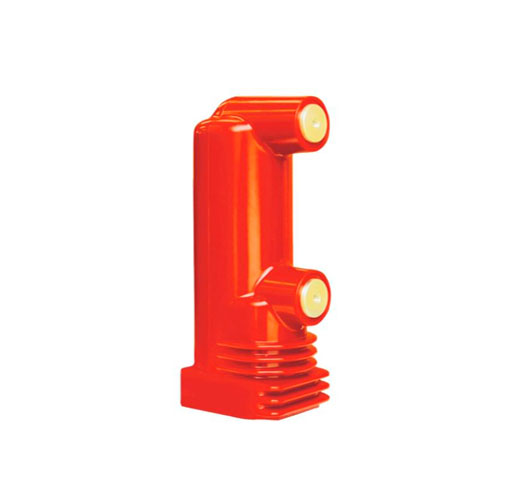
Replacement components such as vacuum interrupters, embedded poles and coils and modern vacuum circuit breakers are the most common building blocks of a retrofit.
Records Turn Data Into Decisions
A program only improves reliability if results are kept and compared. Store each measurement with the date, load, ambient conditions and instrument used. A contact resistance that has risen 30 percent since the last outage tells far more than a single reading inside the limit. Many operators now feed these results into a simple asset health index that ranks panels for the next budget cycle.
Frequently Asked Questions
How long does medium-voltage switchgear last?
Well-maintained MV switchgear typically serves 25 to 40 years. The enclosure and busbars often outlast the switching devices, which is why retrofitting breakers and relays is a common way to extend life.
Is condition-based maintenance always better than time-based?
Not always. CBM saves outages on critical, well-instrumented equipment, but mechanisms and lubricants still age with time. Most programs combine both.
Does gas-insulated switchgear need maintenance?
Less than AIS, but not zero. Gas density monitoring, mechanism checks, cable termination inspections, interlock tests and relay testing are still required.
What is the single most useful diagnostic test?
For most sites, regular infrared thermography combined with a partial discharge survey finds the largest share of developing faults without an outage.
Work with METTZ Group
METTZ Group offers a wide range of medium-voltage switchgear to suit many needs – from compact air-insulated panels for industrial plants to gas- and solid-insulated units and retrofit breakers for ageing installations. Check out our website to learn more, or contact METTZ Group today to work with a representative.
