
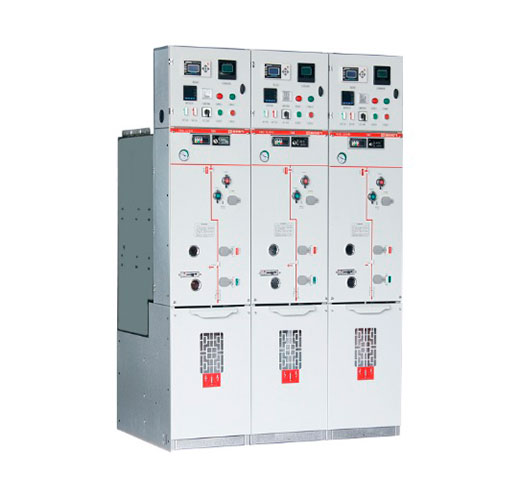
The same switchgear panel can be a good or a poor choice depending on the network around it. Topology decides how many switching points you need, which devices must interrupt faults, how protection is graded and how quickly customers get power back after a fault. This article compares the main distribution layouts and shows how utility and industrial networks apply them differently.
Why Topology Comes First
Before choosing panel types, a designer has to answer three questions:
- What happens when a cable or transformer fails? Does everything downstream go dark until repair, or can supply be switched to another path?
- How fast must supply be restored? Hours, minutes or a fraction of a second?
- Who operates the network? A utility control centre with remote switching, a plant electrician, or nobody on site?
The answers lead to one of a small family of configurations. Each has a typical switchgear “fingerprint”. General switchgear functions and specification steps are covered in our earlier article on switchgear in power distribution; here the focus is on network layout.
Radial Networks
A radial network has one source and one path to each load: substation busbar, feeder breaker, cable, then transformers or loads tapped along the way.
- Switchgear: one circuit breaker with overcurrent and earth fault protection at the head of each feeder; simple switches or fuses at the taps.
- Protection: straightforward time-graded overcurrent, with typical grading margins of 0.25-0.4 s between successive relays, or current grading using fuses.
- Strengths: lowest cost, simple operation, easy protection.
- Weakness: a fault anywhere on the feeder interrupts every customer downstream until it is repaired.
Radial layouts suit rural overhead networks (often with reclosers and sectionalizers), small commercial sites and non-critical industrial loads.
Open Ring (Ring Main) Networks
In an open ring, a cable loop starts and ends at the same substation, or at two substations, and passes through a series of secondary substations. One switch in the loop, the normally open point, is kept open, so the ring actually runs as two radial feeders.
- Switchgear: ring main units (RMUs) at each secondary substation, typically two load break switches for the ring cables plus a switch-fuse or circuit breaker for the transformer.
- Protection: feeder breakers at the source substation clear the fault. Fault passage indicators in each RMU show which cable section is faulty.
- Restoration: the faulty section is isolated by opening switches either side, and the normally open point is closed to feed the rest from the other end. With motorized, remotely controlled RMUs and automatic fault location, isolation and service restoration (FLISR), this takes a minute or less instead of hours.
This is the standard design for urban cable networks worldwide. Our separate guide on smart ring main units covers the digital side in detail.
Closed Ring and Meshed Networks
When the ring runs closed, every load is fed from two directions at all times. A cable fault does not interrupt anyone, provided both ends of the faulty section trip.
- Switchgear: circuit breakers on both sides of each section, because load switches cannot clear faults.
- Protection: simple overcurrent grading no longer works. Designers use directional overcurrent, line differential protection over fibre, or communication-assisted schemes.
- Trade-off: highest reliability, but more breakers, more complex protection and higher fault levels.
Closed rings appear in critical industrial sites, airports, large campuses and some city-centre utility networks.
Substation Busbar Schemes
Topology also applies inside the substation, where the switchgear itself is arranged.
| Scheme | Description | Reliability | Typical use |
|---|---|---|---|
| Single busbar | All feeders on one bus | A bus fault or bus maintenance stops everything | Small substations, simple plants |
| Single busbar with bus section | Two halves joined by a bus coupler or bus section breaker | Half the board survives a bus fault | Most industrial main substations |
| Main-tie-main (secondary selective) | Two incomers, two bus sections, normally open tie; automatic transfer on loss of one incomer | Supply continues after loss of one transformer or utility feed | Data centres, hospitals, process plants |
| Double busbar | Every feeder can connect to either of two busbars through selector disconnectors or duplicate breakers | Busbar maintenance without feeder outage; flexible grouping | Utility primary substations, large power plants, HV and high-end MV |
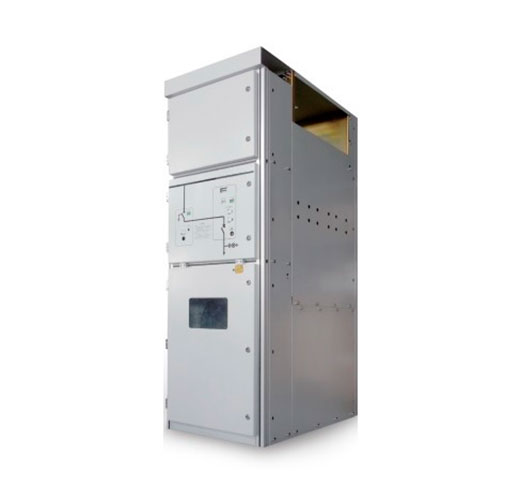
In MV, double-busbar layouts are usually built as compact gas-insulated switchgear, because two air-insulated busbars and selector disconnectors per panel take a lot of space. A double-bus panel also needs more interlocking to prevent off-load disconnectors from being operated under load.
Utility vs Industrial Networks
| Aspect | Utility distribution | Industrial distribution |
|---|---|---|
| Typical layout | Open rings fed from primary substations; radial overhead in rural areas | Radial or secondary selective from a main substation; closed rings for critical loads |
| Number of switching points | Thousands, spread over a wide area | Tens to hundreds, concentrated in a few rooms |
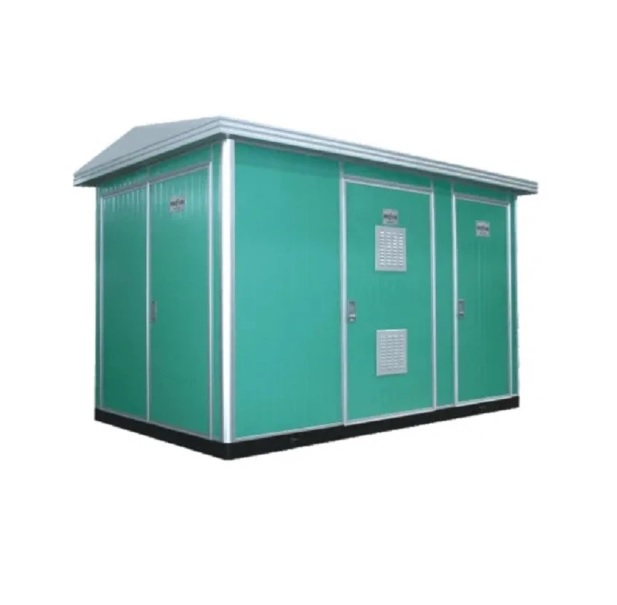
| Preferred equipment | Compact RMUs, pole-mounted reclosers, prefabricated substations | Withdrawable breaker panels, vacuum contactor motor starters, switch-fuse transformer feeders |
| Fault levels | Moderate, typically 16-25 kA | Often high near large transformers and motors, 25-40 kA |
| Operation | Remote control from a control centre; few staff on site | Local trained staff; frequent switching of motors and process loads |
| Main priority | Reduce outage minutes per customer; standardize equipment | Keep the process running; protect large rotating machines |
Other Design Factors
Neutral earthing
Solidly earthed, resistance-earthed, compensated (Petersen coil) and isolated neutral systems produce very different earth fault currents. This affects relay types, the need for sensitive or directional earth fault protection, and the insulation stress on cables and switchgear.
Distributed generation and storage
Solar, wind and battery systems connected at MV make power flow in both directions. Feeders that were designed as radial may now see fault current from both ends, so protection may need directional elements, and switchgear may need ratings for higher fault levels.
Fault levels and growth
Adding transformers, closing rings or connecting generators raises fault levels. Ratings should include headroom for the network as it will look in 10-20 years, not just at handover.
Automation readiness
Specify motor operators, auxiliary supplies, fault passage indicators and a communication interface (IEC 61850, IEC 60870-5-104 or DNP3) even if remote control is not used on day one. Retrofitting later is far more expensive.
Choosing a Configuration: Quick Guide
- Low budget, outages acceptable: radial with breakers at the source.
- Urban utility network: open ring with RMUs, ideally motorized and remotely monitored.
- Industrial plant with two supplies: main-tie-main with automatic transfer.
- No interruption acceptable: closed ring or double busbar with unit protection.
Frequently Asked Questions
Why are most rings operated open?
An open ring keeps protection simple and fault levels lower while still allowing quick restoration from the other end. Closing the ring requires breakers and unit or directional protection on every section.
Can ring main units be used in a closed ring?
Only if the ring positions are equipped with circuit breakers and suitable protection. Standard load break switches cannot interrupt fault current.
When does a double busbar make sense in MV?
When busbar maintenance must not cause feeder outages, or when feeders need to be split between sources, as in large utility primary substations and power plants.
Work with METTZ Group
METTZ Group offers a wide range of switchgear for distribution networks to suit many needs, from medium-voltage switchgear and gas-insulated switchgear to complete prefabricated substations. Check out our website to learn more, or contact METTZ Group today to work with a representative.
