
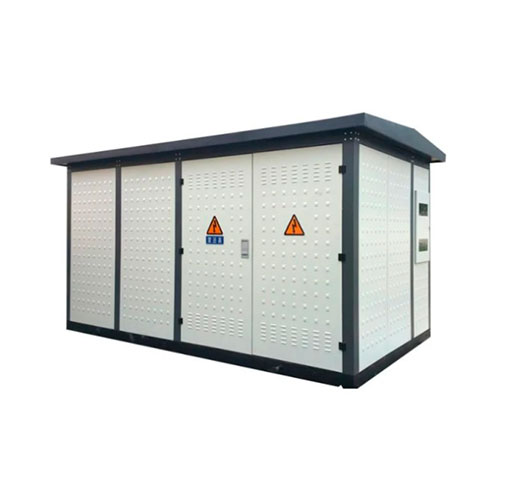
A prefabricated substation brings MV switchgear, a distribution transformer and an LV board together in one factory-built, type-tested enclosure. This guide explains the main designs, what IEC 62271-202 requires, where these units fit best and the points that matter most when you specify one.
What Is a Prefabricated Substation?
A prefabricated substation is a factory-assembled, factory-tested unit that converts medium voltage (typically 6-35 kV) to low voltage (usually 400/230 V, or up to about 1 kV for renewable and industrial uses). The industry uses several names for it: compact substation, package substation, kiosk substation, box-type substation, or unit substation.
The international standard is IEC 62271-202, “High-voltage/low-voltage prefabricated substations”. It covers units with rated voltages above 1 kV and up to 52 kV, installed outdoors at ground level or partly underground, and operated from outside (non-walk-in) or from inside (walk-in).
A prefabricated substation is a distribution asset. It does not convert AC to DC, and it is not meant for transmission-level voltages. Those jobs belong to converter stations and HV substations.
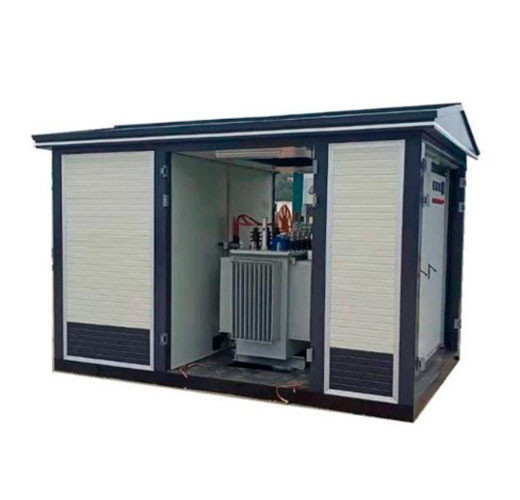
What Is Inside
- MV switchgear, typically a ring main unit with two cable-ring switches and a transformer feeder protected by fuses or a vacuum circuit breaker.
- Distribution transformer, oil-immersed or dry-type, usually 100-2,500 kVA (larger in special designs), built to IEC 60076.
- LV switchboard with incomer, outgoing feeders, metering and, where needed, a capacitor bank. It is designed to IEC 61439.
- Interconnections: MV cables or busbars between switchgear and transformer, and LV busbars from transformer to board.
- Enclosure: steel, aluminium, glass-reinforced plastic or concrete, with ventilation, oil containment and earthing.
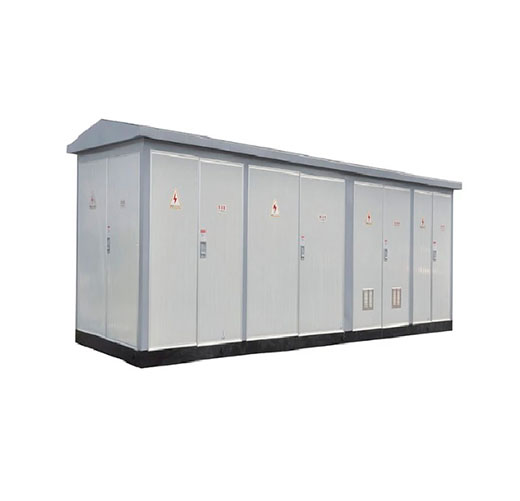
The Main Design Families
European-style (separate compartments)
The MV switchgear, transformer and LV board sit in separate compartments of one housing, each with its own door. This layout gives flexible equipment choice, easy maintenance and room for automation, metering and capacitor banks. It is common in Europe, the Middle East, Africa and Asia. In China it is known as the “YB” type.
American-style (pad-mounted, combined)
Here the transformer tank is the main body of the unit. A load break switch and fuses (often bay-o-net and current-limiting fuses) are immersed in the same oil. MV and LV terminals sit in a front cabinet that can be locked and is tamper-resistant. These units are very compact and economical for loop-fed residential and solar networks. In China this is the “ZGS” type.
Walk-in and skid-mounted packages
Larger walk-in enclosures, or open skids, carry several transformers, full MV switchboards and control rooms. They are common at mines, oil and gas sites, and battery storage plants. Fully equipped “e-houses” extend the same idea to complete electrical rooms.
| Feature | European compartment type | American pad-mounted type |
|---|---|---|
| Footprint | Medium | Smallest |
| MV protection | RMU with fuses or VCB | Oil-immersed fuses and load break switch |
| Flexibility / automation | High | Limited |
| Transformer change-out | Simple, transformer is separate | Whole unit replaced or repaired |
| Typical use | Urban networks, industry, commercial buildings | Residential loops, PV plants, rural networks |
What IEC 62271-202 Checks
The value of a prefabricated substation comes from type testing the whole assembly, not just each component. Key verifications include:
- Temperature rise and enclosure class: the enclosure must not overheat the transformer. Classes 5, 10, 15, 20, 25 and 30 indicate how many kelvin the enclosure adds to transformer temperature rise, so the transformer may need derating.
- Internal arc classification (IAC): shows that people near the unit are protected if an arc fault occurs. IAC-A covers authorized personnel, IAC-B covers the general public, and IAC-AB covers both, with the accessible sides stated.
- Dielectric and short-time withstand of the interconnections and the earthing circuit.
- Mechanical stress: roof loads, impacts on the enclosure, and the degree of protection (IP code).
- Sound level and electromagnetic field where specified.
Where Prefabricated Substations Shine
- Urban distribution: small footprint, low profile and finishes that blend into streets and parks.
- Solar and wind farms: inverter step-up stations such as 0.8/33 kV, often with dual LV windings and monitoring.
- Battery energy storage: MV collector stations next to battery containers.
- EV charging hubs: fast deployment of 1-2.5 MVA where demand appears quickly.
- Data centres and industrial parks: repeatable, modular blocks of capacity.
- Mining and construction: skid or trailer units that move as the site develops, with ruggedized versions for tropical climates and dust.
- Temporary supply: mobile units cover outages or maintenance of permanent substations.
Compared with a site-built brick substation, a prefabricated unit typically cuts on-site work from months to days. It reduces civil works to a foundation and cable trenches, and it arrives already tested.
Specification Checklist
- MV rated voltage, short-circuit level and network type (radial or ring).
- Transformer rating, vector group, losses tier, and oil or dry type (fire and environmental rules).
- LV feeder number and ratings, metering, and power-factor correction.
- Enclosure class, IAC classification, IP rating, and corrosion category for coastal or tropical sites.
- Switchgear insulation: consider SF6-free options (vacuum with air or solid insulation) to meet F-gas rules.
- Remote monitoring: RTU, IEC 61850 or Modbus, and fault passage indicators for smart-grid integration.
- Transport limits, lifting points, foundation design and oil containment.
Frequently Asked Questions
Why choose a prefabricated substation over a traditional one?
It needs less space, installs faster, costs less in civil works and is verified as a complete assembly under IEC 62271-202, which reduces design and commissioning risk.
What safety features should it have?
Look for internal arc classification matching who can approach the unit, mechanical interlocks between switches and doors, padlockable compartments, proper earthing and oil containment.
Can a compact substation be relocated?
Yes. Skid- and trailer-mounted versions are built to be moved. Standard kiosks can also be lifted onto a new foundation after disconnection.
What is the typical rating range?
Most units are 100-2,500 kVA at 10-35 kV. Project-specific designs for renewables and industry go higher.
Work with METTZ Group
METTZ Group offers a wide range of prefabricated and compact substations to suit many needs, from kiosk units for city networks to ruggedized packages for mines, renewables and tropical sites, together with matching power transformers. Check out our website to learn more, or contact METTZ Group today to work with a representative.
