
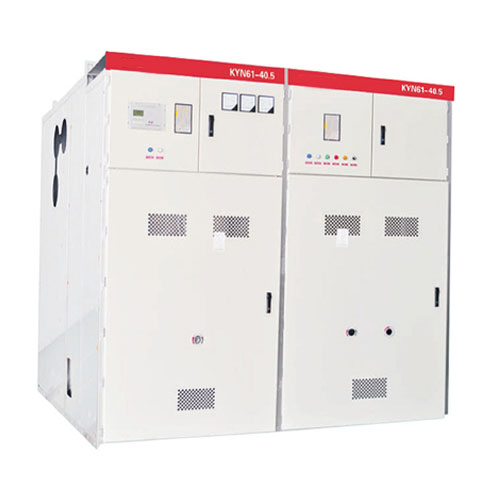
Switchgear is one of the most familiar pieces of equipment in any electrical room, yet it is surrounded by half-truths. This article clears up ten common myths, explains how modern standards actually classify switchgear, and shows where the technology is heading.
Myth 1: “Switchgear regulates voltage”
It does not. Switchgear switches, isolates, protects and measures. Voltage regulation is the job of transformer tap changers, voltage regulators and reactive power equipment such as capacitor banks.
A switchgear assembly combines switching devices (circuit breakers, load break switches, disconnectors, earthing switches, fuses) with measuring transformers, protection relays, busbars and interlocks inside an enclosure. Its purpose is to let operators connect and disconnect circuits safely and to clear faults automatically before they spread.
Myth 2: “A breaker trips when the voltage gets too high”
Medium-voltage circuit breakers react to current, not to a voltage threshold. Current transformers feed a protection relay, which compares measured current against settings for overcurrent, earth fault or differential protection. When a setting is exceeded, the relay energizes the breaker’s trip coil and the contacts open, usually within a few tens of milliseconds.
Voltage-based functions (undervoltage, overvoltage, frequency) do exist in modern relays, but they are additional functions. The core job of the breaker is to interrupt short-circuit currents that can reach 25 kA, 31.5 kA or more at distribution level.
Myth 3: “Medium voltage means 600 V to 69 kV”
That range comes from older North American practice. Under IEC 62271-200, AC metal-enclosed switchgear covers rated voltages above 1 kV up to and including 52 kV. Typical rated voltages are 7.2, 12, 17.5, 24, 36 and 40.5 kV. Low-voltage assemblies (up to 1,000 V AC) are covered by IEC 61439, and high-voltage gas-insulated switchgear above 52 kV by IEC 62271-203.
| Level | Typical range | Main standard |
|---|---|---|
| Low voltage (LV) | up to 1 kV AC | IEC 61439-1/-2 |
| Medium voltage (MV) | above 1 kV to 52 kV | IEC 62271-200 |
| High voltage (HV) | above 52 kV | IEC 62271-203 (GIS), IEC 62271-100/-102 (devices) |
Myth 4: “Metal-clad is the safest type, full stop”
“Metal-clad”, “metal-enclosed”, “pad-mounted” and “vault” are useful names, but several of them are regional terms. IEC replaced the old metal-clad / compartmented / cubicle labels with more precise classes:
- LSC (Loss of Service Continuity): LSC1, LSC2, LSC2A or LSC2B describe which parts of the switchgear stay energized when one compartment is opened for work.
- Partition class: PM (metallic partitions) or PI (insulating partitions).
- IAC (Internal Arc Classification): confirms by type test that hot gases from an internal arc are directed away from people on the stated sides (for example IAC AFLR 25 kA 1 s).
Safety for personnel is therefore defined by IAC and interlocking, while service continuity is defined by LSC. A buyer should ask for both, not for a label.
Myth 5: “Arc flash is rare, so internal arc rating is optional”
Internal arcs are rare, but their consequences are severe: temperatures of several thousand degrees, a pressure wave that can blow doors open, and toxic gases. Most arc events start during operation or maintenance, exactly when people stand in front of the panel. IAC-tested switchgear, pressure relief ducts, arc detection relays and remote racking all reduce this risk. For any switchroom where staff operate the equipment, IAC should be a baseline requirement.
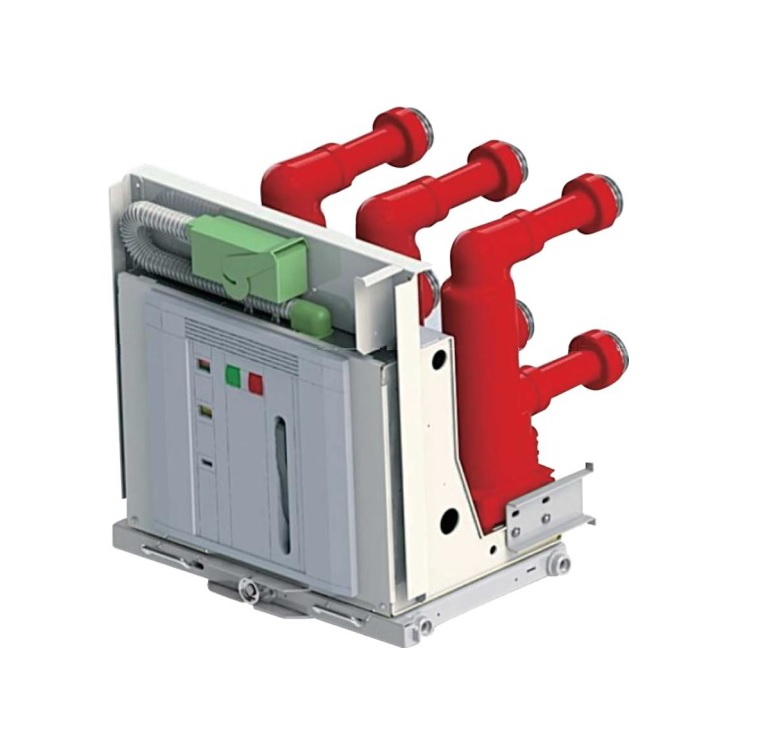
Fact 6: Vacuum now dominates medium-voltage switching
Oil and air-blast breakers have largely disappeared from new MV installations. Today, most MV circuit breakers use vacuum interrupters, which offer long electrical life, compact size and practically no maintenance of the arcing chamber. Vacuum contactors handle frequent motor switching, while SF6 breakers remain common mainly at higher voltages.
Fact 7: SF6 is the most potent greenhouse gas regulated under the Kyoto Protocol
Sulfur hexafluoride is an excellent insulating and arc-quenching gas, which is why it made gas-insulated switchgear so compact. It is also a greenhouse gas with a global warming potential more than 23,000 times that of CO2, and it stays in the atmosphere for thousands of years.
The EU F-gas Regulation (EU) 2024/573 now phases out fluorinated gases in new switchgear step by step:
- MV switchgear up to and including 24 kV: no new equipment with F-gases of GWP 10 or more from 1 January 2026.
- MV switchgear above 24 kV up to 52 kV: from 1 January 2030.
- HV switchgear above 52 kV: from 2028 or 2032, depending on voltage and short-circuit rating.
Limited exemptions apply where no suitable alternative is offered in a tender. Projects outside Europe are not bound by these rules, but many utilities and investors already ask for SF6-free designs.
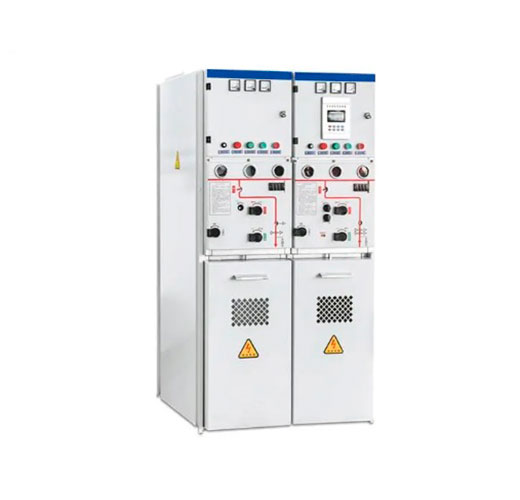
Fact 8: SF6-free does not mean bigger
Vacuum interruption combined with solid insulation, dry air or other low-GWP gas mixtures now achieves footprints close to classic SF6 ring main units. Solid-insulated switchgear encapsulates live parts in epoxy, while dry-air designs use slightly pressurized air with a vacuum breaker. Both avoid F-gas reporting and end-of-life gas recovery.
Fact 9: Switchgear is getting smarter
Modern switchgear is increasingly “digital”. Typical features include:
- IEC 61850 communication between relays and the substation control system.
- Wireless temperature sensors on cable terminations and busbar joints.
- Partial discharge monitoring to detect insulation defects early.
- Motorized racking and remote operation, keeping operators outside the arc flash boundary.
- Low-power instrument transformers (sensors to IEC 61869) that reduce panel size and weight.
This data supports condition-based maintenance instead of fixed calendar intervals.
Fact 10: New loads are reshaping switchgear demand
Data centres, battery energy storage, solar and wind farms and EV charging hubs all need MV switchgear, often in compact or containerized form. These applications bring new requirements: frequent switching, high availability, bidirectional power flow and remote monitoring from day one. Selection now starts with the application profile, not just voltage and current.
Frequently Asked Questions
Is switchgear the same as a distribution board?
No. A distribution board is a low-voltage assembly for final circuits. Switchgear usually refers to MV or HV assemblies with circuit breakers and protection, although LV switchgear also exists at main incomer level.
What does IAC AFLR mean?
It means the switchgear has passed internal arc tests for an area accessible to authorized personnel only (A), with protection on the front (F), lateral (L) and rear (R) sides.
Can existing SF6 switchgear stay in service in the EU?
Yes. The F-gas rules restrict placing new equipment on the market. Installed equipment can stay in service, but leak checks, gas handling by certified staff and recovery at end of life still apply.
How long does MV switchgear last?
Well-maintained MV switchgear is commonly designed for 30 years or more of service. Mechanical endurance of the switching devices and environmental conditions have the biggest influence.
Work with METTZ Group
METTZ Group designs, manufactures and commissions electrical equipment from 1 kV up to 220 kV, including versions for mining and tropical conditions, and supports customers through local partners in 29 countries. METTZ Group offers a wide range of medium-voltage switchgear to suit many needs – from compact SF6-free ring main units to withdrawable air-insulated panels for industrial plants and utility substations. Check out our website to learn more, or contact METTZ Group today to work with a representative.
