
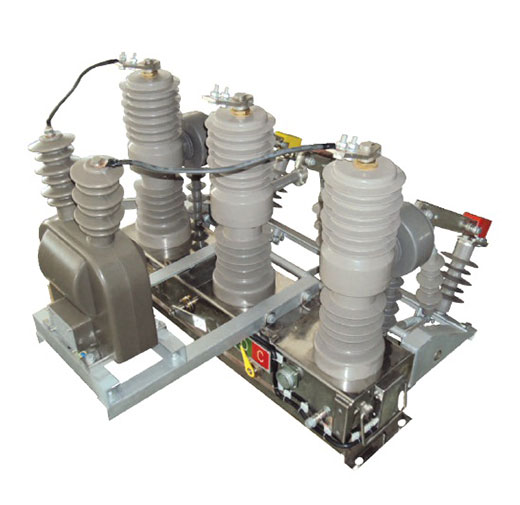
Open-pit mines, quarries and remote industrial sites expose medium-voltage breakers to dust, altitude, extreme temperatures, vibration and constant relocation. This guide sets out a practical selection checklist for outdoor VCBs in those conditions – from electrical ratings to environmental classes and mining-specific protection.
What Makes Mining Duty Different
A utility feeder breaker may operate a few times a year. A breaker feeding an electric shovel, dragline or crusher may switch every day, see frequent fault trips from trailing cable damage and be moved with its substation as the pit advances. At the same time it faces conditions far outside the IEC 62271-1 “normal service conditions” that standard designs are tested for:
- Abrasive and conductive dust (coal, iron ore, copper concentrate) that settles on insulation.
- Altitudes above 1,000 m – many copper, gold and lithium mines operate above 3,000 m.
- Ambient temperatures from -40 °C in northern mines to above 45 °C in desert pits, with high solar radiation.
- Vibration and shock from blasting, heavy vehicles and skid relocation.
- Corrosive atmospheres near processing plants, coastal ports or acid leach facilities.
- Limited maintenance access and long distances to spare parts.
Step 1: Get the Electrical Ratings Right
| Rating | Typical mining values | Selection note |
|---|---|---|
| Rated voltage | 7.2, 12, 24, 40.5 kV | Match the mine distribution voltage (often 6.6, 11, 22 or 33 kV) |
| Rated normal current | 630-1250 A (2000 A at main intakes) | Derate for high ambient temperature and solar gain |
| Short-circuit breaking current | 20-31.5 kA | Base on fault study at the point of installation, including future transformer additions |
| Mechanical endurance | Class M2 (10,000 operations) or higher | Essential for frequent switching of mobile equipment |
| Operating sequence | O-0.3 s-CO-3 min-CO or faster | Auto-reclosing is used on overhead pit lines but normally blocked on trailing cable circuits |
Step 2: Correct for Altitude
Air density falls with altitude, reducing the dielectric strength of external insulation. IEC 62271-1 requires an altitude correction for installations above 1,000 m. In practice, an outdoor breaker for 3,000-4,000 m often needs higher-rated external insulation (for example, the next voltage class bushings or sheds) or a design specifically tested for that altitude. The vacuum interrupter itself is unaffected, because its internal insulation does not depend on air. Current ratings may also need derating because thinner air cools less effectively.
Step 3: Specify Pollution and Creepage
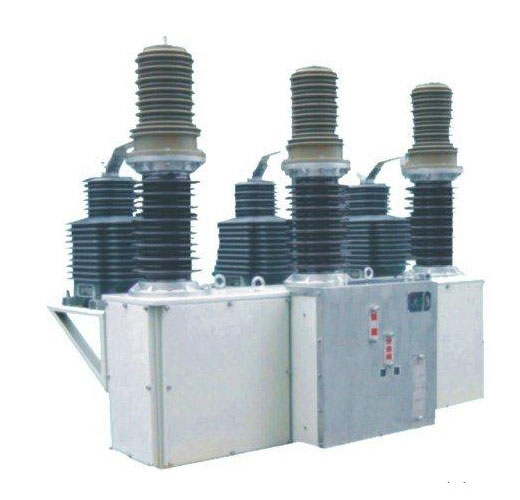
Dust combined with dew or fog forms a conductive layer that can lead to tracking and flashover. Specify the site pollution severity according to IEC TS 60815 and select insulation with matching creepage distance. Mining and coastal sites are commonly classed as heavy or very heavy. Hydrophobic materials – silicone rubber sheds or hydrophobic cycloaliphatic epoxy – help shed water and contamination and recover their surface properties after cleaning.
Step 4: Temperature, Ice and Solar Radiation
- Choose the minimum ambient temperature class (-25 °C or -40 °C under IEC 62271-1) that covers the site. Low temperature affects mechanism lubricants, seals and battery-backed controls.
- Specify anti-condensation heaters with thermostat or hygrostat control in mechanism and control compartments.
- For high ambient temperatures, check current derating and consider sun shields for control cabinets.
- Where icing occurs, specify the ice-coating class (1, 10 or 20 mm) so the mechanism can still operate.
Step 5: Enclosure, Ingress and Corrosion Protection
- IP rating to IEC 60529: IP54 is a common minimum for outdoor mechanism and control enclosures on mine sites; IP55 or IP65 is preferred where dust is heavy or water jets are used for cleaning.
- Corrosion class: specify enclosure materials and coatings for the atmosphere – hot-dip galvanized steel, stainless steel or aluminum with coating systems aligned to ISO 12944 categories C4 or C5 where corrosive.
- Gaskets and cable glands that remain flexible at the minimum temperature and resist UV.
Step 6: Choose the Insulation Concept
Outdoor vacuum breakers are built in several ways:
- Embedded-pole (solid insulated) outdoor breakers, with the interrupter cast in outdoor-grade epoxy or covered in silicone. These are SF6-free and well suited to dusty sites.
- Tank-type breakers where the interrupters sit inside an earthed metal tank. Traditionally these used SF6 as insulation around the vacuum interrupter; SF6-free versions using dry air or solid insulation are now preferred for regulatory and environmental reasons.
- Breakers housed in kiosk or skid switchgear, where an indoor-type VCB is installed in a sealed, conditioned outdoor enclosure – often the best option for mobile substations.
Step 7: Mechanical Robustness and Mobility
For mobile or skid-mounted substations, ask for evidence that the breaker and its frame tolerate transport and vibration – for example, seismic qualification to IEC 62271-210 or project-specific vibration tests. Check that interrupters are secured, that the mechanism has positive transport locks and that primary connections use flexible links rather than rigid bars where frames can flex.
Step 8: Protection and Control for Mining Circuits
- Sensitive earth-fault protection. Mine networks are typically resistance-earthed to limit earth-fault current, and trailing cables need fast, sensitive earth-fault and earth-continuity (pilot) monitoring under national mining regulations.
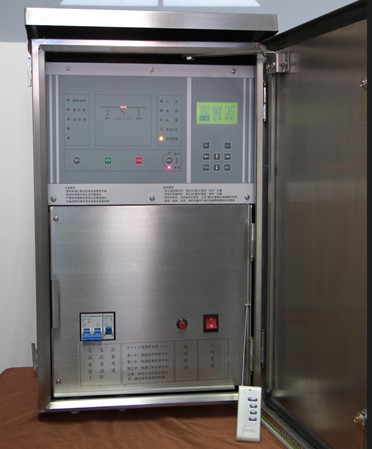
- Integrated current transformers on the bushings and a protection relay or recloser controller in the cabinet.
- Remote operation and monitoring over fiber, radio or cellular links to the mine control room, so operators do not need to approach equipment in poor weather or during faults.
- Surge protection against lightning on overhead pit lines and switching surges on large motor loads.
- Padlockable isolation and earthing facilities for safe cable changes.
Underground Mines: A Different Set of Rules
Underground coal and gassy mines require switchgear with explosion protection – commonly flameproof (Ex d) enclosures to the IEC 60079 series or the relevant national standard – and mine-specific approval. Dedicated mining VCBs are designed for this duty; an outdoor breaker is not a substitute.
Selection Checklist
- System voltage, load current and fault level from a recent study.
- Duty: switching frequency, motor sizes, reclosing requirement.
- Altitude, minimum and maximum temperature, ice, wind and solar radiation.
- Pollution class and required creepage.
- IP rating and corrosion category.
- Fixed, skid-mounted or mobile installation; vibration requirements.
- Protection, earthing system and communication interfaces.
- Spare parts, local support and training for site electricians.
Frequently Asked Questions
Does altitude affect the vacuum interrupter?
No. The interrupter’s internal insulation is independent of air pressure. Altitude affects external insulation and cooling, so bushings, clearances and current ratings must be checked.
What IP rating is needed for a mining outdoor VCB?
IP54 is a common minimum for mechanism and control compartments; IP55 or IP65 suits very dusty sites or areas cleaned with water jets.
Can a standard outdoor recloser be used for a mine?
Sometimes, on overhead pit lines. For trailing cable circuits feeding mobile equipment, protection and earth-continuity monitoring must meet mining regulations, which standard reclosers may not provide.
Work with METTZ Group
METTZ Group designs and supplies equipment for mining and tropical conditions, including outdoor vacuum circuit breakers and mining VCBs, to suit many needs – from pole-mounted feeder protection to complete mobile and prefabricated substations. Check out our website to learn more, or contact METTZ Group today to work with a representative.
