
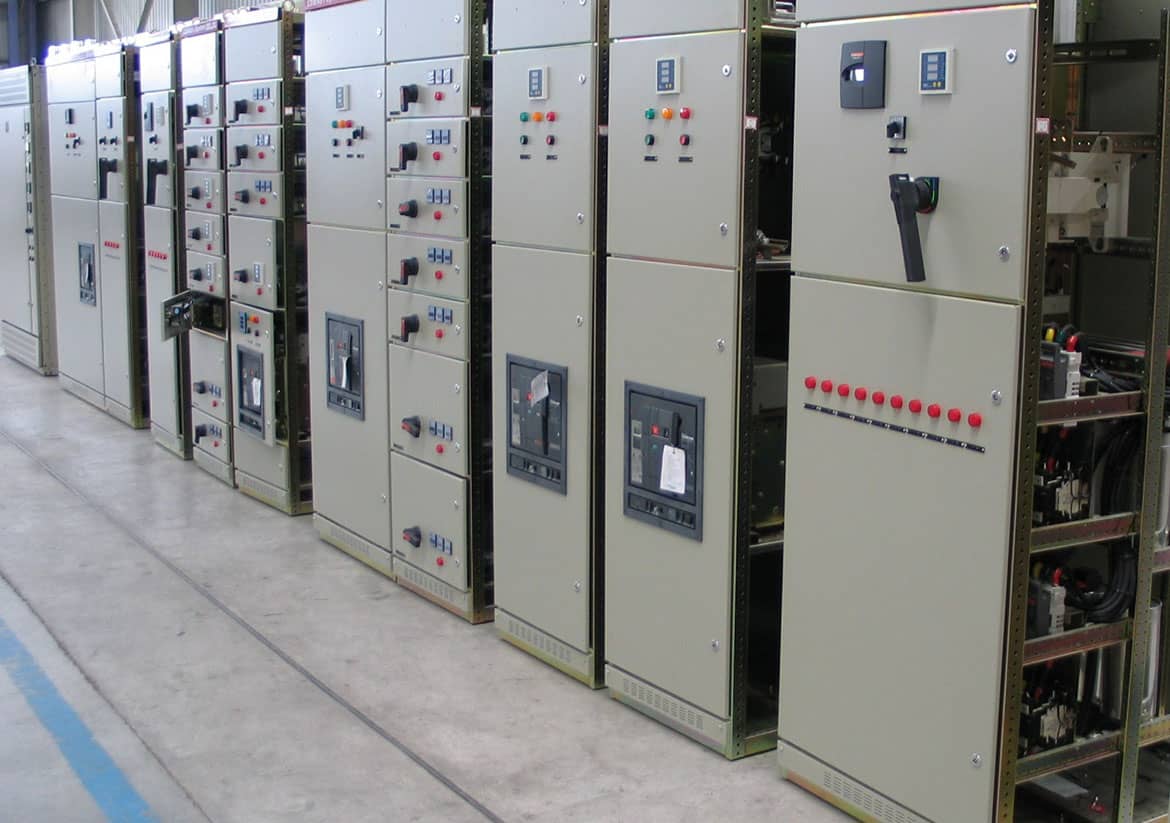
Three bids for the same LV switchboard can look identical on the cover sheet and be very different inside. One may lack verified short-circuit ratings, another may run hot at full load, and a third may be impossible to extend. This guide gives engineers and buyers a structured way to evaluate low-voltage switchgear, from the project’s own requirements to tender comparison and lifecycle cost.
Step 1: Pin Down Your Own Requirements
A good evaluation starts before the first offer arrives. Without a clear requirement, bidders will each interpret the project differently and the offers will not be comparable.
Loads and currents
- Build a load schedule with the rated power, power factor, duty and starting method of every significant load.
- Apply realistic demand and diversity factors, then add a growth margin, usually 20-30 % for industrial sites.
- Note harmonic-producing loads such as variable-speed drives and rectifiers. They increase heating and may need a full-size or oversized neutral and harmonic filtering.
Fault levels
The prospective short-circuit current at the main busbar is set mainly by the transformer. For example, a 2,500 kVA, 400 V transformer with 6 % impedance gives a rated current of about 3,600 A and a short-circuit current approaching 60 kA before cable and source impedance are counted. Add motor contribution, and check any parallel transformers or generators. The switchgear’s short-time withstand and every protective device’s breaking capacity must exceed this figure.
Site and operating conditions
- Ambient temperature, humidity, dust, altitude and corrosive atmosphere.
- Available room size, floor loading, cable entry (top or bottom) and access (front only or front and rear).
- Who will operate and maintain the board, and whether work must be done while adjacent circuits stay live.
Step 2: Translate Requirements into IEC 61439 Ratings
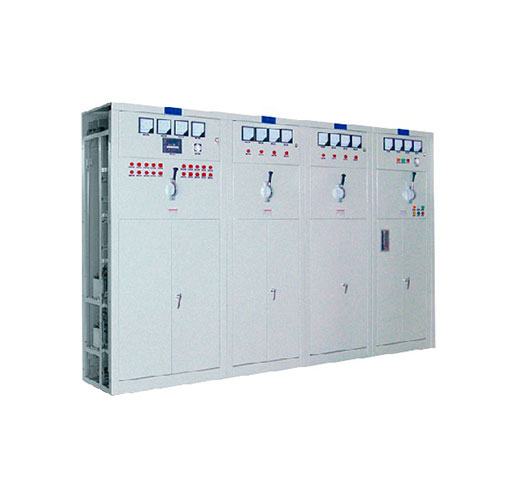
IEC 61439-1 and -2 define the characteristics that every power switchgear assembly must declare. Put them in the specification and ask every bidder to confirm them line by line.
| Characteristic | What to specify |
|---|---|
| Rated voltage and insulation | Ue (e.g. 400 V or 690 V), Ui, rated impulse withstand Uimp, overvoltage category |
| Rated current of assembly (InA) | Based on load schedule plus margin |
| Rated current of each circuit (InC) and rated diversity factor (RDF) | Realistic simultaneous loading of outgoing circuits |
| Short-circuit ratings | Rated short-time withstand Icw (e.g. 65 kA, 1 s) and peak withstand Ipk, or conditional short-circuit current |
| Form of internal separation | Typically Form 3b or 4b for main boards and MCCs |
| Type of functional units | Fixed, plug-in or withdrawable |
| Degree of protection and impact | IP code to IEC 60529 and IK code to IEC 62262 |
| Earthing system | TN-S, TN-C-S, TT or IT, and neutral size |
| Arc fault performance | Arcing tests to IEC TR 61641, if required |
Step 3: Check Design Verification, Not Just Datasheets
Under IEC 61439, the original manufacturer of the assembly system must prove the design by design verification: testing, calculation or comparison with a tested reference design. Key verifications include temperature rise, short-circuit withstand, dielectric properties, clearances and creepage, protective circuit effectiveness and mechanical operation. The panel builder then carries out routine verification on every assembly before delivery.
When evaluating offers, ask:
- Is the offered configuration covered by design verification reports, especially for temperature rise at the offered currents and short-circuit at the offered Icw?
- Were the tests done with the same busbar sizes, enclosure and devices that are being offered?
- Who is the original manufacturer and who is the assembly manufacturer? If they differ, does the assembler follow the original manufacturer’s instructions exactly?
- Will routine verification reports be supplied with the delivery?
A board that has never been tested in the offered arrangement is a risk, no matter how good its components are.
Step 4: Evaluate Protection and Safety Features
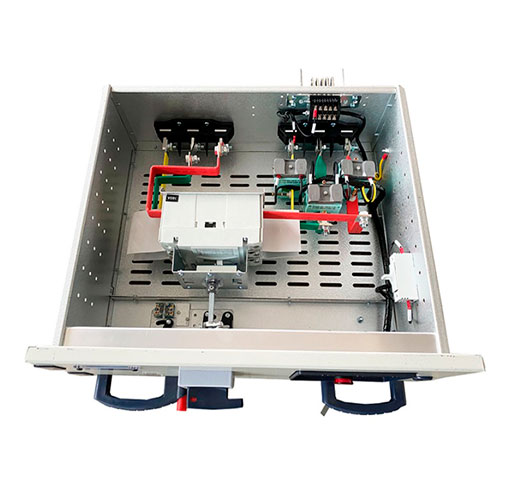
- Selectivity: the offer should show a coordination study proving that the device nearest a fault trips first. Air circuit breakers with short-time delay (category B to IEC 60947-2) make this easier.
- Arc flash reduction: arc detection relays, zone-selective interlocking between breakers and maintenance mode settings that lower trip delays while people work nearby.
- Internal separation and shutters: confirm that the offered form matches how you intend to maintain the board.
- Earth fault and residual current protection where required by the earthing system or local rules.
- Surge protection on incomers, especially where long overhead lines or lightning exposure exist.
Step 5: Look at Digital and Integration Features
Modern LV boards are also data sources. Evaluate:
- Metering class and which values are measured (energy, power quality, harmonics).
- Communication protocol (Modbus TCP, Profinet, Ethernet/IP, or IEC 61850 where required) and integration with the plant SCADA or energy management system.
- Temperature monitoring of busbar joints and cable terminals.
- Interfaces for on-site solar, battery storage and backup generators, including transfer logic.
Step 6: Compare Lifecycle Cost
The cheapest bid is rarely the cheapest board over 25 years. Compare:
- Energy losses: undersized busbars and connections run hot and waste energy every hour of operation.
- Downtime cost: withdrawable units can be swapped in minutes; fixed units may need a shutdown.
- Spare space and extendability: can new sections be added without rebuilding the busbar?
- Spare parts: availability and lead time of breakers, trip units and accessories.
- Maintenance needs: access for thermography, ease of cleaning, and supported service tools.
Step 7: Score the Offers
Use a simple weighted scoring table so the decision is transparent.
| Criterion | Suggested weight | What earns a high score |
|---|---|---|
| Technical compliance | 30 % | All ratings confirmed, no deviations |
| Verification evidence | 20 % | Design verification reports matching the offered design |
| Safety features | 15 % | Required form, arc fault mitigation, clear interlocking |
| Lifecycle cost | 20 % | Low losses, good extendability, local spares |
| Delivery and support | 15 % | Realistic schedule, commissioning support, training, documentation |
Common Mistakes
- Specifying the assembly’s rated current but not the short-circuit rating.
- Ignoring the derating effect of high ambient temperature or poor room ventilation.
- Accepting component certificates in place of assembly design verification.
- Leaving no spare ways or space for future feeders.
- Forgetting harmonic loads when sizing the neutral.
- Choosing Form 1 or Form 2 to save money, then discovering that maintenance requires a full shutdown.
Frequently Asked Questions
Can existing LV switchgear be upgraded instead of replaced?
Often yes. Breakers, trip units and metering can be retrofitted, but any change to busbars or ratings must stay within the original design verification or be re-verified.
Is a type-tested board the same as an IEC 61439 verified board?
The older IEC 60439 terms “type-tested” and “partially type-tested” were replaced by design verification in IEC 61439. Ask for verification to the current standard.
How often should LV switchgear be maintained?
Typically a visual inspection and thermography every year, with breaker servicing and cleaning according to the manufacturer and site conditions.
Work with METTZ Group
METTZ Group offers a wide range of low-voltage cabinets to suit many needs, from main switchboards and motor control centres to sub-distribution boards, together with LV cabinet components and busway and busbars. Check out our website to learn more, or contact METTZ Group today to work with a representative.
