
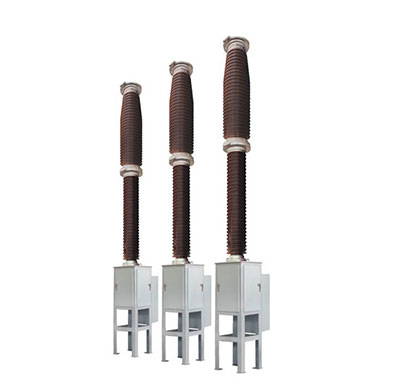
Electricity travels through several voltage levels, and many types of equipment, before it reaches a socket. This guide walks through each stage of the transmission and distribution (T&D) chain, explains where one ends and the other begins, and looks at how renewables and HVDC are changing grid design.
The Grid in One Picture
Electricity is not pushed through wires like water through a pipe. Generators set up a voltage, and energy flows through electromagnetic fields guided by the conductors. Supply and demand must also balance second by second, because large-scale storage is still limited. Every power system is built in layers:
- Generation: synchronous generators typically produce 10-25 kV. Wind turbines and solar inverters produce 0.4-1 kV or more.
- Step-up substation: raises the voltage to transmission level.
- Transmission: bulk transport at 110-765 kV AC, or as HVDC.
- Sub-transmission: regional supply at 35-132 kV, depending on the country.
- Primary distribution: medium-voltage feeders at 6-35 kV (IEC MV range up to 52 kV).
- Secondary distribution: low voltage, typically 230/400 V (IEC 60038) or 120/240 V in North America.
Transmission vs Distribution: The Real Differences
| Transmission | Distribution | |
|---|---|---|
| Typical voltage | 110 kV and above (up to 1,000 kV AC / ±1,100 kV DC) | Below about 110 kV, down to LV |
| Topology | Meshed, so power can flow along several paths | Mostly radial or open-loop rings |
| Purpose | Move bulk power between regions, plants and load centres | Deliver power to individual customers |
| Operator | Transmission system operator (TSO) | Distribution system operator (DSO) or utility |
| Protection | Distance, differential and fast breaker schemes with redundancy | Overcurrent, earth-fault, reclosers and fuses |
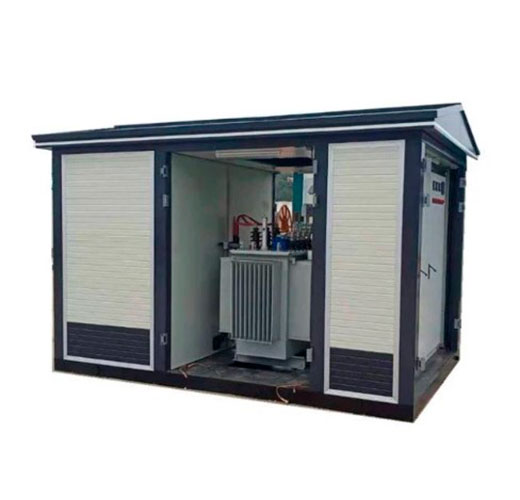
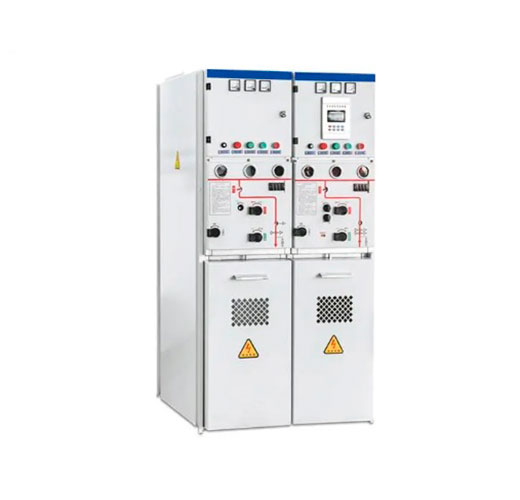
| Main equipment | HV/EHV breakers, power transformers, overhead lines, GIS | MV switchgear, ring main units, distribution transformers, LV boards |
Big industrial users such as smelters, mines and data-centre campuses often connect directly at 110-220 kV, which blurs the line between the two. Rooftop solar and batteries now also send power back up the distribution network, so it is no longer a one-way system.
Stage by Stage: What Equipment Does the Work
At the power plant
The generator step-up (GSU) transformer raises the voltage so that current, and with it resistive loss, falls sharply. High-voltage circuit breakers and disconnectors connect the unit to the grid and isolate it for maintenance.
On the transmission line
Overhead lines use aluminium conductors, often bundled two to six per phase, hung from insulator strings on steel lattice towers. Shield wires above the phases intercept lightning. Many now include optical fibre (OPGW) for protection signalling and data. Underground and subsea cables are used in cities and across water.
At transmission and grid substations
Substations switch lines in and out, transform between voltage levels and host the protection that clears faults within tens of milliseconds. Reactors, capacitor banks and FACTS devices such as STATCOMs keep voltage within limits.
In the distribution network
Primary substations feed MV lines and cables. Along the feeders, MV switchgear, ring main units, reclosers and load break switches sectionalize the network. Pole-mounted or pad-mounted distribution transformers then supply LV boards and service cables.
At the customer
Meters, low-voltage cabinets and distribution boards with breakers, RCDs and surge protection deliver power safely to circuits and loads.
HVAC or HVDC?
Alternating current dominates because transformers make changing voltage cheap and simple. High-voltage direct current wins in specific cases:
- Long distances: above roughly 600-800 km overhead, HVDC lines are cheaper overall, because they need fewer conductors and have lower losses, despite expensive converter stations.
- Subsea and long underground cables: AC cables beyond about 50-100 km are limited by charging current. DC has no such limit, which is why offshore wind farms far from shore use HVDC.
- Asynchronous interconnections: DC links can connect grids running at different frequencies or out of phase, and they give precise control of power flow.
Voltage-source converter (VSC) technology has made HVDC more flexible. It supports weak grids, can restart a grid after a blackout (black start) and allows multi-terminal DC networks.
What Is Changing in 2026
Renewables reshape power flows
The best wind and solar resources are often far from cities. Grids need new long-distance corridors, and distribution networks have to host two-way flows from rooftop PV and batteries. Inverter-based generation also provides less natural inertia, so grid-forming inverters and synchronous condensers are spreading.
Storage at every level
Grid-scale battery energy storage now provides frequency response, peak shaving and congestion relief, and it can defer line upgrades. Smaller systems support commercial sites and microgrids. Learn more about our batteries and energy storage.
Digital substations and monitoring
IEC 61850 communication, sensors on transformers and switchgear, dynamic line rating and drone inspection give operators a real-time view of asset condition. This lets them load existing lines harder without risking safety.
Electrification of demand
EV charging hubs, heat pumps, electrolysers and AI data centres are adding large new loads. Distribution networks need stronger feeders and more transformer capacity in places that were planned decades ago.
Cleaner switchgear
F-gas rules in the EU and elsewhere are pushing utilities toward SF6-free MV switchgear, using vacuum interruption with air, solid or alternative-gas insulation.
Frequently Asked Questions
Where does transmission end and distribution begin?
Usually at the primary or grid substation, where voltage drops from transmission or sub-transmission level to medium voltage. The exact voltage boundary differs from country to country.
Why is electricity transmitted at such high voltage?
For a given power, higher voltage means lower current. Lower current reduces resistive losses and allows smaller conductors over long distances.
Is HVDC replacing AC grids?
No. HVDC complements AC networks for long-distance, subsea and interconnection links. Almost all distribution, and most transmission, will remain AC.
What is a ring main unit?
A compact MV switchgear unit, usually with two load break switches for the ring cable and one protected transformer feeder. It is used in urban cable networks.
Work with METTZ Group
METTZ Group offers a wide range of transmission and distribution products to suit many needs, from overhead line hardware and cable systems to MV switchgear, transformers and LV cabinets. Check out our website to learn more, or contact METTZ Group today to work with a representative.
