
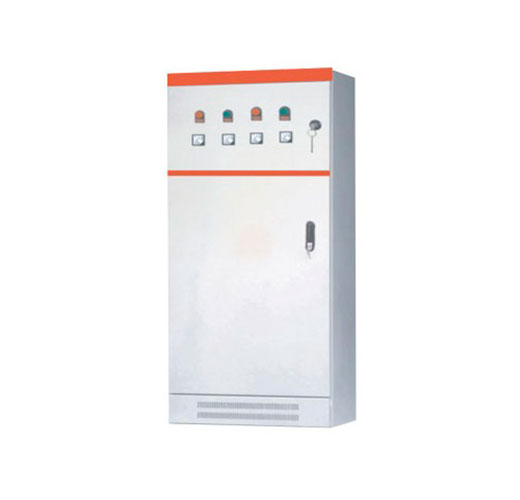
An automatic transfer switch (ATS) moves a load from a failed power source to a healthy one without anyone touching it. This article explains the transfer sequence, the main transition types, the IEC 60947-6-1 classes and the details that decide whether an ATS performs when the grid goes down.
What an ATS Does
An ATS sits between two (sometimes three) power sources and a load. A controller continuously monitors the sources. When the preferred source fails or drifts outside set limits, the ATS switches the load to the alternative source; when the preferred source is healthy again, it switches back.
IEC 60947-6-1 calls this device transfer switching equipment (TSE). An automatic version (ATSE) includes the sensing and control logic; a manual version (MTSE) relies on an operator.
Common source combinations include:
- Utility and generator: the classic standby arrangement for hospitals, offices, pumping stations and telecom sites.
- Utility and utility: two independent grid feeders or two transformers, used in data centers and critical industrial plants.
- Generator and generator: remote sites and mines without a grid connection.
- Grid and battery or solar-plus-storage: increasingly common as battery systems replace or support diesel generators.
The Transfer Sequence, Step by Step
- Monitoring: the controller measures voltage on every phase and frequency of each source, and detects phase loss, phase reversal and unbalance.
- Ride-through delay: short dips of a second or two are ignored, so a momentary disturbance does not start a generator unnecessarily.
- Generator start: if the fault persists, the ATS sends a start signal to the generator.
- Transfer: once the alternative source is stable in voltage and frequency, the ATS opens the normal side and closes the emergency side. Mechanical and electrical interlocks prevent both sides closing together.
- Retransfer delay: after the grid returns, the ATS waits, typically several minutes, to confirm it is stable before switching back.
- Cool-down: the generator runs unloaded for a few minutes, then stops.
Modern controllers let the user set every threshold and delay, log events, run scheduled generator tests and report status over Modbus or Ethernet.
Transition Types
| Type | How it switches | Interruption | Typical use |
|---|---|---|---|
| Open transition (break-before-make) | Opens the first source, then closes the second | Short gap, from tens of milliseconds upward | Most standby installations |
| Delayed (programmed) transition | Holds a neutral position for an adjustable time | Fraction of a second to several seconds | Motor and transformer loads that need residual voltage to decay |
| Closed transition (make-before-break) | Briefly parallels both sources, typically for less than 100 ms | None when returning between two live sources | Hospitals, data centers, test transfers without a blink |
| Soft-load closed transition | Parallels the sources and ramps load gradually | None | Large generators, peak shaving |
One point is often misunderstood: on a sudden grid failure, every ATS type causes a short interruption, because the generator still has to start. Closed transition only avoids the break when both sources are live, for example during retransfer or testing. Paralleling with the grid also requires synchronization and, in most countries, utility approval. Loads that cannot tolerate any interruption need a UPS downstream of the ATS.
IEC 60947-6-1 Classes
- Class PC: able to make and withstand short-circuit current but not to break it. Usually a motorized changeover switch, protected by upstream breakers or fuses.
- Class CB: built from circuit breakers, so it can also break short-circuit currents and provides overcurrent protection.
- Class CC: built from contactors, able to make and withstand but not break short-circuit current.
The standard also defines utilization categories, such as AC-31 for resistive loads, AC-33 for mixed motor loads and AC-35 for discharge lamps. Choose the category that matches the real load.
How to Specify an ATS
- Rated current: size for the full connected load, with margin for growth; common ratings run from 63 A to 3,200 A and above.
- Short-circuit rating: the rated short-time withstand or conditional short-circuit current must match the fault level and the upstream protective device.
- Number of poles: 3-pole or 4-pole. A switched neutral is often needed when a generator has its own neutral-earth bond, to avoid parallel neutral paths and nuisance earth-fault trips.
- Transition type: open, delayed or closed, based on load type and continuity needs.
- Controller functions: adjustable thresholds and delays, generator exercise scheduling, event log, communication protocol and remote override.
- Location and enclosure: close to the main board, with suitable IP rating and access for maintenance and bypass.
In larger installations, the transfer function is often built into the main switchboard as two interlocked air circuit breakers or a motorized changeover in a dedicated section of an LV cabinet.
Installation and Maintenance
An ATS connects two energy sources to the same load, so wiring mistakes can back-feed the grid or a generator and endanger line workers. Installation must be done by qualified electricians in line with local wiring rules and the manufacturer’s instructions. For maintenance, plan a monthly generator test through the ATS under load, an annual inspection of contacts and terminations, thermography of connections and a check that interlocks and controller settings are still correct.
Frequently Asked Questions
Does an ATS give uninterrupted power?
Not by itself. On a grid failure, the load is off until the alternative source is available. Use a UPS for loads that cannot tolerate a break.
What is the difference between an ATS and a manual changeover switch?
A manual changeover switch needs an operator. An ATS senses the failure and transfers on its own, which shortens outages and removes human error.
Can an ATS work with solar and batteries?
Yes. Many controllers support grid, generator and energy storage sources, though hybrid inverters often include their own transfer function.
Work with METTZ Group
METTZ Group offers a wide range of low-voltage switchgear with automatic transfer to suit many needs – from compact changeover panels to main switchboards with interlocked generator and utility incomers. Check out our website to learn more, or contact METTZ Group today to work with a representative.
